By Eve Perrins, Second Year, English and History
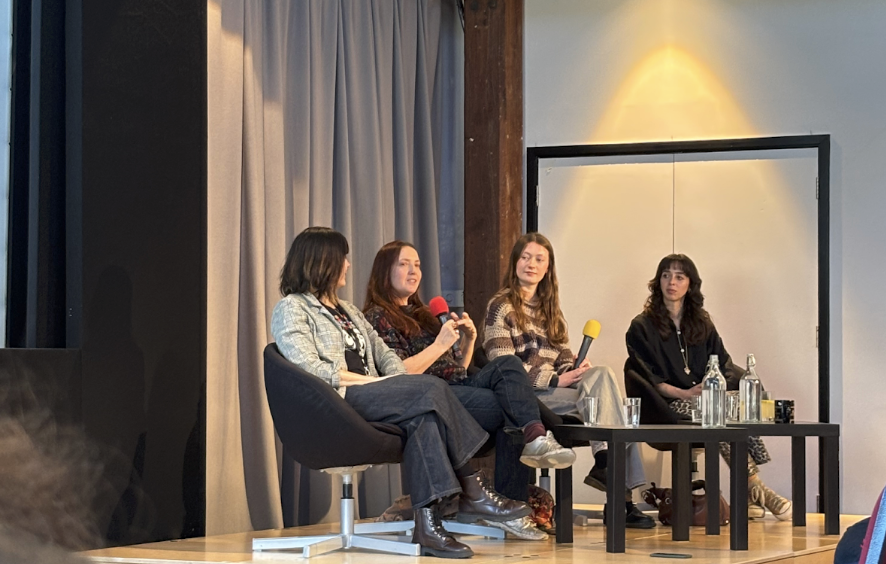
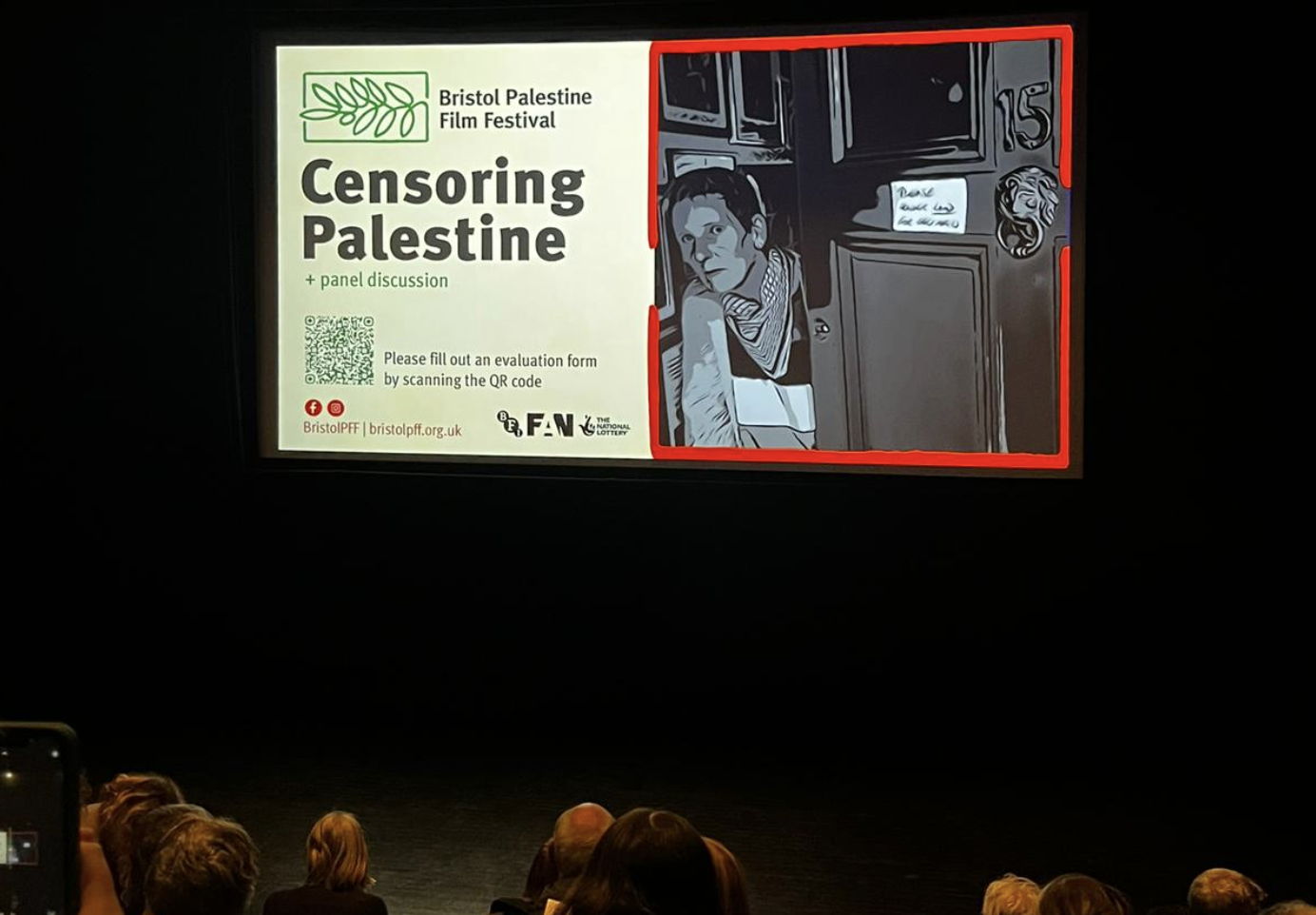
Censoring Palestine (2024), was shown at Arnolfini on the second day of this year’s Bristol Palestine Film Festival, marking the 15th year of the event. This year, the festival feels even more important, and the film highlights the issues surrounding the debate on censorship in the UK. After multiple breaches of the ceasefire in Gaza and increasing world outrage and anger, the festival felt particularly important as it centred the lives and voices of Palestinians outside of the conflict.
The documentary I saw discussed a perceived bias in the British and American media when reporting issues on Palestine. Exploring the theme of censorship, the documentary raised the question of international complicity in the conflict in Gaza, as well as the importance of free speech in the current political climate.
Arriving at Arnolfini, you were first met with a stall of festival merchandise; with the money made being donated to the Palestinian Red Crescent Society. Featuring art made by Palestinians, the stall was a warm welcome into an event that valued Palestinians as people, not just political props.
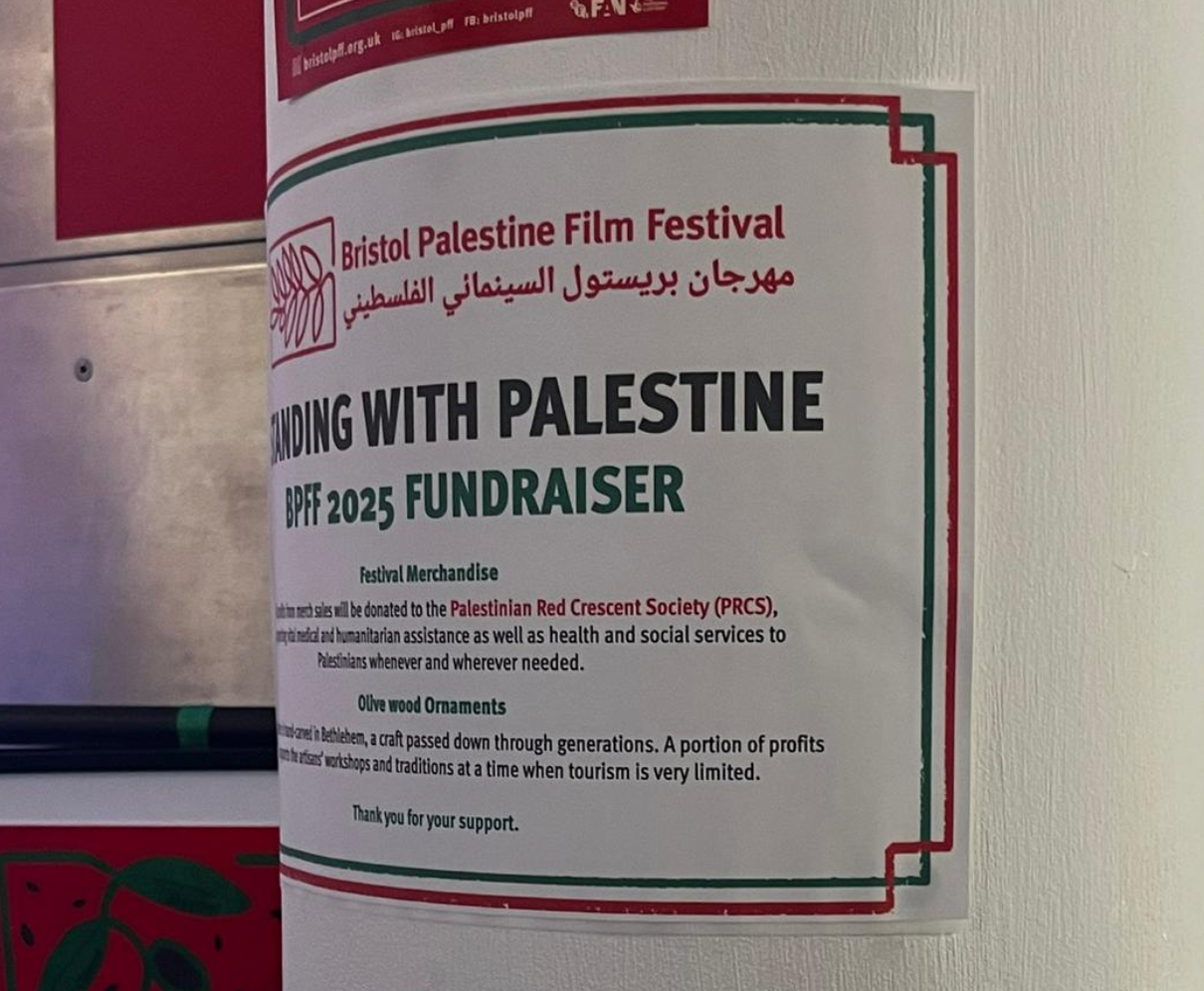
The focus on art and culture is an important reminder of the humanity and individuality of people that often gets overlooked in periods of conflict. The Palestinian Red Crescent Society (PRCS) is an independent Palestinian National Society, which aims to ‘build the resilience of Palestinians through the provision of health and social services.’
The aims of the PRCS align well with the focus of the BPFF and added to a feeling of strength and resilience that the festival exuded. The women working at the stall were keen to discuss the items being sold, with each item having firmly grounded ties in Palestine. It was refreshing to see and felt hopeful.
Censoring Palestine was a documentary mainly focusing on the actions of police, government, and media towards activists for peace in Palestine in the UK. It was a slight break away from the focus on Gaza and Palestinian people but was a documentary that felt topical in many ways and helped to contextualise the conflict to a British audience.
The first half focused on the alleged media bias of the BBC in reporting the conflict. This portion of the documentary focused on first hand testimonies from journalists who felt themselves victims of this censorship in the UK. It is an evocative documentary, relying heavily on the use of individual accounts of journalistic suppression.
The documentary states that the UK is not just complicit in genocide, but funding and contributing to it by sending drones to Israel, as well as constructing reconnaissance operations. Therefore, the documentary implies the BBC acts as an arm of the state, hiding this from the public and stifling dissent. It felt dystopian to watch.
The second portion of the documentary moved away from this focus towards the censorship of Palestine Action and the Met Police’s response to the Palestine protests. Images of elderly people being carried into police vans were interspersed with testimonies from the mothers of two members of Palestine Action arrested in Filton this summer.
 Natalie Payne
Throughout the documentary, I was faced with more questions than answers. Why was this happening and why are we allowing it? I began to think less on the conflict in Gaza and more about our own laws and restrictions on protest and direct action. The impact of this direction is not one hundred percent clear to me. I thought about whether it is a good thing to contextualise the conflict to the UK, whether it means activists can make more of a difference by focusing on what is happening at home.
On the other hand, I felt this documentary made victims of activists and took away from the agency of Palestinian people themselves. I went into the documentary hoping to hear the voices of Palestinian people, but instead I felt we heard only from British journalists. Upon reflection however, I think this is important. I liked how the documentary focused on real life testimony. I think it is important we don’t shy away from the conversation of censorship of journalism, and people continue to take a stand and pressure the government to end the weapons sale to Israel.
On the whole, I left this documentary feeling I understood why people in the UK are protesting about a conflict abroad and better equipped to have conversations with others about it.
Featured Image: Epigram / Eve Perrins
Did you manage to catch any of the Bristol Palestine Film Festival?