
By Charles Hubbard, Second Year, Theatre and Performance
Perhaps the strangest thing about the Avatar franchise (which is now three entries deep and shows no signs of stopping) is that they seem inevitably destined for massive, four-quadrant box office success, despite being some of the oddest and most idiosyncratic mainstream films of the 21st century.
I suppose that’s to be expected from legendary Hollywood madman James Cameron as the depth and intensity of his artistic obsessions are matched only by his unprecedented commercial instincts. Every movie he’s made in the last 30 years has reached $2 billion at the global box office! All that to say, Fire and Ash is just as out-there as the first two films, at times more resembling the latter Dune books in its extremely zany denseness than a major studio blockbuster.
However, there are still more than enough sensationally staged and well-realised sequences to keep the average moviegoer invested, even if their brain might go into soft-focus every time the characters start explaining the lore of Eywa and the deep mythology of the clans of Pandora. Cameron’s unparalleled skill for intricate, almost kaleidoscopic setpieces has always been more than enough to guide audiences through the clunkier aspects of his films and this dichotomy between his strengths and weaknesses as a writer-director is no more evident than it is here.
Picking up right where its superlative predecessor, The Way of Water (2022), left off, Fire and Ash is mostly concerned with how each of its characters respond to the death of Netayam (Jamie Flatters) - spoilers for a different film. Jake Sully (Sam Worthington barely attempting to conceal his natural Australian accent) has retreated further into his military roots, advocating for the use of guns against the Na’vi’s enemies like a blue Charlton Heston. Neytiri (Zoe Saldana, who is so sidelined here, you can tell that no one guessed she’d be an Oscar winner by the time this came out) allows her hatred of humans - or ‘pink-skins’, as she calls them - to curdle and toxify even further.
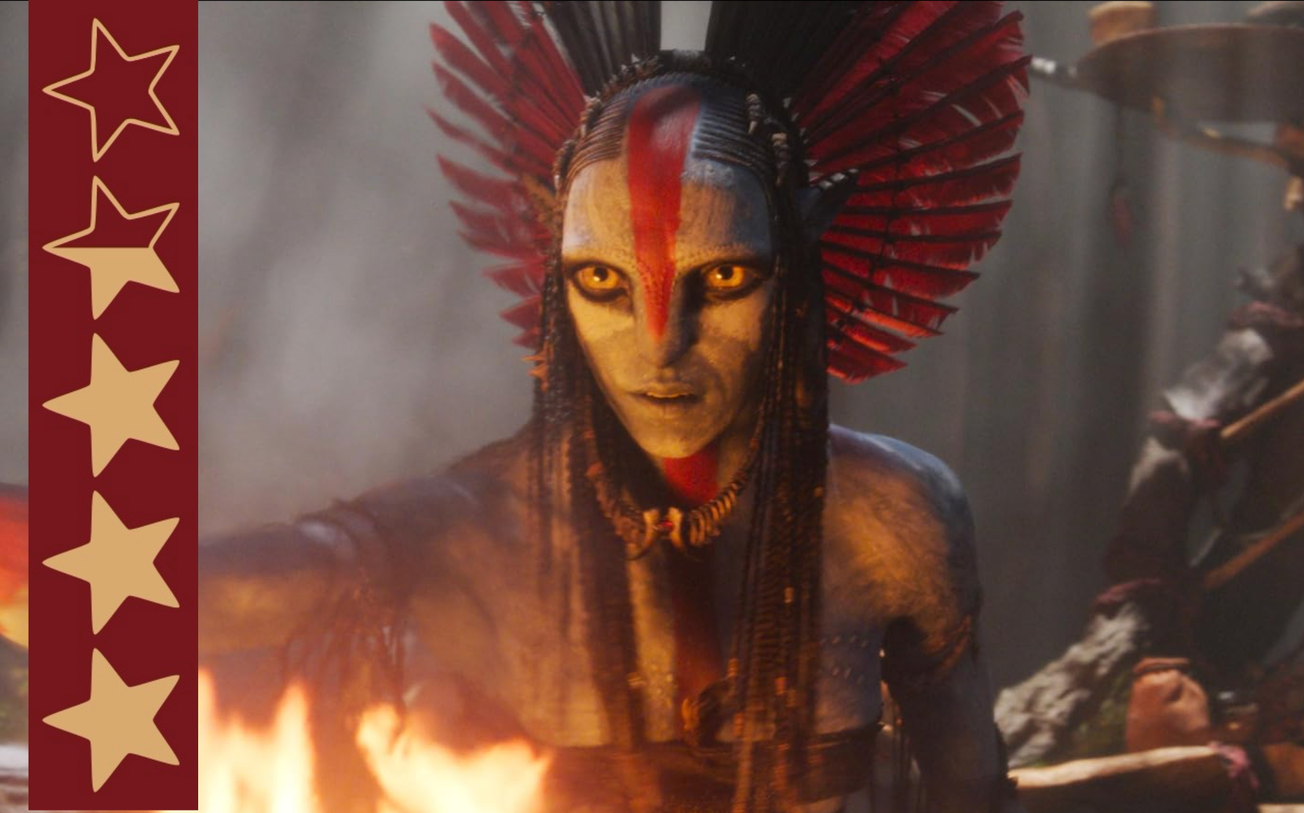
Lo'ak (Brian Dalton) faces wave after wave of survivors' guilt with his narration, which intermittently drops in and out of the film, constantly foregrounding his family’s grief. However, this entry is mostly interested in Spider (Jack Champion), a human who has been adopted by the Sully family, and his struggles to adapt to a world whose mere air is instantly poisonous to him. Our characters’ internal struggles are only exacerbated when their previous foe - dogmatic military man Colonel Miles Quaritch (Stephen Lang doing some career-best scenery-chewing) - returns to team up with Oona Chaplin’s Varang - a feral Na’vi who has turned her back on Eywa.
If that plot summary sounded a little muddled, that’s because the film has a lot (perhaps even a little too much) going on. The density of Fire and Ash’s plot and thematic concerns entirely justify its gargantuan 198 minute running time, which itself is likely to send more casual audiences heading for hills (or at least the toilets) after the two-hour mark. Varang alone introduces half a dozen new world-building ideas not even considered in the first two films, chief among them the idea that, by non-consensually plugging your hair braid into someone else’s you can inadvertently control their actions. Also, the Na’Vi love psychedelic drugs! Who knew?
While I certainly appreciate Cameron’s breathless desire to introduce new concepts to the world at an almost minutely rate, some start to get a little uncomfortable. In particular, the image of having a rogue troupe of Na’Vis ride around ‘scalping’ people’s braids and using them as war trophies traffics in problematic and misrepresentative stereotypes of Native Americans. The Avatar films walk a pretty fine tightrope of picking and choosing trademarks and traditions from different indigenous cultures without modelling any single one of them too specifically and it’s moments like these that make Cameron in danger of falling right off said tightrope.
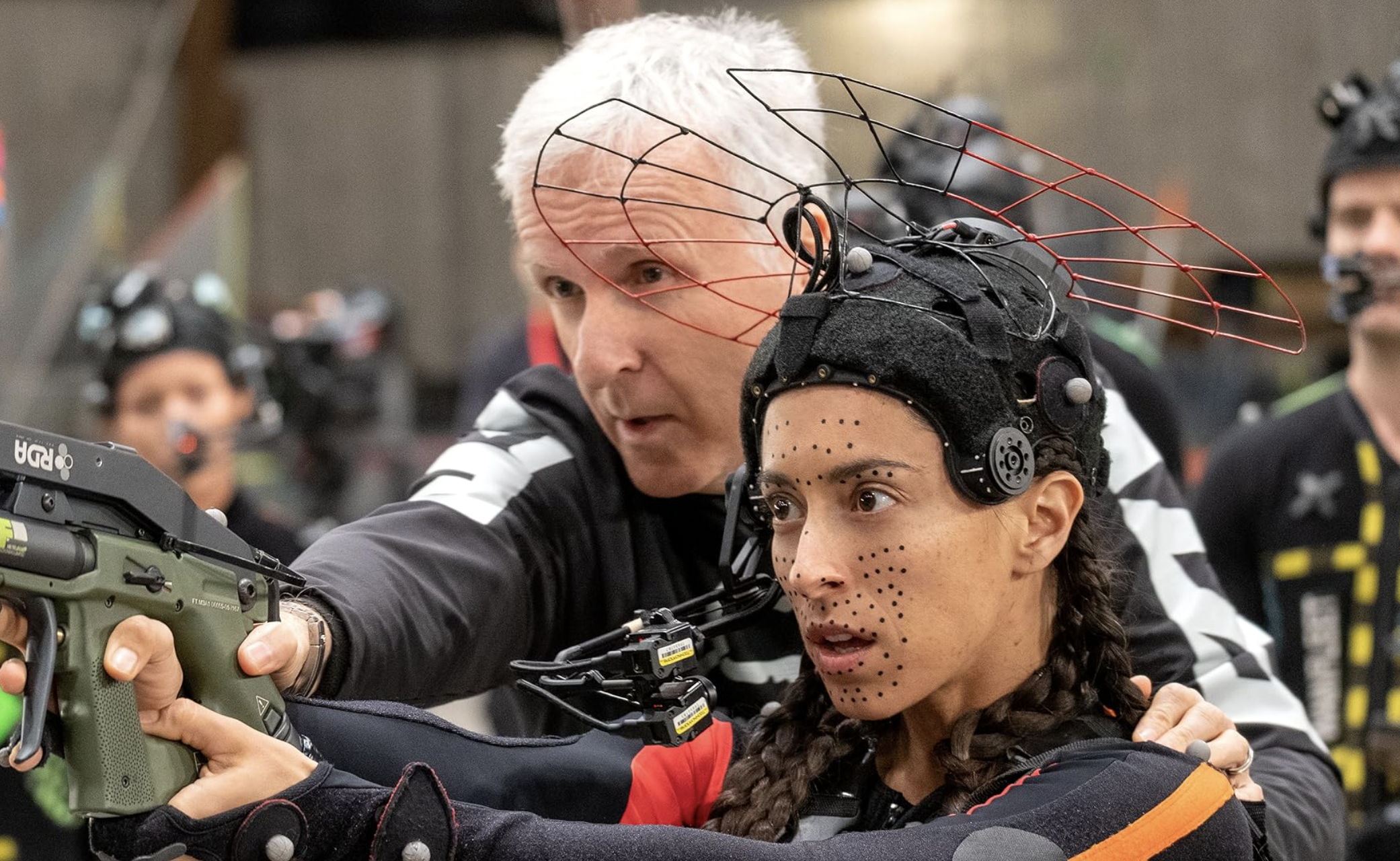
While the action is uniformly fantastic across the board, the opening set piece featuring an attack on an airborne trading ship led by a mo-capped David Thewlis (Lupin from Harry Potter) and his band of tentacled reindeer is a particular highlight. Cameron utilises both 3D and high frame-rate better than any other director on the planet, racing past the likes of Peter Jackson and Ang Lee (who are always a little more hit-or-miss on this front), and this film is a perfect front-to-back showcase for his particular set of skills.
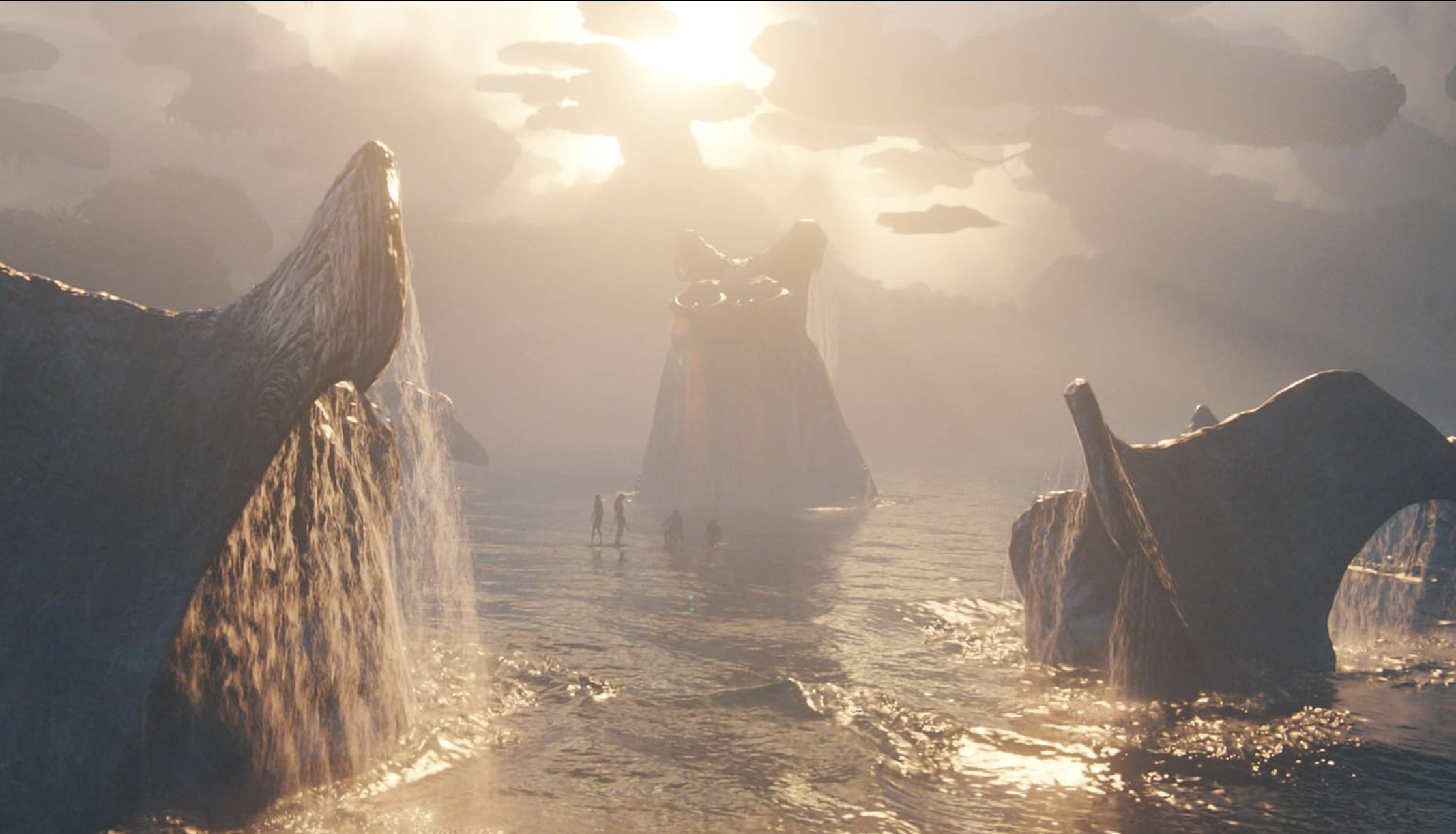
However, as thrilling as the extended final fireworks display is, it’s ripped almost entirely from the franchise’s previous entries, be it summoning the clans from the first film or the inclusion of the whales from The Way of Water. Sure, Cameron doing a cover band version of himself is still exciting, but it’s a shame to watch one of modern cinema’s greatest technical pioneers resort to repeating himself.
 Betsan Branson Wiliam
If you’re not generally a fan of the Avatar franchise, or worse, still have no familiarity with them, I’d recommend you steer clear of this one. Originally designed as the second half of The Way of Water, there’s no hand-holding or table-setting to welcome the unaffiliated. Instead, Cameron simply throws you in at the deep end and expects you to keep up with the story’s breathless pace.
It’s easily the weakest of the franchise and possibly Cameron’s weakest film full stop (excluding his first feature, Piranha 2, from which he was fired) but I’d be lying if I didn’t have a goofy smile on my face the entire time, even when I couldn’t quite deal with whatever was being throw at me.
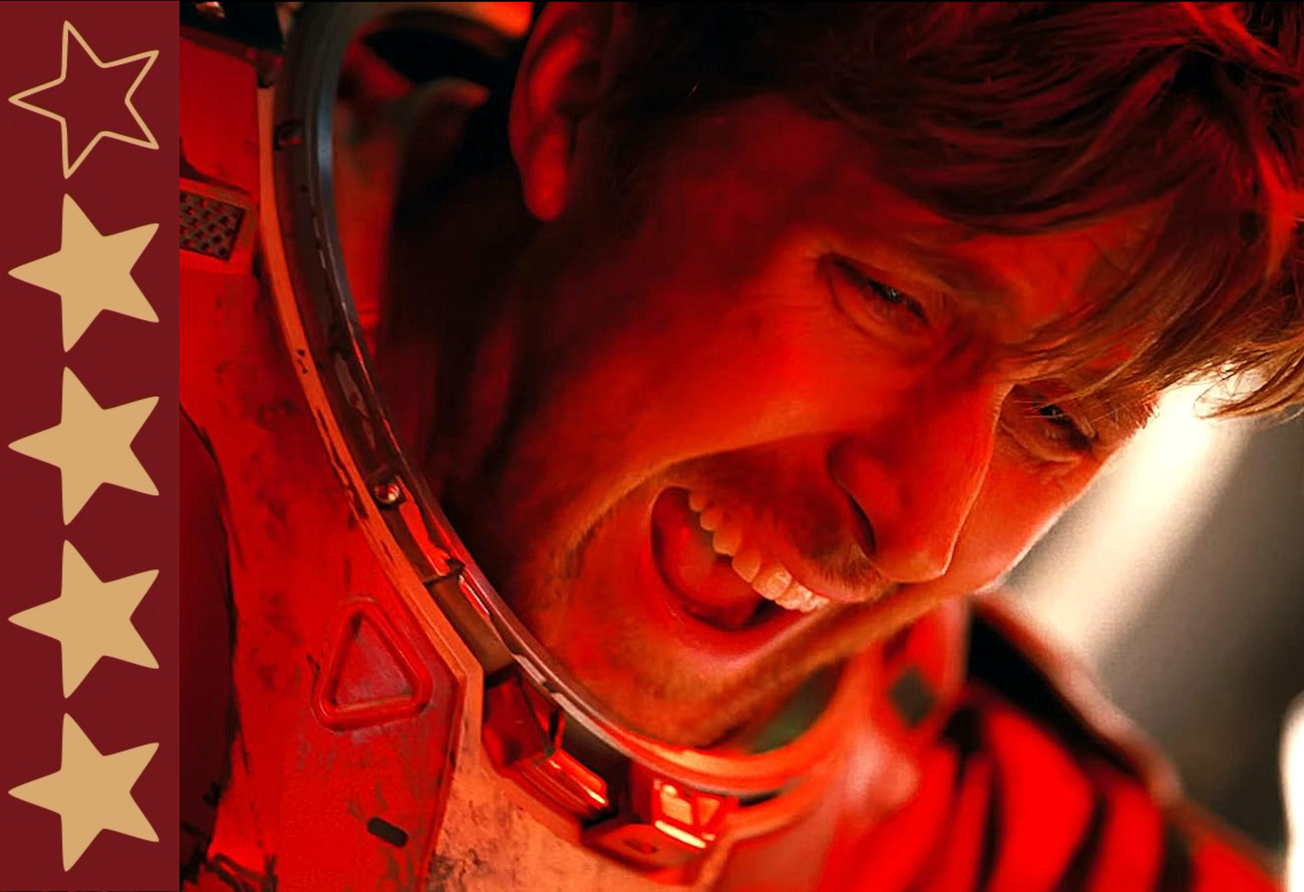
Featured Image: IMDb / Charles Hubbard
Will you be first in line for the next gargantuan Avatar film?


)