

By Charles Hubbard, Second Year, Theatre & Performance
It’s very easy to feel anxious about American politics right now. The lunatics have been running the asylum for seven months now and it feels like one of Trump’s bumbling fascist goons could accidentally hit the big red button any day now. Enter A House of Dynamite - a film so obsessed with being politically prescient, yet so removed from the movements of the current US government that its writer and director might as well have been locked in a bunker since 2014.
Kathryn Bigelow’s late-stage career has been defined by telling gritty, stripped-back stories of steely professionals doing their jobs in the hazy midst of the War on Terror, be it Jeremy Renner defusing unexploded bombs in The Hurt Locker or Jessica Chastain hunting down Osama Bin Laden in Zero Dark Thirty. However, we are living in a brave new world now, one where the number of competent people holding government positions is quickly vanishing and Bigelow’s worldview is hopelessly outdated. A House of Dynamite’s vision of the hallways of power being entirely populated by noble, good-hearted people would almost be comforting in our current political hellscape, if the film wasn’t so desperately trying to freak you out.

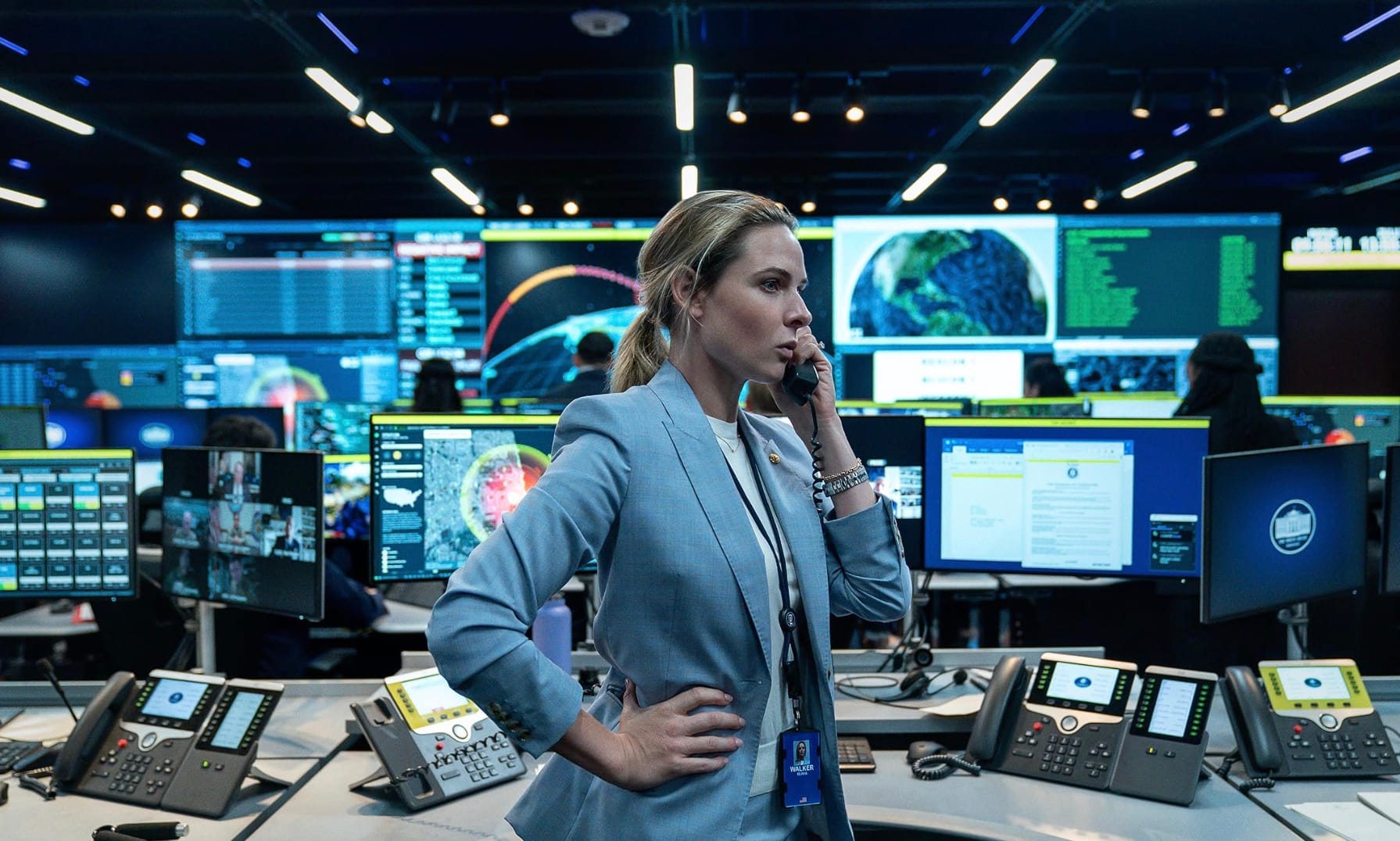
When a missile is deployed (from where? Who knows?) and is due to land in Chicago (why? Who knows?), the entirety of Washington DC is placed on DEFCON 2 and those in the control room race to find out who is responsible and how to stop it. The film actually only showcases about twenty or thirty minutes of time, yet does so from a variety of different viewpoints so, by the time the president (Idris Elba) makes the call about what to do, the audience have already seen the scenario play out many times and know exactly how it is going to end. If this sounds a little dramatically inert, that’s because it is. Not satisfied with a simple A-to-B narrative, Bigelow and screenwriter Noah Oppenheim (bizarrely the former president of NBC News) fragment the second half of the story many times over in an attempt to give the events a greater sense of profundity. However, all they actually achieve is a total kneecapping of any momentum or suspense that the film might have otherwise accumulated.
Bigelow’s decision to refuse to engage with any current political figures or trends may have been a smart move in another context or form (I’m as tired as anybody of thinly veiled Trump parodies) but here it just comes across as cowardly. She’s always been an intensely centrist artist, whose output “merely states the facts of the matter” with the woman herself often being cagey about what her actual politics are. That tendency becomes a debilitating problem here. There is absolutely a time and place for a film about how, even with the most competent and level-headed people in power, nuclear war is still inevitable. However, that time and that place is certainly not a week after the real Secretary of Defense (now the Secretary of War) yelled at a room full of generals for being “too fat” and “too woke”. It’s as if Bigelow was passed this script towards the end of the Obama administration, took a decade to raise the funding for it and didn’t realise that maybe it should be kept on a shelf until the US government isn’t entirely run by fraudsters, sex predators and podcasters. While Paul Thomas Anderson is ruthlessly skewering the exponential rise of fascism, Bigelow seems to be curled up in the corner, simply wishing that said fascists didn’t exist. I expected a little more from one of our greatest living thriller directors.
 Megan Mclean
At least the cast is full of heavy hitters. Rebecca Ferguson makes for a perfect Bigelow lead. Arguably the film’s biggest mistake is punting her after the first 25 minutes, after which I could feel my audience’s interest steeply declining. It’s also great to see Pulitzer Prize-winner Tracy Letts (best known as Saoirse Ronan’s father in Lady Bird) get given a decent role in a thriller. It’s just a shame he’s forced to churn out groaners like “This isn’t insanity. It’s reality”, the posturing machismo of which painfully clashes with the film’s clear aspirations towards gritty verisimilitude. And then there’s Idris Elba, who the film self-consciously cuts around until the final 20 minutes. His absence for most of the runtime is clearly intentional on Bigelow’s part but all she’s really doing is withholding the sharpest tool in her arsenal for no apparent reason, a choice glaringly indicative of a film intent on overthinking everything far too much. Also, if you thought that the music in Conclave was a bit too overbearing, this score (also by Volker Bertelmann) will have you cackling the twentieth time something as mundane as a file being stamped is set to shrieking violin strings.
It’s difficult to remember the last time such a deeply mediocre and homogeneous work came from a major artist. Maybe Steven Spielberg’s Ready Player One? Making a version of Dr. Strangelove bereft of any humour or satire would already be a bad idea and releasing it when its vision of government is almost utopian, when compared to our current nightmare, doesn’t do it any favours. There is certainly nothing wrong with taking comfort in visions of competent, if imperfect, governmental leadership (it’s the entire appeal of a show like The West Wing) but A House of Dynamite is so woefully anxious in the wrong direction, it’s difficult to watch it without feeling anything but an intense frustration. If the film itself is ignorant of our current political climate, why should it be allowed to lecture us about the possible imminence of nuclear war?
Featured Image: IMDb / Felix Glanville | Illustration by Epigram / Sophia Izwan
What did you think of A House of Dynamite?