By Emma Griffiths, Sports Editor
The Women's Rugby World Cup 2025 is being hosted in England for the first time since 2010. Epigram explores what it means for the biggest tournament in the sport's history to be right on our doorstep.
As I step out of Brighton train station, I’m confronted with the Women's Rugby World Cup. And 'confronted' is an apt verb choice - I’m not exaggerating when I say it’s everywhere.
I expected maybe one slightly damp sign, potentially a couple of England shirts and cowboy hats sticking out in a sea of people who just didn’t really care that the biggest celebration of women’s rugby was happening right here in their city.
But instead, I walk out into the Brighton sunshine to be greeted by more England shirts that I could count, cow boy hats galore, signs directing people to Fan Zones - and more importantly: people going.
I’ve been covering women’s rugby for over a year now, so I’m not really sure why this made such an impact on me. I’ve written countless articles on how much the women’s game is growing; I could recite record-breaking statistics of tickets sold in my sleep - 410,000 for your information - and yet, seeing it in person is something entirely different.
Without sounding dramatic, it really does feel like we’re collectively on a precipice. We've all invested in a sport whose stocks are about to skyrocket. It’s like the calm before the storm, if the storm was adorned in red sparkly cowboy hats, yelling manically at a screen, and covered in a light sheen of sweat from the tropical 22 degrees.
I follow the crowds to the Fan Zone, and I’m surprised - sounds terrible to say but it is true, I am surprised - to look around and see that the crowd isn’t just full of twenty-something girls like me. In fact, we’re almost the minority.
I’ve found that in women’s sport, there’s a tendency to assume that if you’re a woman, you must watch women’s sport - simply because you are a woman. For the name of feminism. But that completely defeats the point - sport isn’t political at its core. Sport is unifying: it doesn’t matter who you are, where you’re from - as long as you’re really good at handling an egg-shaped ball, or watching other people do that, you're welcome.
The crowd proves this. In one glance, I take in a group of middle aged men, countless families, teenagers and about every other demographic that you could think of.
In other words, the Fan Zone is full. I mean, not as full as it would be a Men’s World Cup, but again, remember that I said ‘precipice’ - the all-out full-tilt acceleration is imminent. I arrive just as a try is scored on the huge screen at the front, and a roar erupts.
Stop it you guys, I think, no need to be that excited to see me.
But the excitement is palpable - and obviously not because I’ve arrived, but because another try has been scored in the final group round games.
This World Cup hasn't just been record-breaking from participation statistics - almost every game is privy to world-class performances that are redefining the calibre of women's rugby. And we're only two weeks in.
Just looking at Pool A, which I'm on my way to watch, there are stories of incredible talent and tenacity from every nation.
For Australia, eighteen year old Caitlyn Halse - the youngest Wallaroo ever - has quickly established herself as a dominant force in the Australian offensive scoring multiple tries in every game.
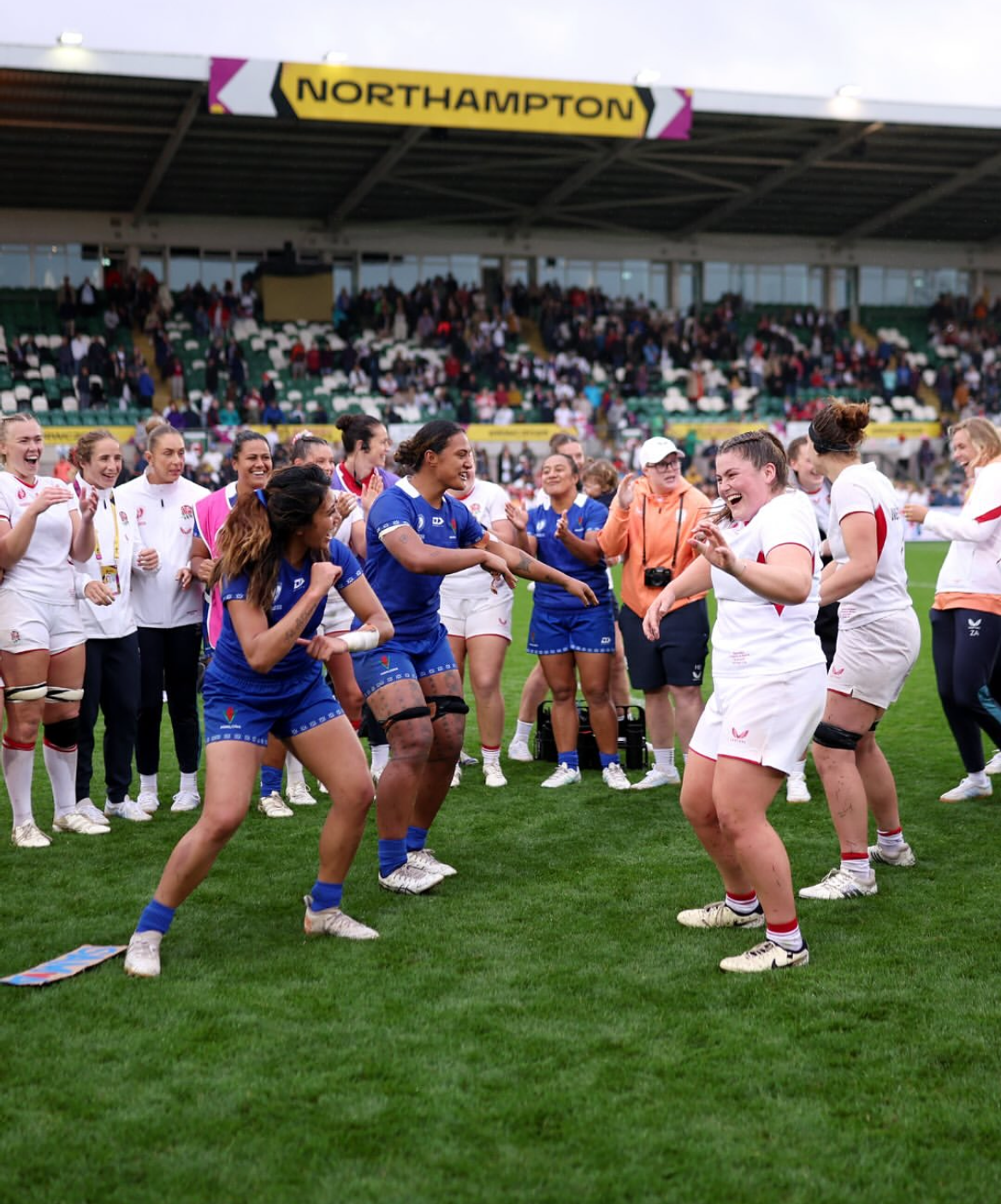
Samoa - a nation that is primarily amateur or semi-professional and crowdfunded to even get to the tournament - scored their first World Cup points last week, and celebrated like they’d just lifted the trophy.
In all of the groups, the girls on the pitch have not just proved that women’s rugby is good - they’ve proved that it’s great. Forget keeping up with the boys, they’ve shown that it’s a game in its own right.
I head towards the stadium, with a sneaking suspicion that I might find this a bit more emotional than I initially expected. I was going to tell myself to man up, but actually, maybe that’s part of what this day is - revelling in a historic moment, drinking in the atmosphere, the pride that practically seeps from every person there.
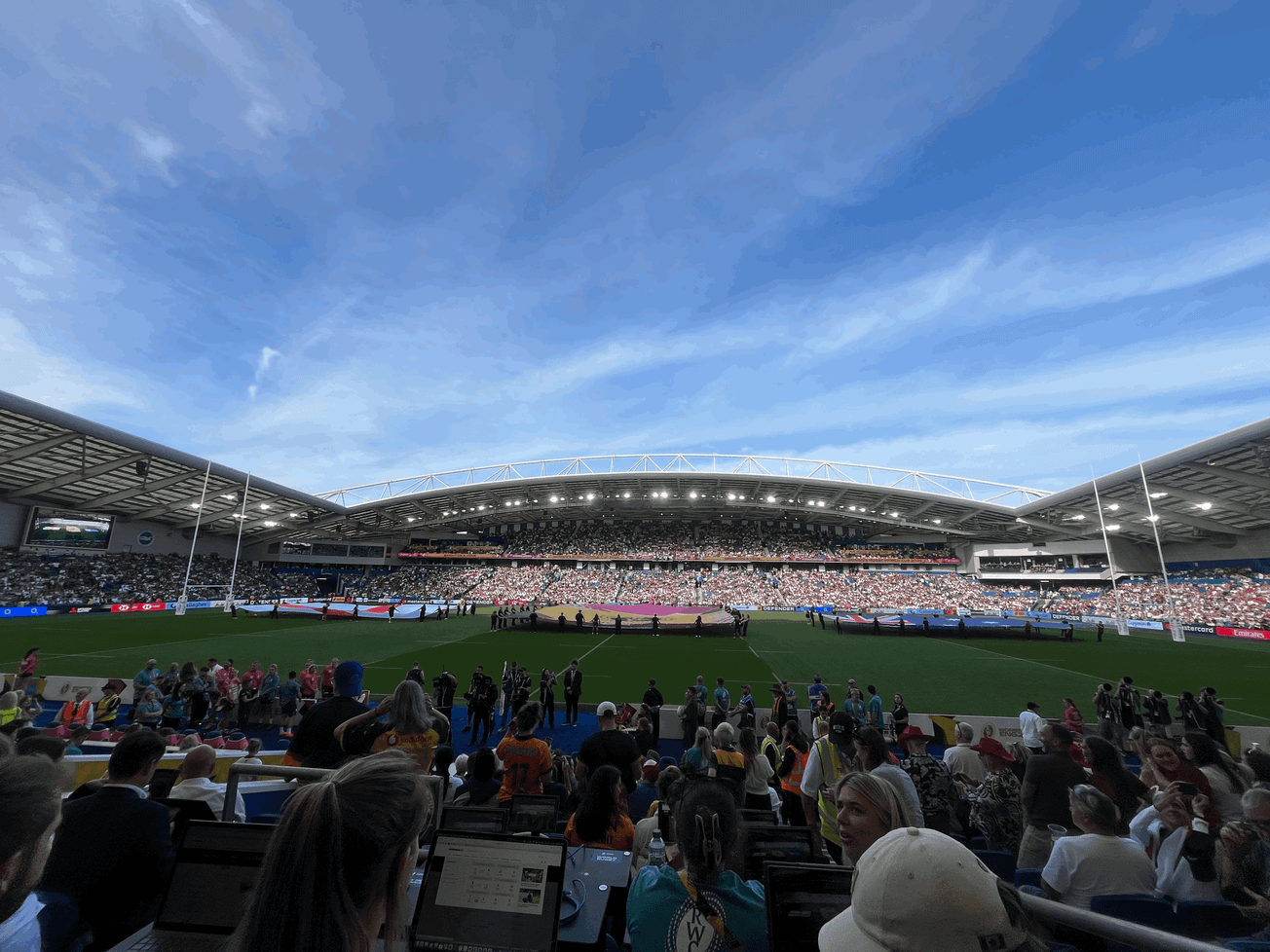
If I thought that there was a sea of supporters in central Brighton, then the stadium transcends geographical metaphors entirely. It’s packed, even 90 minutes out from kick-off when I arrive.
As people take their seats, a number of flashes up on the screen - 30,443 people watching today. It’s crazy how, suddenly, these five digit numbers have become almost normal. When England last hosted the Women’s Rugby World Cup in 2010, just over 7,000 came to the final. 15 years on, and over quadruple that number are coming to just the group rounds.
This season was the first one where the Red Roses matches not only broke even, but made money. The girls are all on fully professional contracts - as the best team in the world, they are a model for the rest of global women's rugby of what equality in sport truly looks like.
The final this year will take place in the sold out 82,000-capacity Allianz Stadium in Twickenham - not the smaller Stoop, not as a precursor to a men's match, but as an important rugby date in its own right. England Sport is doing a lot right when it comes to improving the standards and expectations attached to women's rugby, and seeing these funnelled into a World Cup is incredibly exciting.
And as if all of this isn’t nice enough, the 80 minute whistle heralds in a very rare moment in sport. Both sides celebrating - although Australia have suffered a pretty substantial loss, they’ve done enough to make it through the quarterfinals. A match almost always requires a winner and a loser: being able to see two winners is, put simply, outstanding.
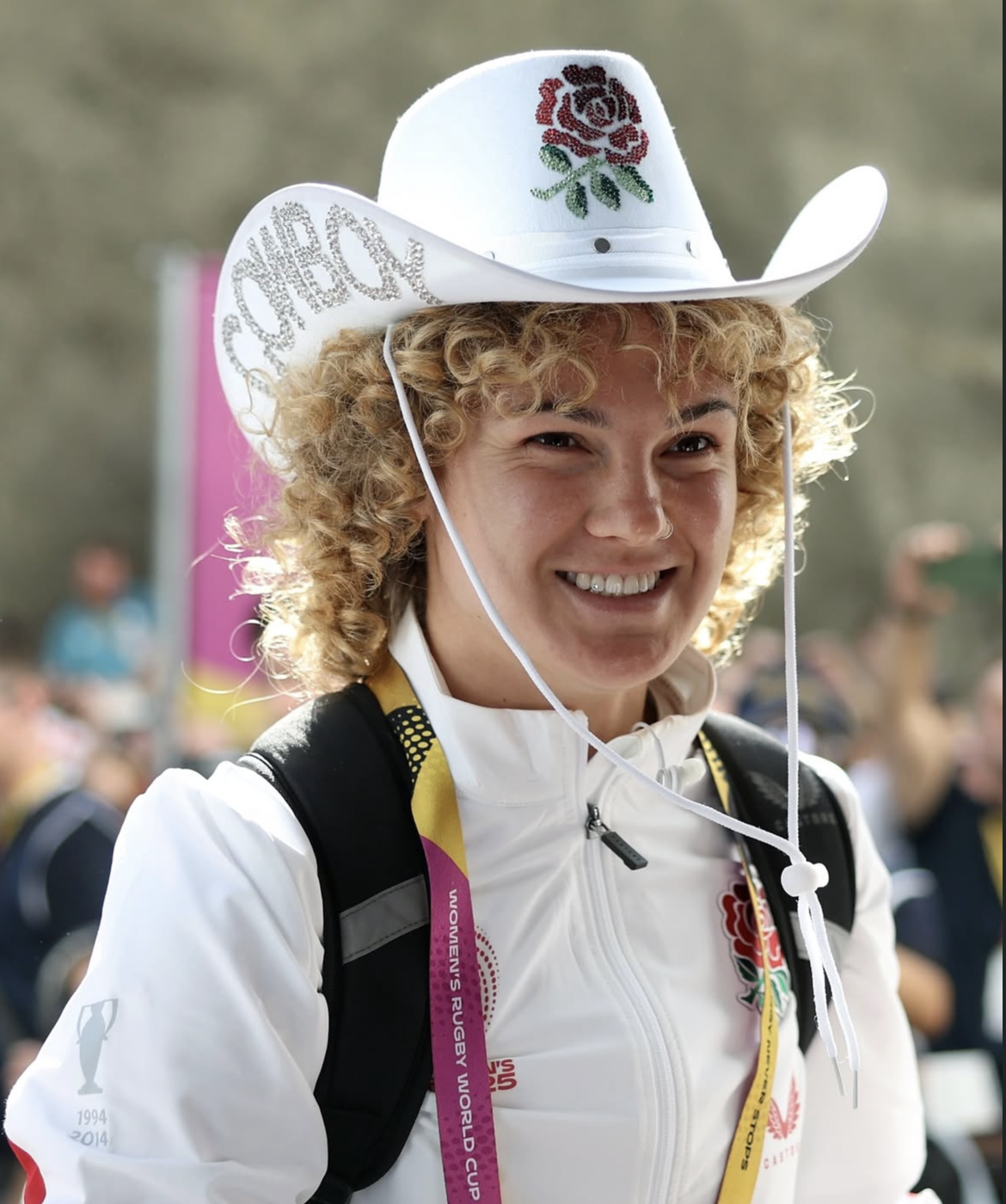
Even five years ago, this wouldn't be a reality. The crowds, the atmosphere, the funding, the calibre of the rugby played. As much as obviously this shouldn't be a novel experience, that obviously the women's game is finally being treated with the respect and gravity that it deserves, it is also easy to forget how amazing all of this is.
This World Cup goes so much further than just who eventually lifts the trophy (which is also the biggest ever by the way). This World Cup is a celebration of everything the sport has ever been, everything it has become and everything it hopes to achieve. As we move into the knockout rounds, and the stakes get higher and higher, the emotion is sure to only increase.
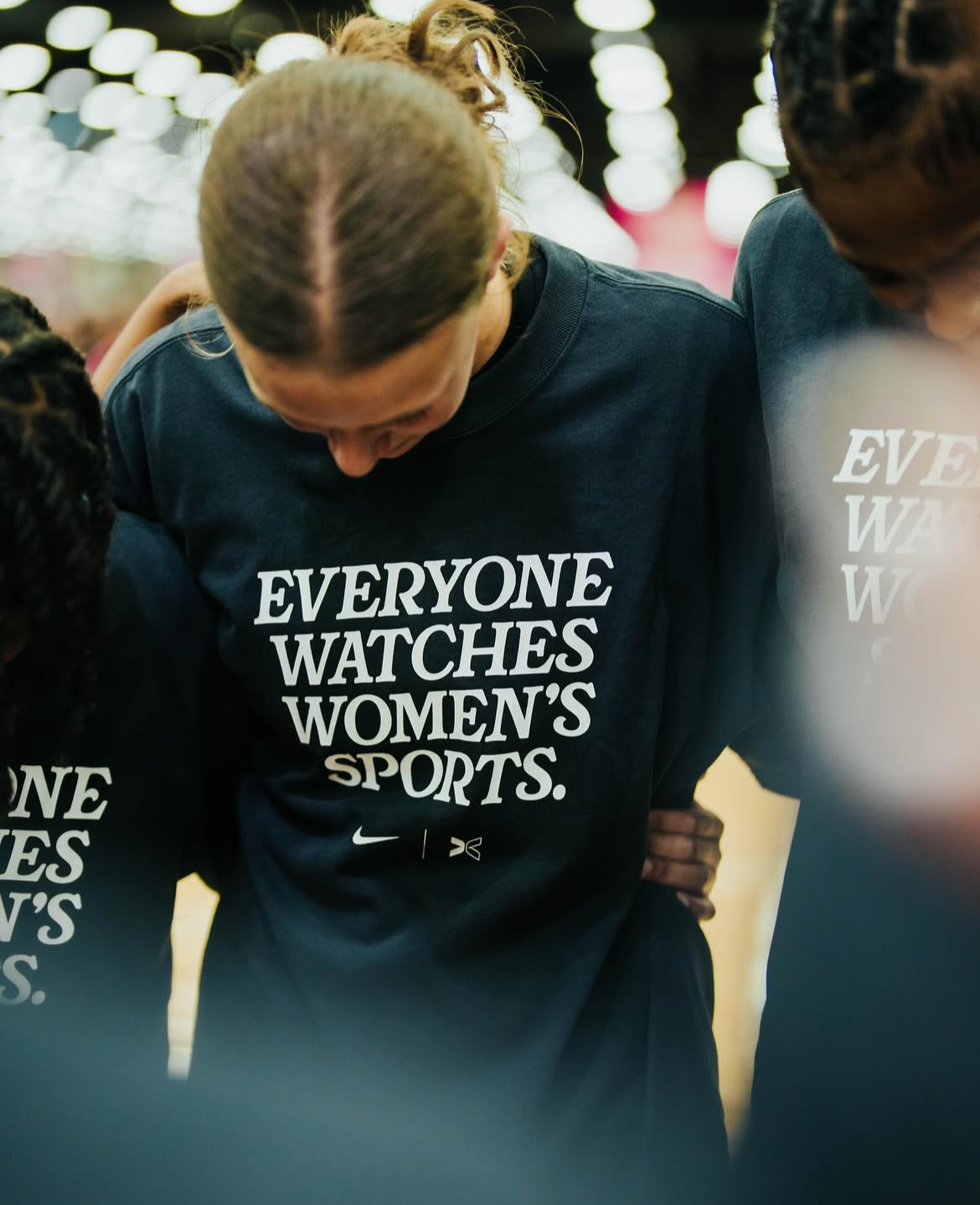
Bristol is hosting two quarter-finals and both of the semi-finals. If you can't get a ticket - an amazing statement in its own right - Bristol Amphitheatre has a huge Fan Zone, replete with big screens, food and drink, and shed loads of atmosphere. It's an event that you don't want to miss - I mean, remember: everyone watches women's sport.
Featured image: Epigram / Emma Griffiths
Will you be heading to Ashton Gate for the World Cup semi-finals?