
By Jenine Althari, Third year, Chemistry
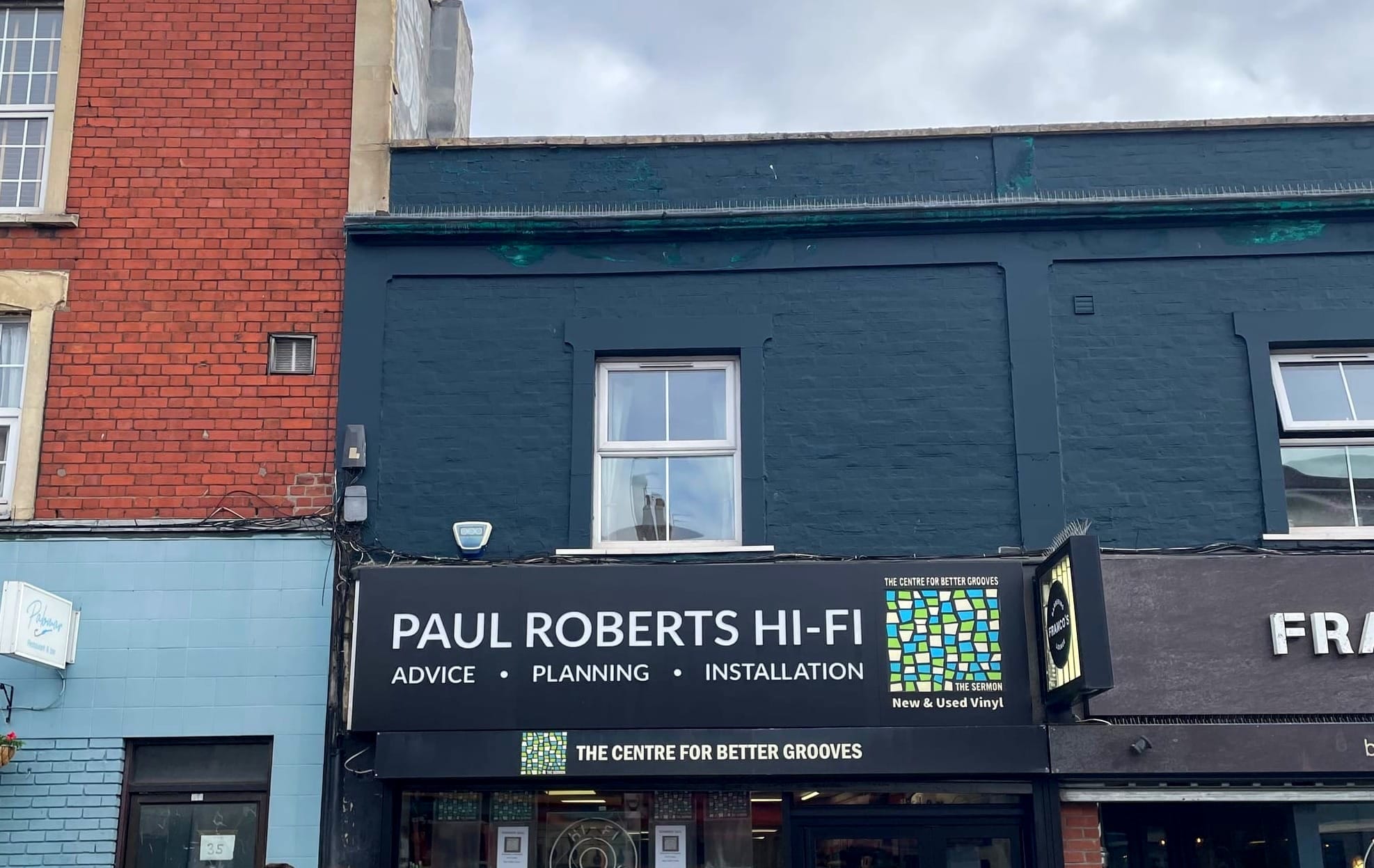
At Paul Roberts Hi-Fi, signed as the “Centre for better grooves”, Paul Verrinder and Gordon Montgomery bring decades of expertise in analogue audio.
When asked about the difference between digital and analogue, Gordon responded not with explanation, but demonstration. He gently lowered the needle onto the 12-inch record, and a soft cackle gave way to This Journey In by The Rebirth. The track filled each corner of the shop- rich and unhurried. And, like the timing of a practiced punchline, Gordon said, ‘I rest my case for vinyl’.
In an era of ultra-clean digital sound, this warmth and presence felt like something we’ve forgotten to expect when listening to music. So, what is it that gives vinyl its distinct sound, and why are more people returning to it?
Part of the answer lies in the difference between how these formats capture sound. Digital audio records sound in snapshots which are quick samples of the waveform, taken tens of thousands of times per second. A standard CD, for example, captures 44,100 samples per second. These points are stored as binary, a series of 1s and 0s, and during playback, the gaps between them are filled in by approximations.
Vinyl, by contrast, doesn’t have missing pieces. It captures the entire continuous waveform as a physical groove, carved directly into the record. What’s heard through the speakers is the needle tracing those vibrations in real time. It’s a continuous signal, not a reconstructed one. Vinyl preserves the full detail of the music, including the subtle dynamics that are often flattened in digital mastering.
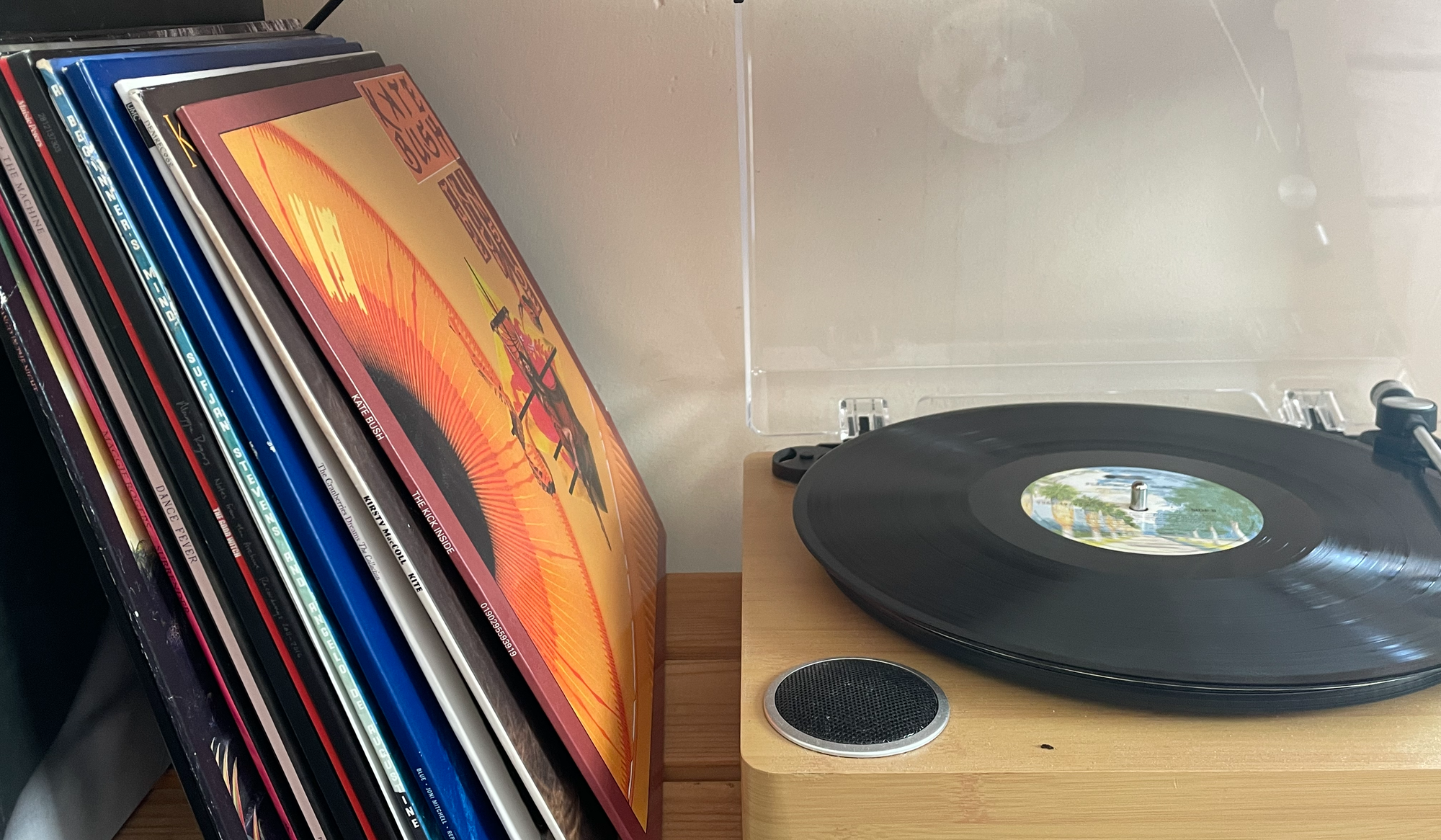
As the record in the shop continued to spin, Gordon highlighted what sets the analogue sound apart: the ability to hear the ‘nuance of the musicians’ and the ‘bends in the notes’ is what makes it ‘feel like we are in the studio with them’. Perhaps that’s what people really mean when they talk about vinyl’s warmth: not just a tonal quality, but the full preservation of the original sound.
Much of what we hear of digital audio is shaped by dynamic range compression- a process applied during the mastering stage to ensure music sounds consistent across all playback systems. Engineers reduce the difference between the quietest and loudest parts of a track, effectively pushing everything closer together. The result is often a louder, more uniform sound, but with less space for subtlety and contrast.
This pursuit of loudness became an industry obsession from the late 1990s, during a period now known as ‘the loudness wars’. Record labels pushed mastering engineers to prioritise volume over detail, hoping louder tracks would grab listeners attention on the radio, or MTV. Nowadays, streaming platforms apply their own loudness normalisation, meaning there’s no competitive advantage in maxing out volume. As a positive consequence, more artists and producers have returned to dynamic mixes that preserve the original feel of the music.
But beyond how music is mastered, the format itself can shape the sound we hear. Even without aggressive compression, CDs and digital files face physical limitations that vinyl doesn’t. A vinyl provides more space for information, while CDs often require that information be squeezed into a smaller area. The more space a format allows, the more closely it can preserve the original depth and dynamics.
To capture this idea, Paul offered a simple analogy: ‘It’s like trying to fit a 30- piece orchestra into a small room. With vinyl, they’ve all got space. With a smaller format like a CD, half the orchestra has to be kicked out’.
This relationship between physical space and sound quality is perhaps most obvious in the 12-inch single, a format designed for clarity instead of convenience. With just one track per side, these records dedicate far more space to a single song. ‘You’ve got just seven minutes of music there’, Gordon explained, ‘so the grooves are wider… it picks up a much better sound’.
That physicality isn’t just a technical detail; it helped define the sound of disco and shape its evolution. In the 1970s, as nightclubs evolved into high-volume, high-energy spaces, DJs needed a format that could deliver punchy sound without distortion. The wide grooves of 12-inch singles made disco possible, allowing for stronger bass, crisper percussion, and deeper dynamic range. “This is where disco became hugely successful,” Gordon noted. Disco was about more than just rhythm, and the 12-inch single shaped both the way it sounded and the way it moved people.
Still, there are more factors contributing to the reemergence of vinyl than just preservation of original dynamics. After all, streaming is instant, portable, and often free. It can be said that vinyl offers deliberate listening in a world of distraction. Records come with a ritual, and the intentionality of the routine slows you down. Alongside this, much of its charm comes from the act of collecting. And unlike streaming, where musical taste is often shaped by algorithms, a record collection is curated- not generated.
It must be said that even amongst vinyl records, not all sound is equal. Gordon pointed out that the same album can vary dramatically in quality depending on how and when it was pressed: ‘In theory, the earlier the pressing, the better the quality’. This is because the original master disc, created from the tape, can only be used to press a limited number of records before it begins to wear out. When new masters are made, slight degradation is introduced. So for collectors, early pressings aren’t just valuable, they often sound better too.
Pressing location matters too, with Gordon noting Japanese records among some of the best. They’re often sought after for their clarity and craftsmanship, the result of high-grade materials and meticulous attention to detail during mastering and duplication. In contrast, some modern reissues are pressed from digital files rather than original analogue tapes, introducing limitations before the needle even hits the groove. And when combined with low-quality pressings or poor care, it’s easy to see where the cackle and hiss reputation comes from. But those distortions aren’t inherent to vinyl. 'Vinyl doesn’t have to have those distortions. When looked after, it can sound like this’, Gordon said, gesturing at the warm sound still filling the space.
The record reached its runout groove, and the case for vinyl had played itself out.
Vinyl’s return isn’t just about chasing better sound; it’s about resisting the flattening of how we listen. In a time when music is often consumed passively, in playlists built by code, the record pushes for something else: attention, care and involvement. Vinyl asks for something from the listener and offers something deeper in return.
Featured images: Corin Hadley