By Beth Nugent, Third Year, Film and Television
The shortlisted Oscar short film takes place in a small unknown town in the south of America. A young couple is curled up in bed laughing and talking about their dreams, but all of that is about to come crushing down when the next day they are on the hunt for the morning after pill. After being rejected from the local pharmacy, the young couple ask a local man to try and secure the medication for them, but this leads to dangerous repercussions…
When talking to director Elizabeth Rao about the inspiration for The Truck (2025), she recalled the moment when Roe v. Wade fell in America and that she ‘had such a visceral reaction’ and ‘realised there’s a universal shared experience that both women and men share of that first moment outside your own bubble of teen love [...] and realise that there’s a larger political force, telling you what to do with your body.’
Without wanting to alienate the other side of the political argument Rao focused on ‘opening peoples hearts’ through a simple ‘day in the life’ format to the film.

The film opens with a soft and playful scene of the young couple in bed. It’s lighthearted and dreamy, surrounding the conversation of Jo's (Shirley Chen) future as a musician. It displays everything puppy love can be, giggles, bright eyes and butterflies. The dialogue is natural and flows easily between the two actors and you feel like a fly on the wall as you watch the pair gaze lovingly into each other's eyes.
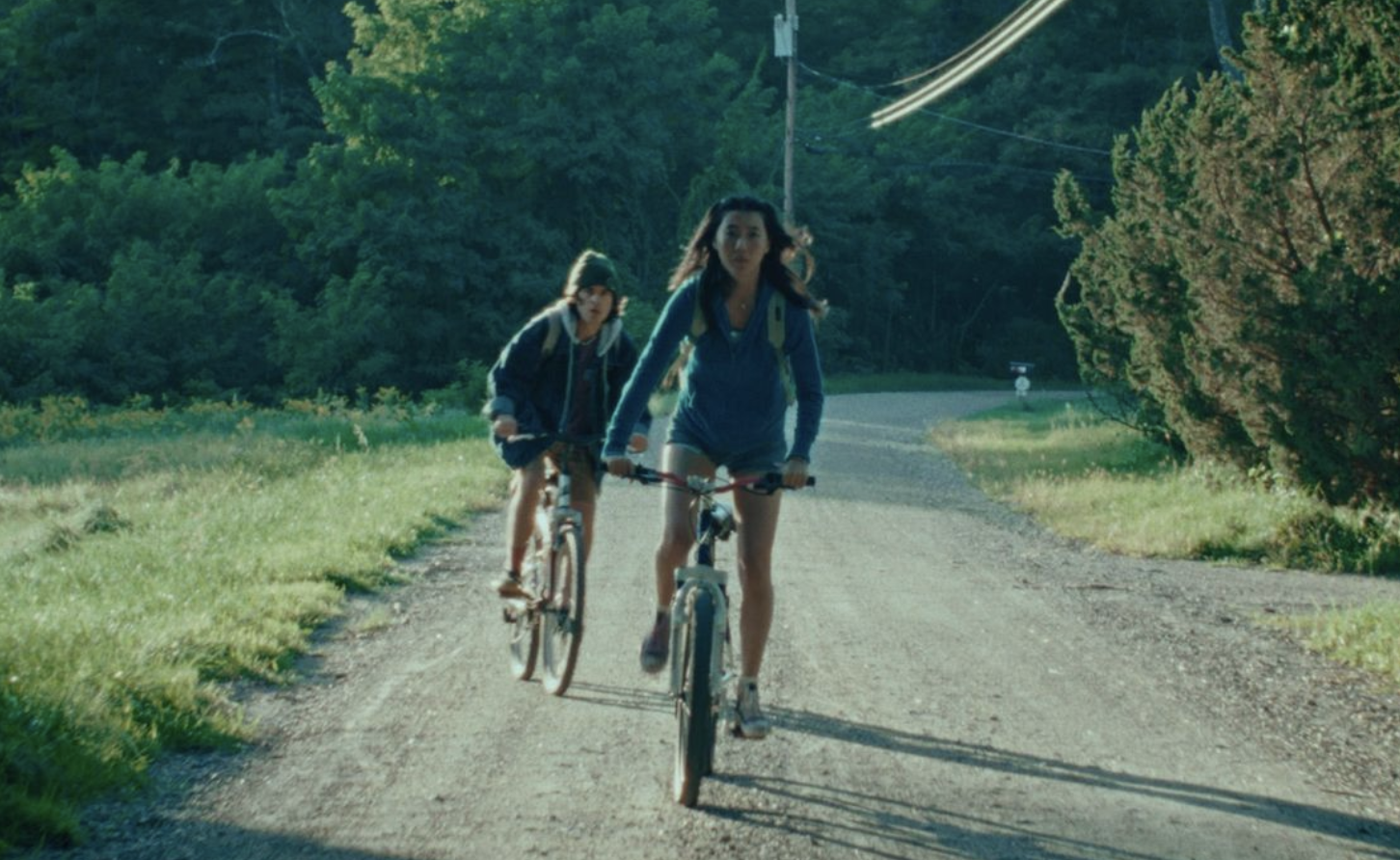
Then a dramatic tonal shift to the next day when Jo and Arash (Daniel Zolghadri) are cycling to the pharmacy attempting to buy the morning after pill. Rao drew attention to these bicycles on purpose in an attempt to highlight how reliant young vulnerable teens are in rural southern America and that they are ‘subject to the adults and the people with vehicles, and those bikes are their lifelines.’
It’s a devastating moment when Jo realises that the only way she can get the pill is by asking someone else to buy it for her. It’s such an exposing moment to witness, as a young girl explains her situation to an older man that it makes you question how this is even a conversation in 2025.

This deal then leads onto the most chilling scene in the entire film. When Mason (Garret Richmond) meets with the couple for the handover of the pill, he insists they get into his truck. Immediately the shots become tighter and the claustrophobia sets in. All three actors do an incredible job at handling the tension in this scene as Mason refuses to handover the pill and instead talks at length about topics that cross the boundaries of appropriateness, and force the couple to convince him how much they love each other.
When talking about that day on set, Rao noted: ‘it was very uncomfortable to experience, but also incredibly playful and explorative [...] every beat they would discover something new, and then that would trigger a different waterfall reaction from the other two.’
The playfulness these actors had when shooting effectively keeps the viewer on their toes when watching. The scene feels unpredictable and at no point can you figure out where it’s headed, which makes for a heart pounding scene.

The colour grading and aesthetic in this film is a purposeful choice. Rao explained that she was cinematically inspired by Wendy & Lucy (2008), and wanted to shoot on 16mm film, but without the budget to support this equipment, they had to replicate it through grading and location. This choice was made to achieve the feel that this world was ‘something between a memory and a kind of commentary on the idea and the image that we have seen coming out of America.’
Highlighting the blues and greens in the location was also an effort to ‘contrast between being a vulnerable young person in a very stark and harsh and maybe a little bit wild landscape of rural America.’
 Georgiana Watt
Overall, the film was a stark reminder that when Roe V. Wade fell, it was just the beginning of the politicisation of women’s bodies and the significant danger they are now facing from just wanting basic healthcare.
Rao did an incredible job at presenting this harsh reality by allowing the camera to be quiet and just observe, encouraging the viewer to make their own mind up.
Featured Image: Elizabeth Rao / The Truck
You can follow along on The Truck’s journey through their website thetruckfilm.com
Again, Epigram is appreciative to Anthony Hon and Elizabeth Rao for this interview opportunity.