By Charles Hubbard, Second Year, Theatre & Performance
I’m afraid Edgar Wright might be cooked. That might be an incendiary statement (and one that seems to entirely contradict the logline of this review) but I’m afraid it was the lasting impression I was left with when walking out of the notoriously quirky, Bournemouth-born visual stylist’s latest work. I was marketed as a comforting and triumphant return to making zippy, kinetic thrillers after flopping so hard with his disastrously misguided Last Night in Soho (2021). I instead got a reminder that Wright may not ever be able to make a film as good and light on its feet as Shaun of the Dead (2004) ever again.
If he is only able to pull a seven out of ten movie from a sure-fire premise such as this, what hopes can we have for his future, potentially more ambitious projects? Wright seems to be one of those unfortunate directors whose films have only suffered with larger and larger budgets, placing him alongside the likes of Tim Burton, Robert Zemeckis and James L. Brooks. It’s as if, with so many eyes on him and the expectations of providing a big win for a major studio resting on his shoulders, Wright has buckled under the pressure and been forced away from what made his earlier films so special. More than that, The Running Man sees Wright make his first foray in the realm of angry, righteous political satire and, if the quality of his work is ever to improve again, we really need to get him out of there as soon as possible.
The film is based on the 1982 Stephen King novel of the same name (published under the pseudonym Richard Bachman), which is ironically set in the very year we’re currently living through - a dystopian hellscape indeed. Ben Richards, a good-hearted but constantly livid factory worker (a magnetically rage-fuelled Glen Powell) looking for the best way to afford medicine for his sick daughter, reluctantly signs up for The Running Man - a seemingly suicidal game show in which the contestants have to survive a whole month of the run with the entire country hunting them down.
As Richards continuously evades death to the thrill and vitriol of the viewing audience, he begins to wonder why the show’s producer Dan Killian (Josh Brolin) keeps such a tight grip on the way it operates. If you picture a crossover between The Hunger Games (2012) and Minority Report (2002), you’re already most of the way there. You can’t blame Wright for trying his hand at this narrative framework, especially since it had already been done so poorly by the 1987 adaptation starring Arnold Schwarzenegger. Unfortunately, his script, co-written with Scott Pilgrim’s Michael Bacall, is at once too safe and too overwrought.
The main problem here is that Wright has never been a particularly political storyteller. If anything, his films feel strangely conservative despite all the blood spilled. They’re mostly about downtrodden white guys pulling themselves up by their bootstraps, saving the day and getting the girl - a picture-perfect fantasy of whitewashed individualism. So why did he think that taking on such a fundamentally Marxist text was a good idea? The script certainly pays lip service to ideas of class solidarity, inherently evil conglomerates and the negative impacts of a privatised police force and yet does so with a winky half-heartedness, forcing it to take a back seat to Wright’s crowd-pleasing instincts.
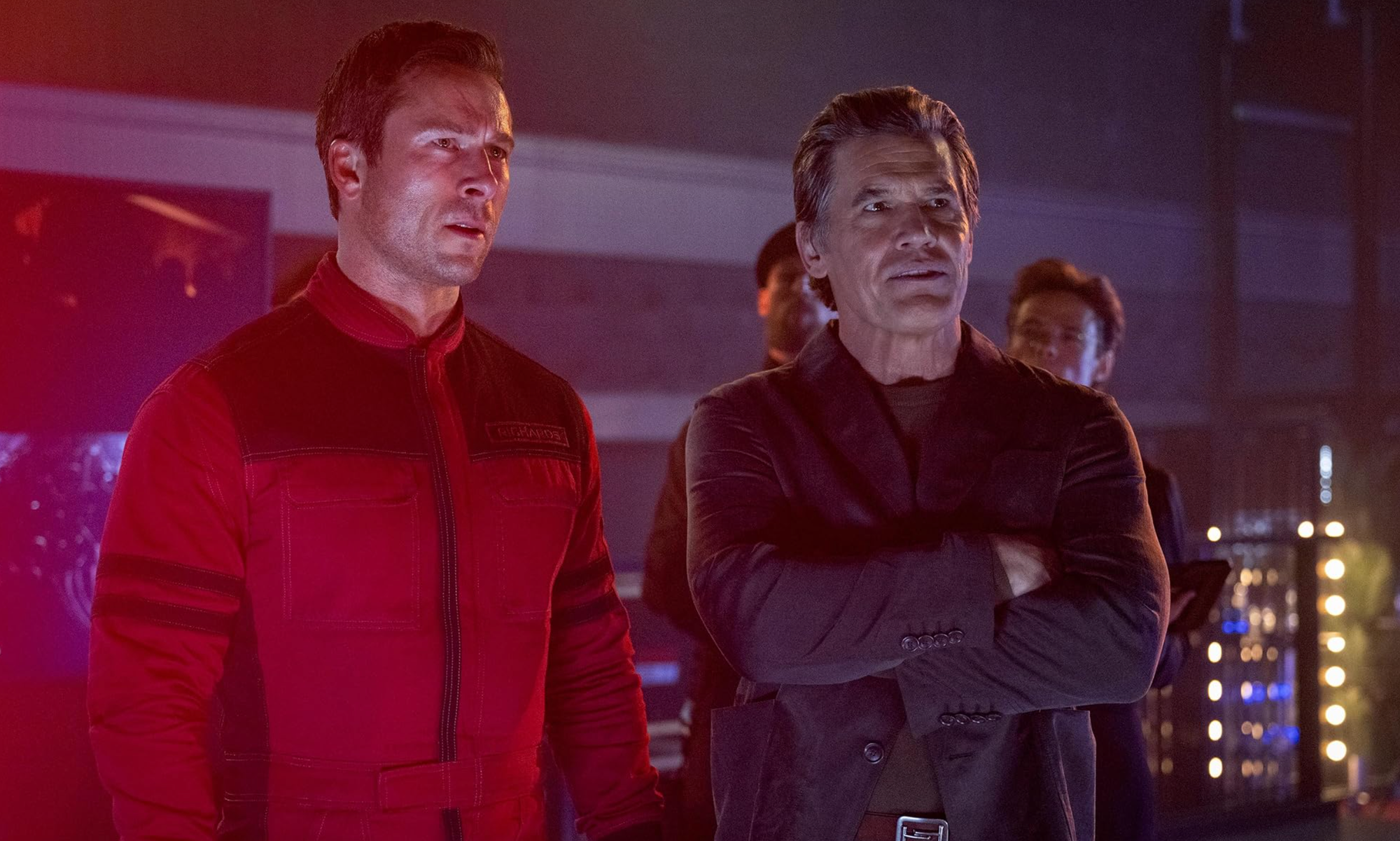
This material needed a filmmaker like Paul Verhoeven or Brian De Palma - directors who understand the perverse pleasures of lurid violence and collateral damage but with a knack for making the audience feel icky at how much fun they’re having. Unfortunately, Hollywood won’t touch those guys with a ten foot pole and Wright isn’t quite on their level. His control of the tonal dial is also all over the place, which is frustrating considering how seamlessly his collaborations with Simon Pegg manage to switch from horror to comedy at a moment’s notice. Many scenes played with po-faced sincerity elicited sniggers from my audience, while other clear attempts at humour played to deathly silence. It’s often impossible to tell whether Wright wants us to take the events depicted seriously or not, which is a real drawback for a film that seems like it desperately wants to say something coherent about our current political and socio-economic moment.
The film is also rather light on Wright’s usual visual and textual tricks, be it repeated snippets of dialogue, flashy scene transitions or synchronisation between music and editing. However, since his over-reliance on such elements managed to squeeze any humanity or gravity out of his 2017 heist thriller Baby Driver, maybe it’s best that he left the box of toys undisturbed this time. Despite all these problems, the film still moves with a gripping, breakneck pace, largely due to a career-best turn from Glenn Powell, who dials down his devil-may-care charm from Anyone But You (2023) and Twisters (2024) and replaces it with an almost Jack Nicholson-esque anger and intensity.
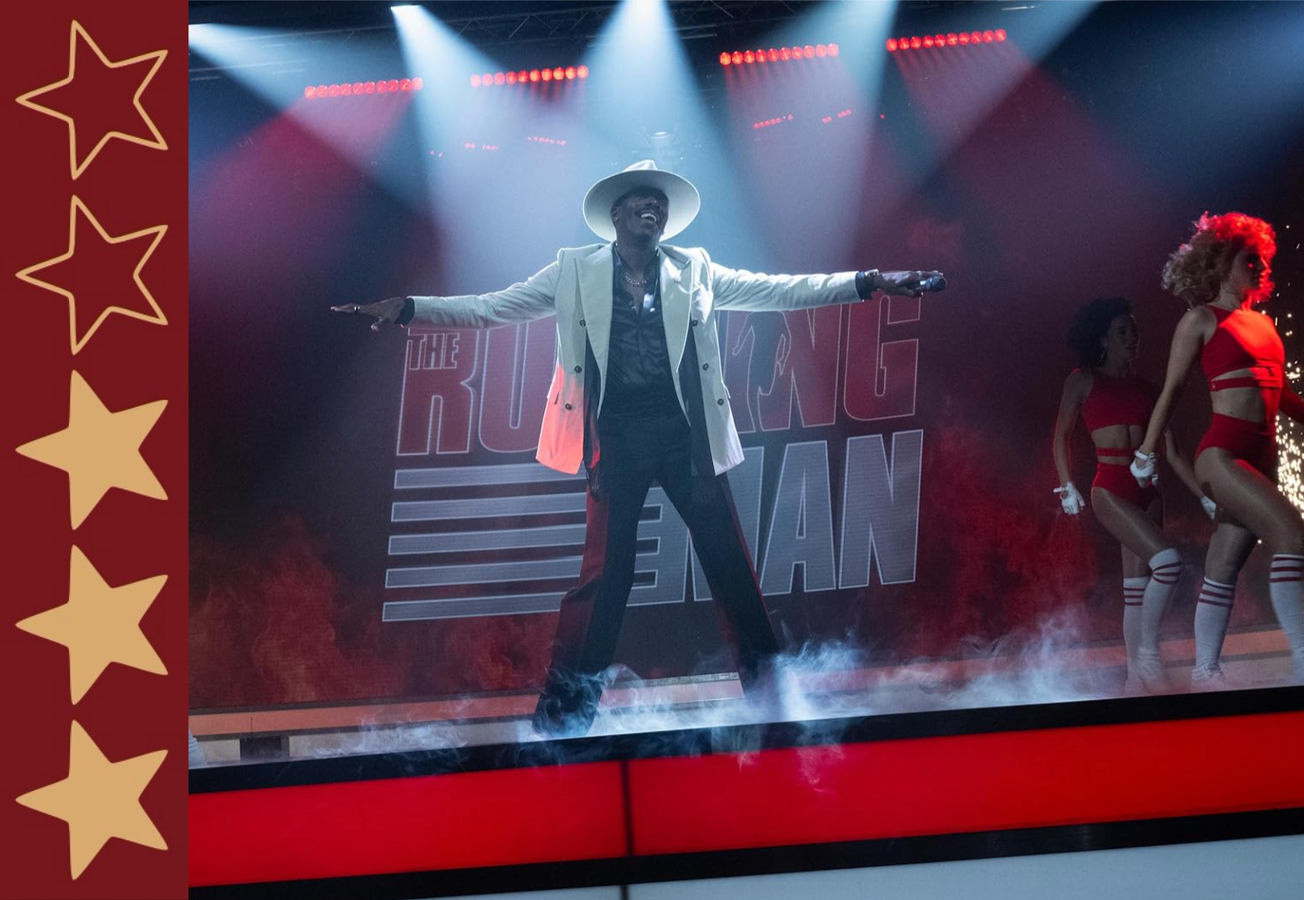
It confirms, along with his performance in Richard Linklater’s Hitman (2023), that all Powell really wants to do is dress up in funny wigs and do silly accents. Get him on a comedy sketch show! Josh Brolin is giving you his regular as a clearly evil TV producer but it’s hard not to be enraptured by his gravelly, baritone voice, even when it’s spouting some pretty tin-eared corporate satire. Colman Domingo, best known for understated naturalism in Rustin (2023) and Sing Sing (2023) (both of which earned him Best Actor nominations) is unexpectedly great casting as Bobby Thompson, The Running Man’s flamboyant and duplicitous host.
 Harry Gillingham
If you like well-constructed action scenes and Glen Powell’s gorgeous face, you’re basically guaranteed to have a good time. Wright still stages wild, bombastic action sequences as well as anyone in the business and there’s plenty of fun to be had with the deep supporting cast. But I can’t help feeling like Wright is applying his considerable skills to the exact wrong projects. Part of the magic of Shaun of the Dead and Scott Pilgrim vs. the World (2010) is that they felt entirely unburdened by any notion of pretension or importance.
It’s a shame that, if Wright was to make those films today, they’d probably cost twice as much and end up half as good. I’m still excited to see what he does next (the man’s still young and no doubt has another few decades in him) but I worry that the joy and excitement of seeing his name get attached to a project languishing in development hell will never be recreated.
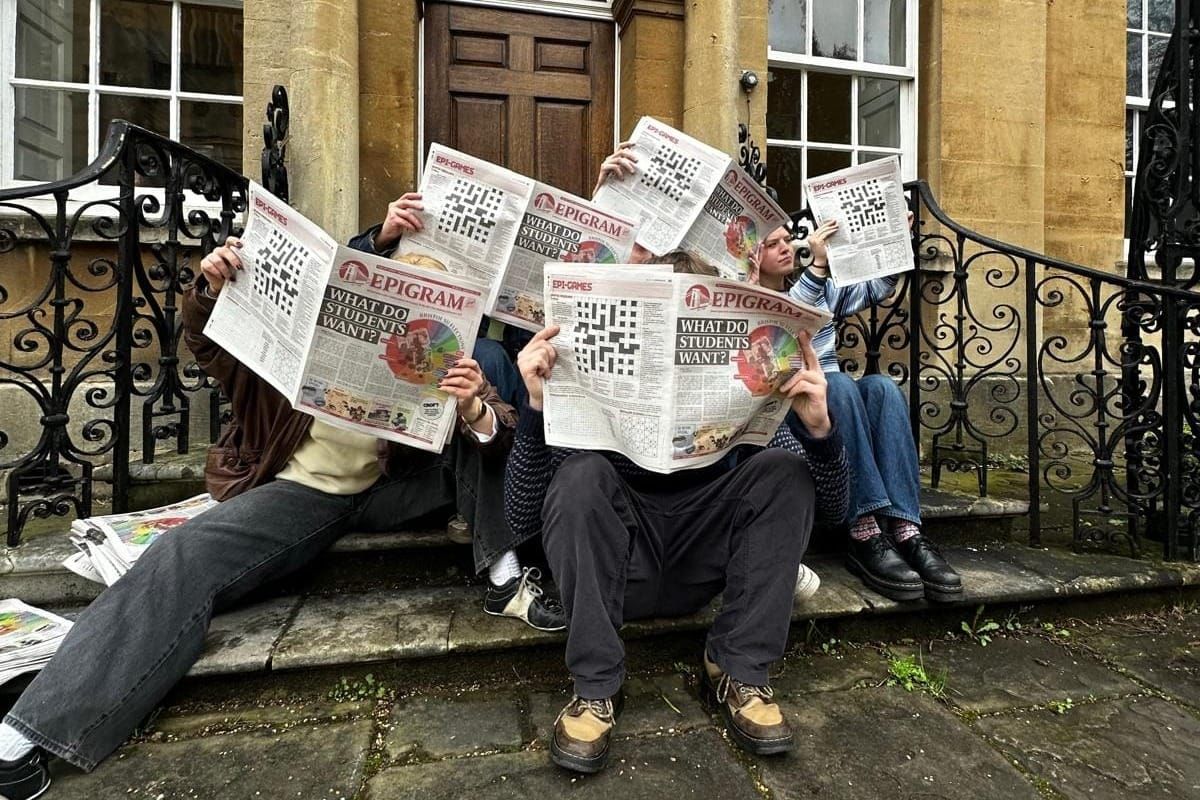
Featured Image: Featured Image: IMDb / Charles Hubbard | Illustration by Epigram / Sophia Izwan
Will you be running to catch Edgar Wright's flick when it comes on streaming?