By Disha Angadi, Features Subeditor
A note on Renter’s Digest: kicking off Epigram's Renter’s Digest launch on November 1st, we are concluding Break the Mould to expand our fight beyond housing conditions to the trials and tribulations of renting as students. You can expect to read advice for first time renters, where to live to combat rising house prices and ways that you can hold your landlord (legally) accountable.
After much deliberation, the Renters' Rights Act came into force on 1 May 2026, acting as a ray of hope for tenants who have been struggling with issues relating to mould, undue eviction and sudden construction notices. It is a piece of legislation which evolved directly from modern public protests and long-standing strikes. So, now, the key question is, what does the Act really do for tenants and more specifically, what does it do for student tenants?

Bristol, an evidently student dominant city has been at the forefront of controversies surrounding poor housing - from extreme mould found in lettings, periodic issues with maintenance, to lack of compliance from Landlords. New data found by the Bristol Live provides that Bristol is the ‘worst place to live’ in the South West and rightfully so.
Chapter three of Part 2 of the Renters' Rights Act, 2025, introduces a welcome change and potential bandage to improving the dysfunctional housing conditions found in Bristol. It introduces the setting up of a private rented sector database.
This provision carries with it three major benefits. Firstly, it provides for improved accountability on part of Landlords - it makes certain that a clear record is kept for every property a landlord chooses to let. Secondly, it promotes improved transparency for tenants, especially student tenants. Tenants would now be able to check whether the property they intend to rent is registered following the set protocols and whether the landlord is in breach of any of the provisions via the database. Lastly, the mandatory advertising rule which states that a property cannot be advertised without due registration ensures that the amount of frauds can be minimised.
What does a private rented sector database (PRS) mean?
It is crucial to note that the name of the database has been changed to "Register your rented property” service. Section 75 of the Act provides that it is a database containing entries made by persons who are or intend to become residential landlords of properties they intend to let i.e. 'residential tenancies'. It requires that every residential landlord must create a Landlord Entry (free of charge) and a separate Dwelling Entry for each individual property they let.
As provided by the Independent Landlord, the PRS will be launched on a rolling basis from 15th December, 2026 onwards. It will cost £65 for landlords to register each property on the PRS Database, and they will need to renew their registrations each year and pay the £65 fee each renewal. It requires that by 14th November, 2027 all rental properties in the scope of England will have to be registered.
As provided by section 91, the penalties for non-compliance range from £7,000 for a single breach to £40,000 where a landlord gives the Database false or misleading information, or for a continuing breach. The amount will be set by the local authority contingent on the nature and severity of the breach.
What do student tenants stand to gain from this scheme?
- If a landlord provides misleading information regarding a property, you have the power to report them to the Council and they will be held liable under the Act.
- You receive strengthened protection against rogue landlords via the digital tool that tracks private landlords and letting agents who have committed serious housing offences. However, this remains a government tool and you will need to contact the Council to access it.
- With stronger local authority enforcement, you can be assured that the Councils can spot unregistered or unsafe student houses much faster. Thereby, preventing frauds from some malicious landlords.

What do student tenants potentially stand to lose?
- The categorisation of your housing dictates whether this provision applies to you or not. This Act applies to standard private rented flats but not to University Halls and Purpose Built Student Accommodation (PBSA).
- It remains unclear when public access will be permitted, you may be disadvantaged but be left without redress until the database opens up for all in late 2027.
- Since the database requires landlords to pay a fee for every property, this add-on bleeds indirectly into the rent charged to you (in one way or another).
It may seem that the Renters' Rights Act adds undue complexity to an already unravelling housing market but it does contain the power to better regulate and check landlord’s actions in relation to property and tenant management.
 Annabelle Minnis

 Evie Greville

But, as it is with student housing, nothing is ever completely black and white. Only time and the practical application of this database will tell whether this provision improves or dampens the debilitating housing conditions which students are forced to face today.
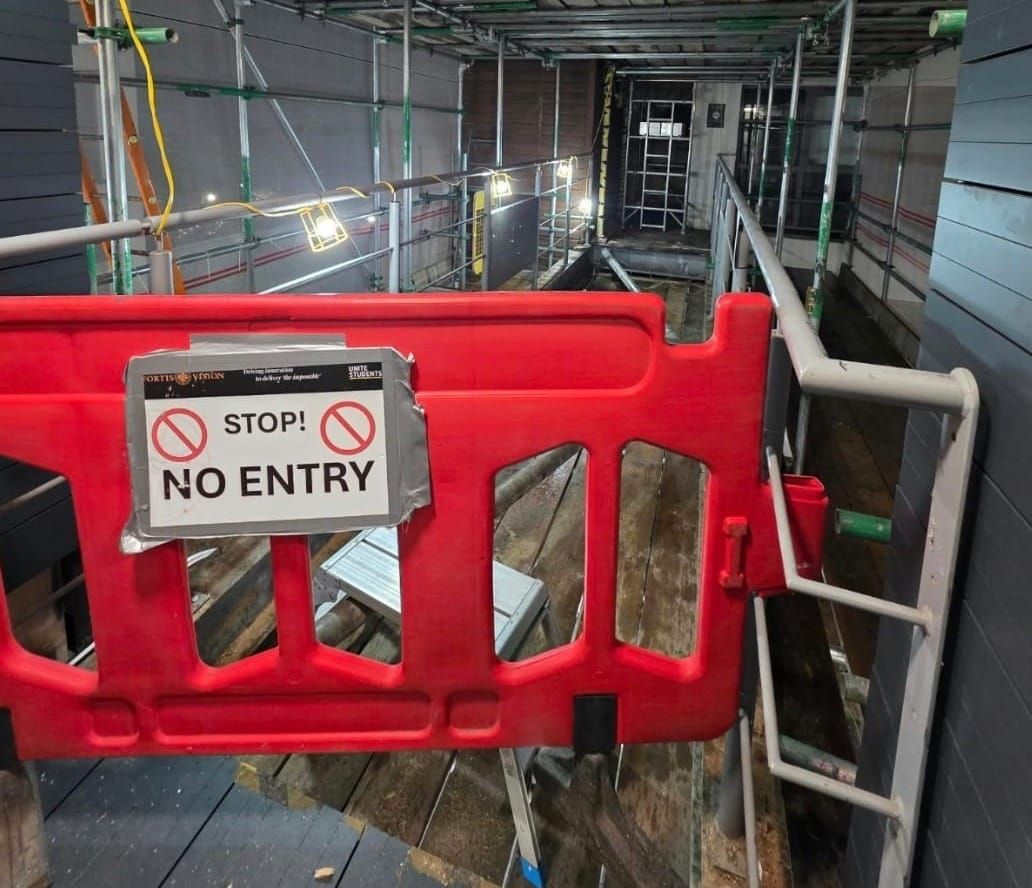
Featured image: 'Sudden construction in Bristol student accommodation' | Epigram / Disha Angadi
Do you think the PRS will benefit student tenants?