By Scarlett Smith, First Year Spanish and Portuguese
Imagine a walk to your university. Your walk to get some groceries from Lidl. Your flat shopping trip to Cabot Circus. It’s summer, and on the way you have the option to walk through a small park. Someone has stopped walking their dog to watch a butterfly float between the white and yellow flowers. An elderly couple sit on the bench, watching bikes whiz past behind the row of planters. You take off your headphones, and you can hear a tiny hoverfly pass by your ear.
This slice of paradise was - and could be - the reality of Bristol’s city-centre.
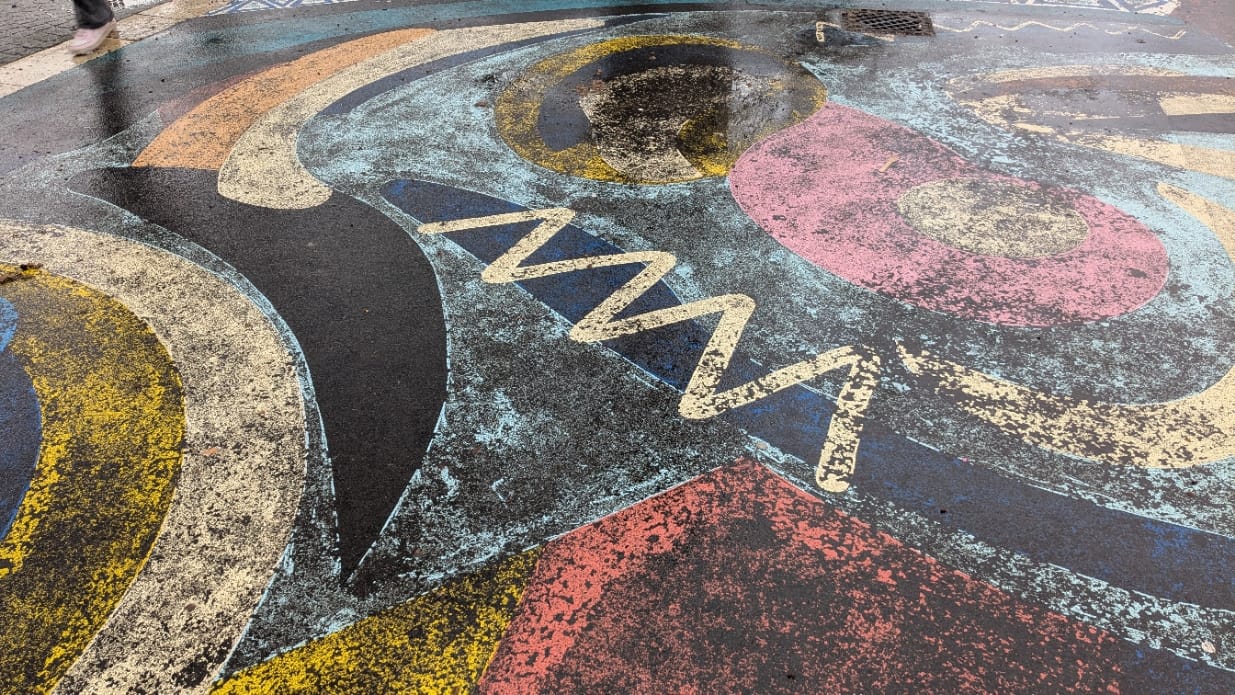
The deterioration of Bristol’s city centre mural has been ridiculously, and disappointingly, quick. Bristol City Council cite ‘an unforeseeable technical issue’ as the reason for its demise, despite using ‘specialist road line marking paint’. The mural Our Common Ground is part of a wider plan to replace ageing fountains with artwork, and to install repaired paving alongside trees and flowers. The reality of this change is, frankly, depressing. We have not yet received the pollinator-friendly artistic paradise that the council’s website promises. Despite this, looking back at the history of this small slice of ground, its potential is clear. Throughout the 1940s into the 1970s this area was a neat green garden flanked with decorative plants. Could a return to this preserve some peace between the storms of e-bikes and scooters?
Even the smallest of wildflower patches can benefit pollinators. A mixture of native and non-native plants ensures that wiry local flowers survive for generations of harsh winters, while decorative foreign plants provide blossom all year round. With their choice of daffodil planters and the aim to install the purple-flowering Judas trees, Bristol City Council intend to head in this direction. When these trees outgrow their planters, however, thy are sentenced to be hacked up when they inevitably outgrow and damage their planters. These planters around the edge of the mural are designed to stop vehicles driving over the artwork, but couldn’t these be used for even more wildflowers or smaller plants that are more suited to a small space? A return to a lower-level garden-style green area seems undoubtedly a more sustainable solution. Aside from environmental benefits, the most noticeable impact will be how we experience this space day-to-day. Our Common Ground was a beautiful mural celebrating the city’s diversity. But with instillation costing £61,000, I doubt this investment will be worth it. Despite being a space for all to enjoy, its flaky and waning paint is not creating an inviting environment.
As spring leaps into full force, around the university we get to enjoy beautiful and diverse green spaces; isn’t it the royal fort gardens we flock to as soon as there’s a whisper of sun? Shouldn’t everyone have access to a space like this? While the city centre can’t afford the scale of green space of the Royal Fort Gardens, we should not underestimate the impact of these mini paradises, even small ones, on our wellbeing.
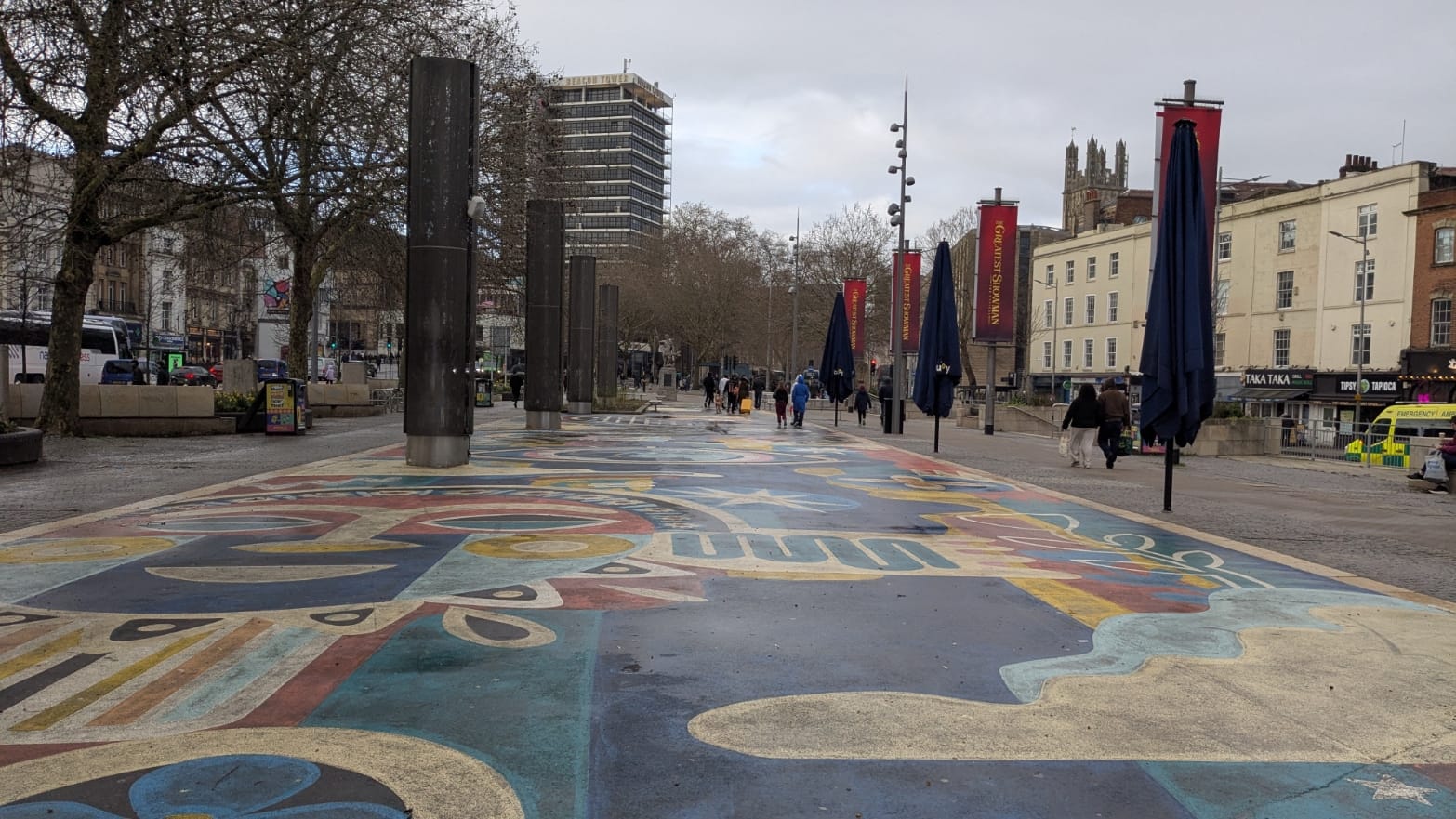
We should not go back to the tightly cropped and sterile grass that covered this area in the last century. However, I can’t help thinking that they did get something right. Even with mural maintenance in the works, will we actually get to enjoy this public space? I propose that this space be used once again as a small public park. With the amount of footfall the area gets (alongside the constant, viscous bike tires), a completely green space would get immediately uprooted and muddied. Saying this, having a focus on low-level planters full of diverse, colourful flowers is completely achievable. Perhaps even small patches of grass could be incorporated. This could leave space for a smaller, central, artwork. This would not only be less costly to maintain but even more complimentary to the, now colourful, surroundings.
 Lola Nelson
The potential of this area is clear, but I question how beneficial a mural like this for Bristolians, despite its good intentions. This city is full of beautiful public art, but wouldn’t we benefit from a real Common Ground? A free and green ground. Accessible, central, and for everyone.
Featured image: Epigram / Scarlett Smith
How do you think Bristol's city centre should look?