
By Jemima Choi, SciTech Co-editor
It's finally time to bring academic research into the 21st century. Gone are the days of error messages, desperate email chains and tedious approval requests. Source is a brand new marketplace for researchers and students, aiming to make knowledge accessible for everyone across the globe.
For those of you lucky enough not to know, obtaining research online is an absolute nightmare for three reasons. Near and far, arts and science collections are only fractionally digitised. In fact, it has been estimated the UK National Archives has only digitised less than 10 per cent of its collection. Now consider what content is selected to be put online, and the fear that smaller archives, less mainstream or well-known content face greater funding challenges and are simply not prioritised, leaving less popular material underrepresented online. This is certainly the case for vast collections outside of the Anglosphere, where papers stay untranslated, offline, and unreachable to the rest of the globe. Indeed, how can research advance without inputs, repeats and rebuttals from all perspectives? The disparity is clear, and the barrier to foreign researchers unvaulted. Until now.
The premise
In the first instance, a researcher might use the Source's search feature to find their desired article.
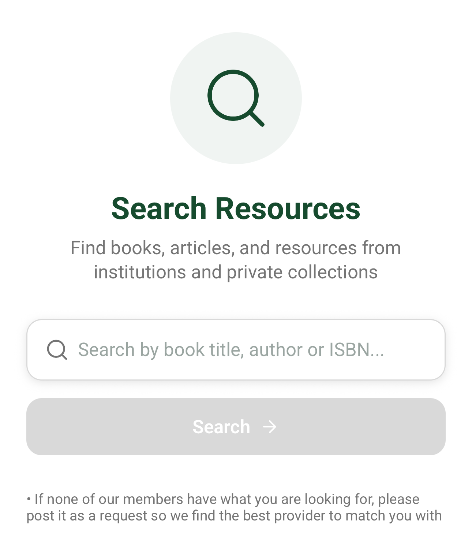
If unsuccessful, users then have the option to post a ‘global research request.’ You'll be matched with a verified user (hinge who?) and they'll provide you with the access you need. There is no niche too small or complex; Source App offers a bespoke research service for complex and specialised requests, where a team will work with you to find the right approach within two to three working days.
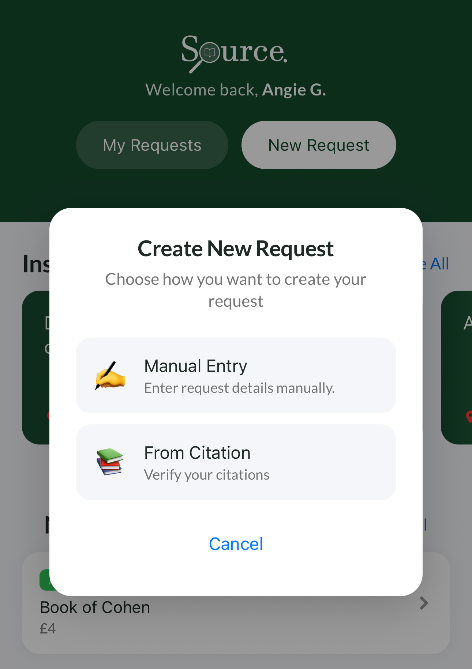
Verified users can list any books, journals and materials kicking around that they own, setting their own prices and earning money for their time. This is done under fair dealing exceptions for research and private study, not for general publication or redistribution.
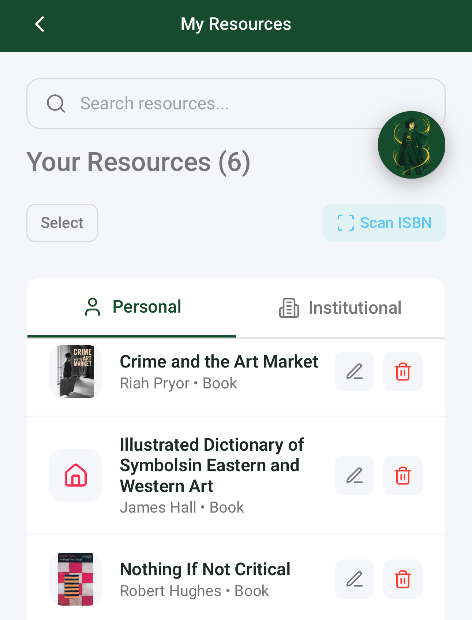
Et voila! Rarer collections brought to the light. Hunter-gatherer urges satisfied. A first is in sight.
About the founder: Angelina Giovani-Agha
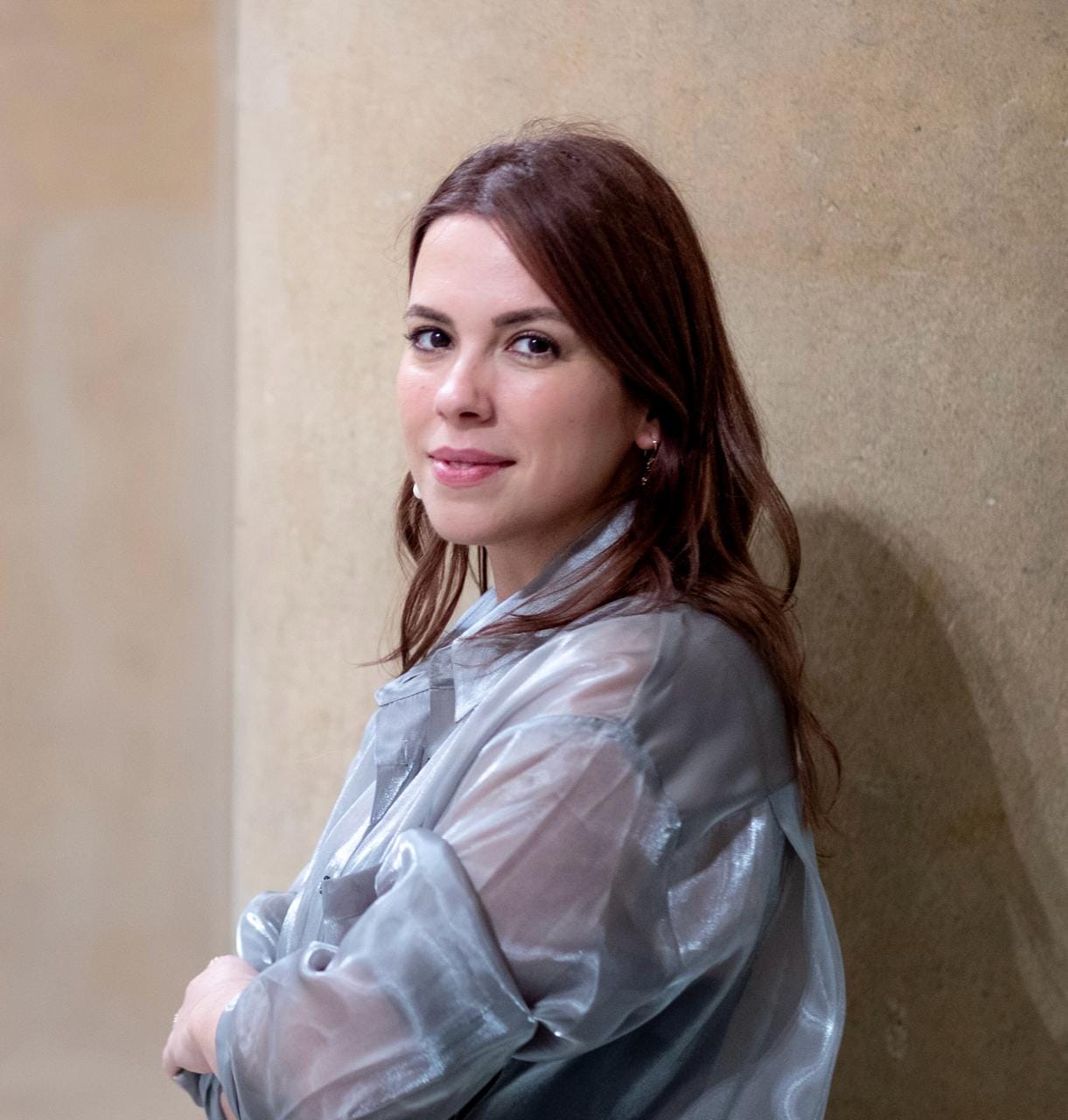
‘Source is intentially counter-cultural: while the world races toward AI-generated answers, we connect the people [...]’
Based in London, Angelina Giovani-Agha is a well-established art historian and provenance researcher revolutionising ethical collecting. Her firm, Flynn & Giovani Art Provenance Research has supported major research institutions such as the likes of the Musée d'Orsay. Having guest lectured at the Courtauld, the Victoria and Albert Museum, Sotheby's, Christie's and more, she stands as a key figure in the ever-transitioning research sphere, embracing thorough academic rigour in a world of AI shortcuts.
‘I built Source because I need it. Archives across Latin America, Russia, the Balkans, and Asia hold vast research that exists entirely offline, catalogued only in their original language. This is often an insurmountable barrier for foreign researchers, but not for those already there,’ says Ms Giovani-Agha.
With regards to AI, she notes ‘Source is intentionally counter-cultural: while the world races toward AI-generated answers, we connect the people who need information with the people who can simply walk in and get it. None of them hallucinate.’
With diss season finally upon us, perhaps now is the time to give these tools a try. Work smarter (and ethically), not harder- right?
Source App is now available on IOS and Android. Not a paid endorsement.
Featured Image: Source