By Simren Jhalli, Second Year, Comparative Literatures
Spike Island opened its doors to its autumn expedition this September, showcasing the striking and contemplative works of Nour Jaouda, Matters of Time and Dan Lie, Sleeping Methodologies. These site-specific installations each explore themes unique to the artists, offering visitors moments of reflection and immersion.
Nour Jaouda’s work reflects her own sense of living between London and Cairo, suspending sculpture and painting in a state of limbo. Her exploration of cultural identity draws inspiration from Khayamiya, an intricately patterned textile that is created through the ancient craft of appliqué, traditionally used to line the interiors of ceremonial tents.
'These messages create transcendent spaces of mourning'
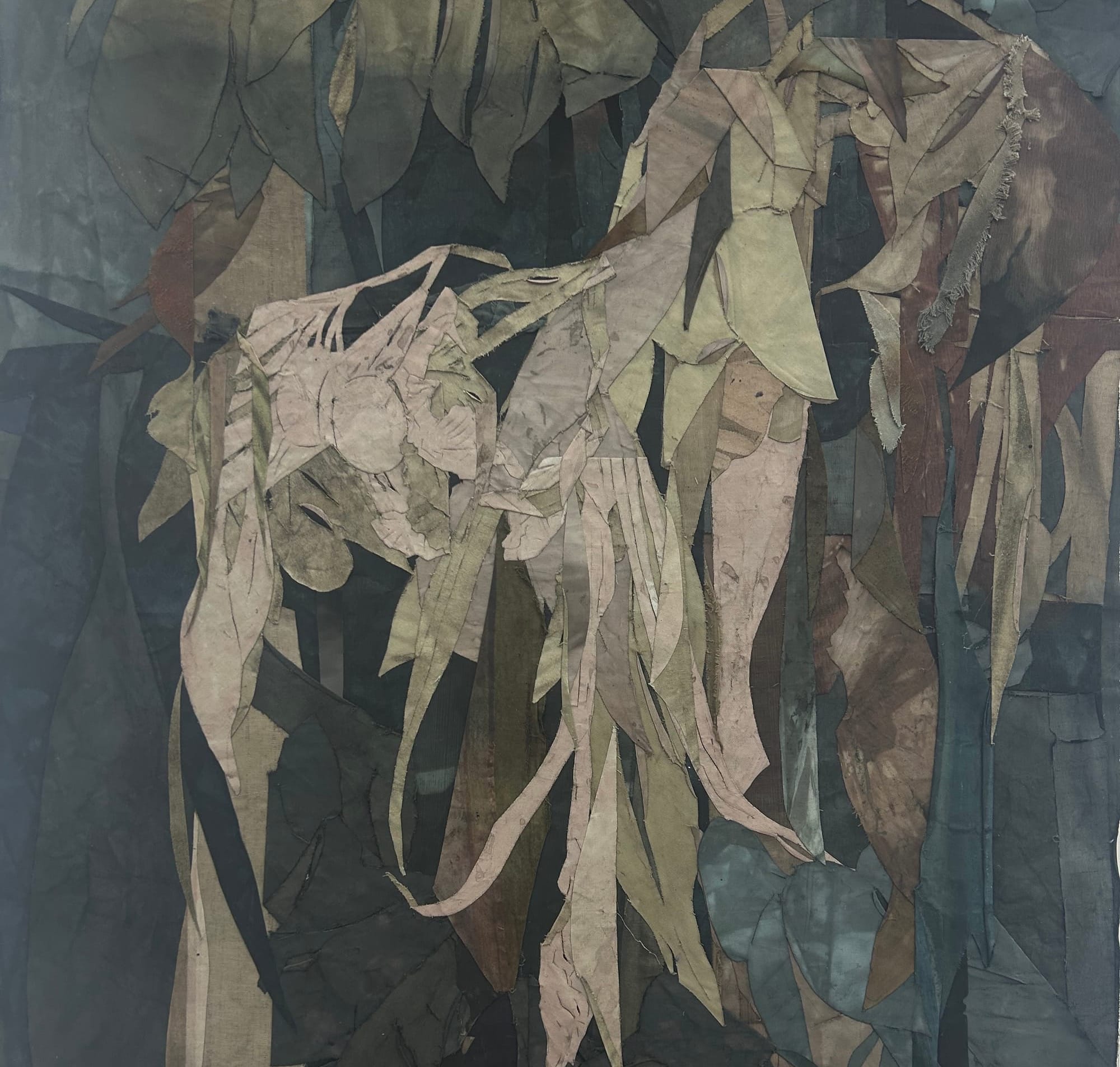
Jaouda describes her installations as 'landscapes of memory,' intertwin1ing the permanent with the ephemeral. Visitors first encounter remnants of the work, textile offcuts draped along a suspended rail, before entering the main display. These fragments were created in collaboration with Cairo’s tent makers in Darb al-Ahmar, who hand-stitched patterns based on Jaouda’s drawings using cloth she hand-dyed with natural pigments sourced from local markets. The motifs summon images of disappearing or absent landscapes; gardens and trees erased by Cairo’s development, and plants like the olive tree and iris that carry enduring associations with heritage and loss in Palestine. These messages create transcendent spaces of mourning. Bronze chairs, scattered through the space, ground the installation with a sense of weight and permanence, nodding to the social life of the city.
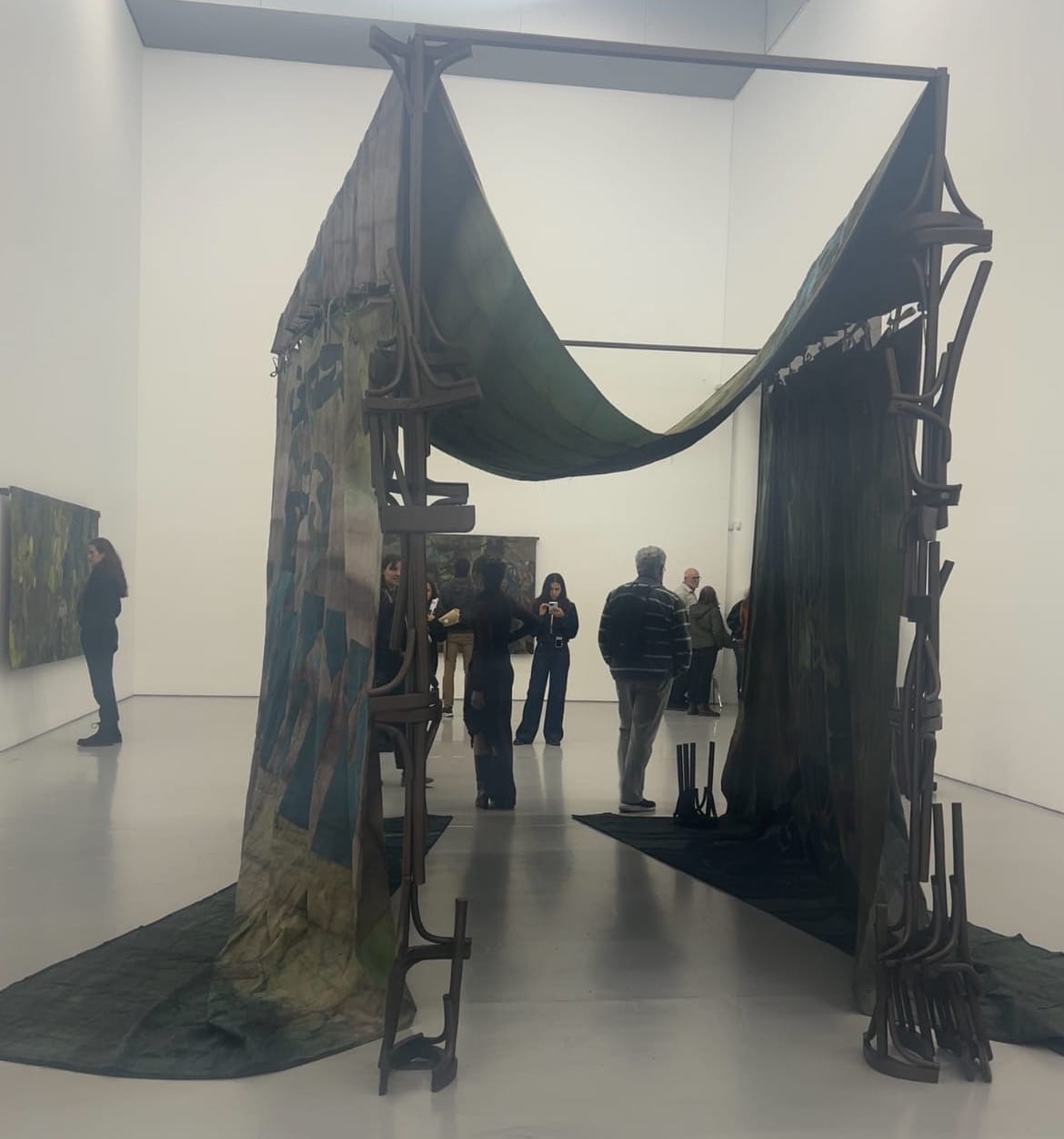
At the heart of the exhibition stands The iris grows on both sides of the fence (2025), a canopy pitched in the centre of the room. This aimed to mimic the historical purpose of Khayamiya which was used to line ceremonial tents for weddings, funerals, Ramadan iftars and other gatherings, typically combining as both ornamental and shelter. The faded, patchwork colours result from a slow, deliberate process of folding, rubbing, and erasing, reinforcing the theme of impermanence. Loose threads and frayed edges suggest that each piece is part of a larger, unfinished whole. The installation invites visitors to linger, gather, and create a momentary sense of community.
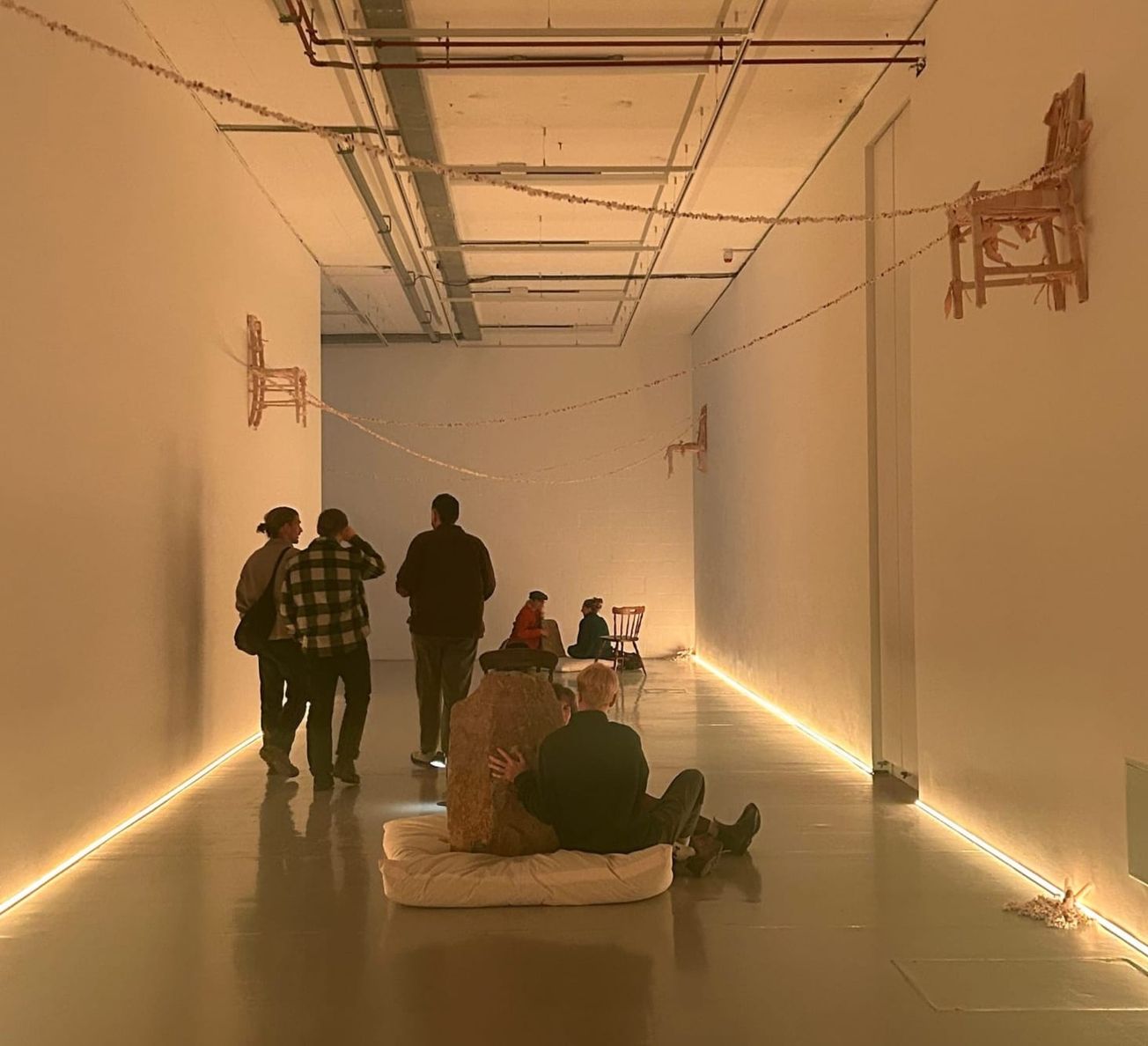
Dan Lie’s Sleeping Methodologies also fosters communal experience, exploring how exhaustion and crisis can become catalysts for transformation. Visitors are encouraged to put aside their devices and slow down in a space bathed in warm yellow light. An exhibition insider explained Lie’s fatigue from working a variety of exhibitions back to back and beginning this journey not truly having an aim but needing a soothing outlet to recover.
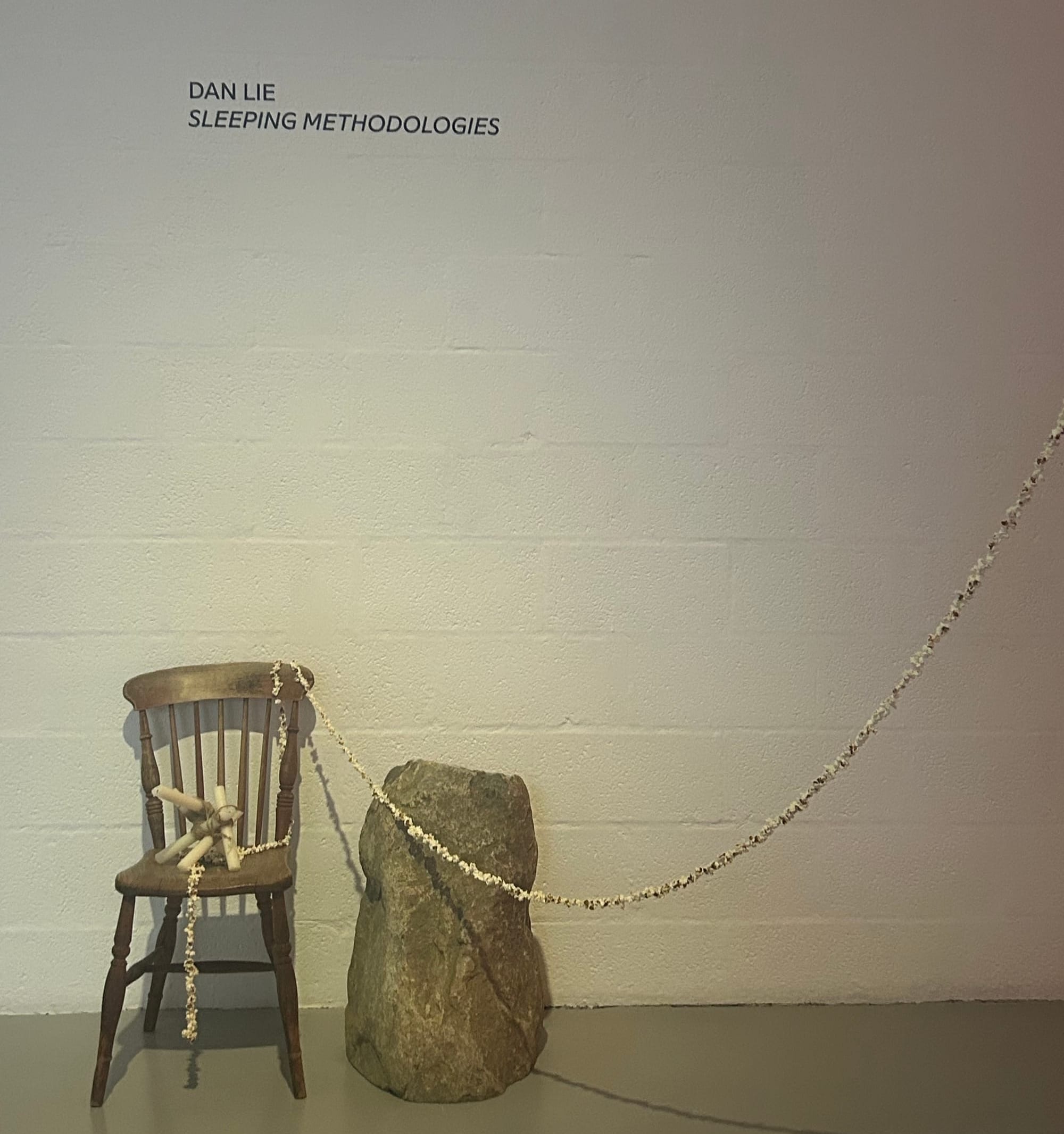
A garland of popcorn traverses the gallery, which was created through the companionship of other team members, symbolising how a reach for rest also involves a sense of community and connection with others. The installation itself is composed of chairs wrapped in cotton dyed with tea and coffee, while large stones stand like quiet guardians beside mattresses filled with hay and lavender. Visitors are encouraged to sit, recline, or even lie down, surrendering to stillness.
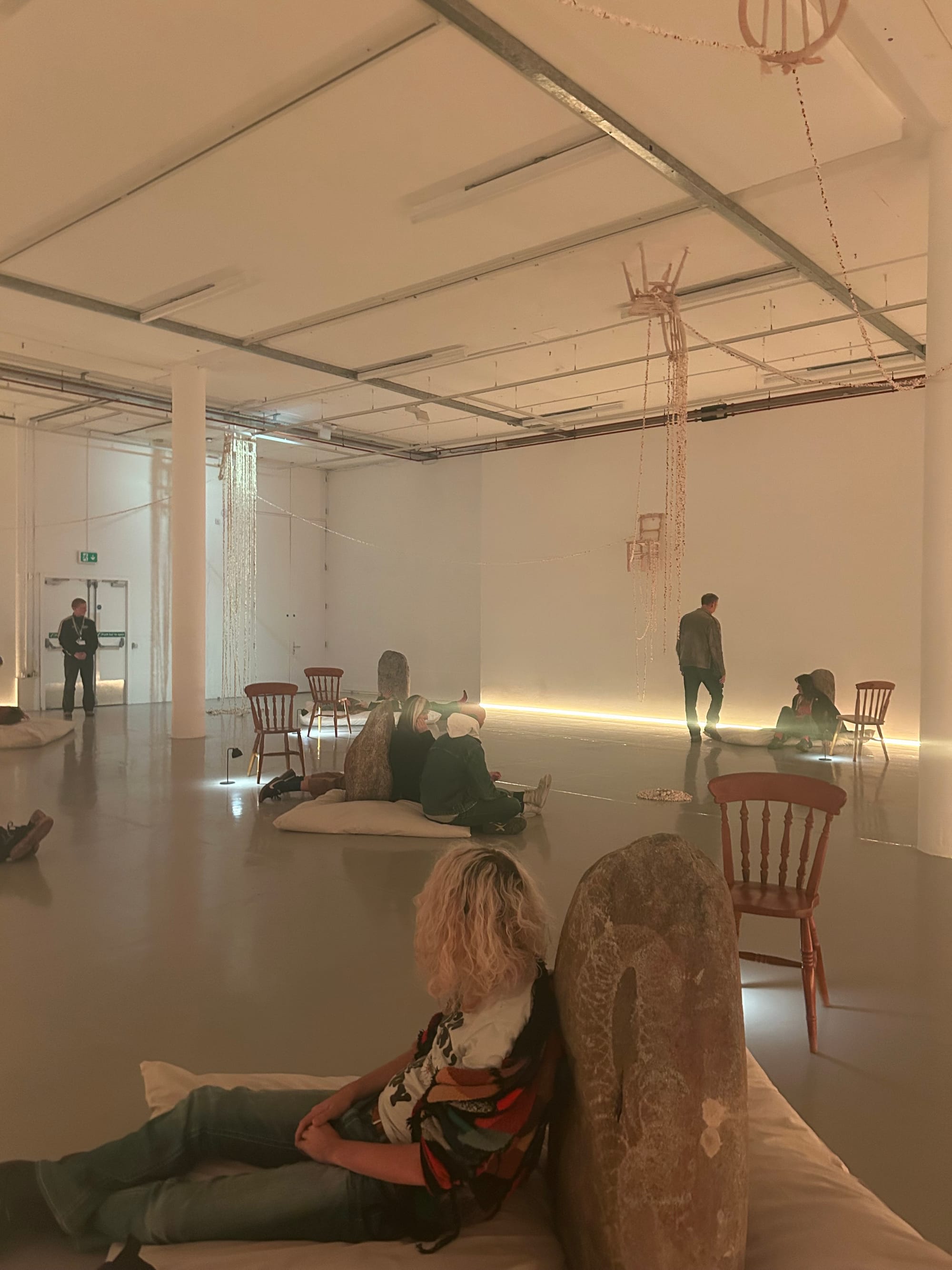
This is a deliberately simple space; one that invites companions to pause, drift, feel, observe, and move fluidly between engagement and disengagement. Lie’s practice centres on site and time-specific works, often developed in collaboration with what they describe as “other-than-human beings.” Here, that presence is felt in the watchful arrangement of rocks and the thoughtful comfort of candles scattered throughout the room. Stepping into this yellow-hued environment feels like crossing a threshold, leaving behind the relentless pace of daily life. Its monochromatic palette and spare design create a neutral, open setting: an uncluttered stage for conversation, reflection, and shared rest.
 Mia Jansa
Together, Jaouda and Lie transform Spike Island into a place where memory, identity, rest, and renewal converge. These installations are not just to be viewed but to be felt - spaces where visitors can slow down, reconnect with themselves and with others, and contemplate the shifting landscapes of both place and time. For anyone seeking an experience that is as restorative as it is thought-provoking, this autumn exhibition offers a rare chance to pause, breathe, and step into a dialogue between art, history, and the present moment.
Featured Image: Epigram / Simren Jhalli
Will you visit the new exhibitions at Spike Island?