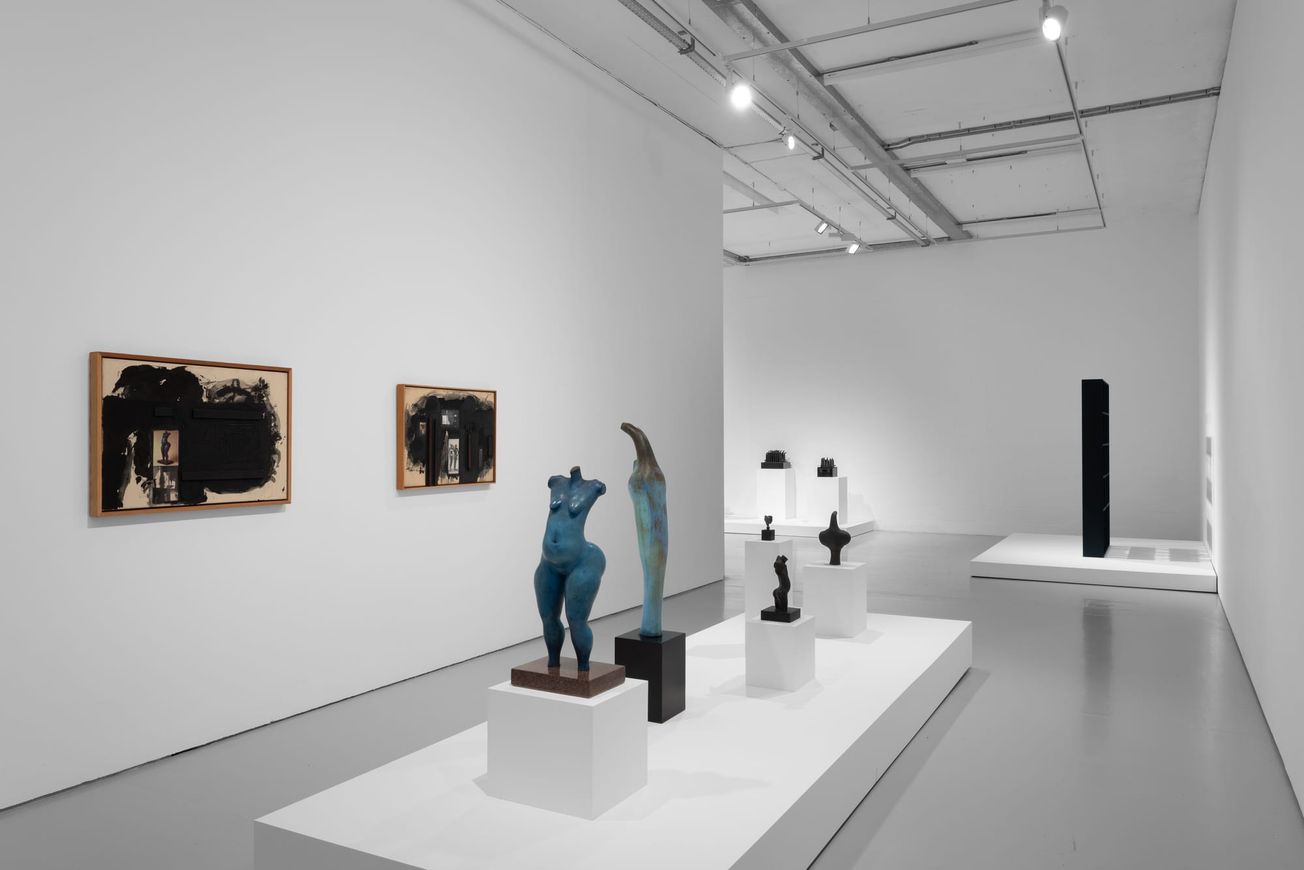
Donald Locke: Resistant Forms is the first major European retrospective of the Guyanese-British artist (1930–2010), and it’s a remarkable opportunity to see a body of work that speaks directly to themes central to the Black Humanities; migration, materiality, hybridity, and resistance. Locke’s fifty-year practice charts a personal and political arc from post-independence Guyana to Britain’s art schools to the cultural networks of the American South. But more than geography, what unfolds here is a story of becoming.
Locke was born in Georgetown, Guyana, and came to the UK in the 1950s on scholarship to study at Bath Academy of Art and then went on to study at the Edinburgh School of Art. He briefly returned to Guyana and after a decade teaching art, he returned to Edinburgh and then settled in London in the 1970s. In 1979, he received a Guggenheim Fellowship in Sculpture, which brought him to Arizona, and later to Atlanta, where he remained until his death.
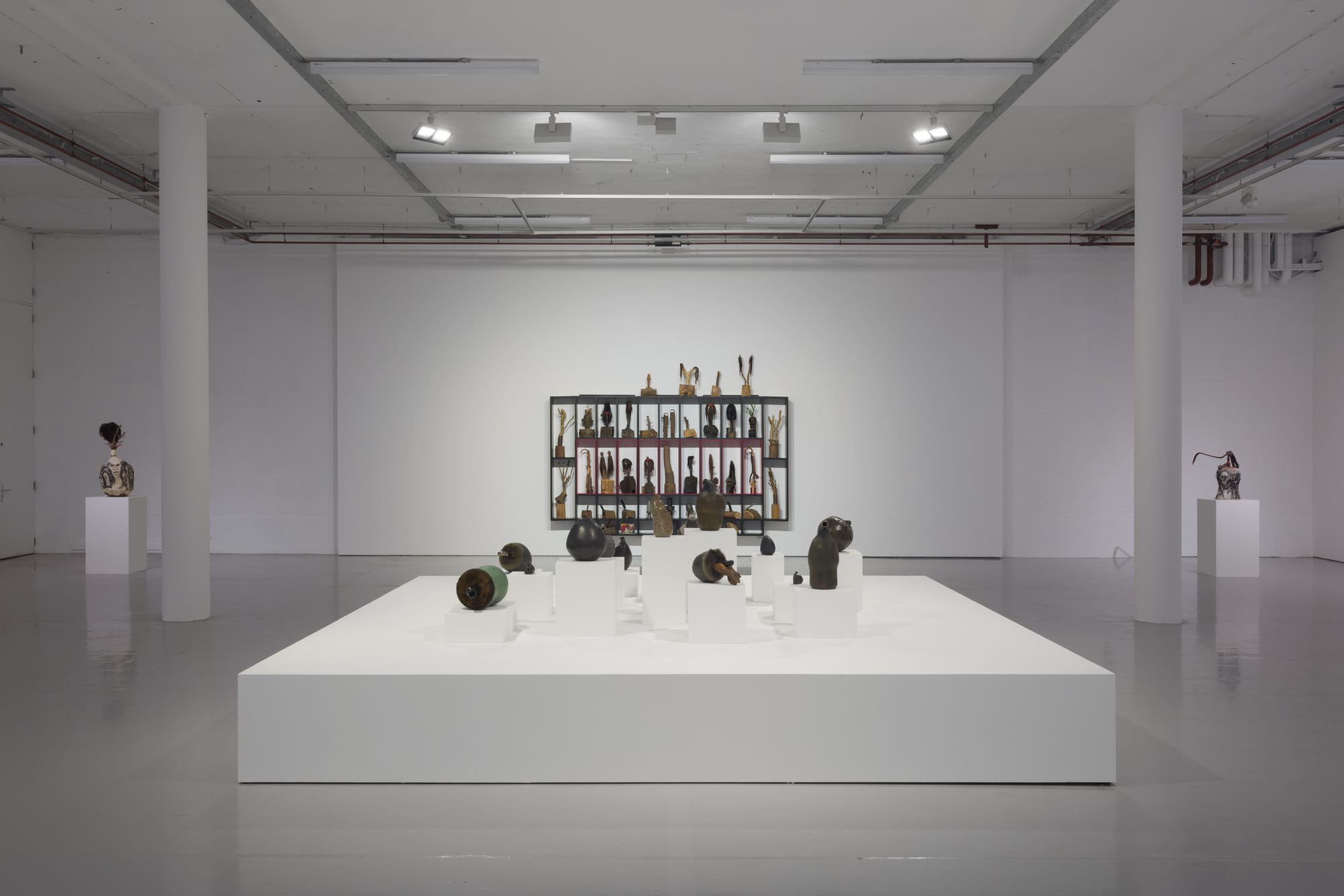
The exhibition is arranged chronologically. His earliest ceramic works from the 1960s and 70s are dark and ambiguous. His early sculptures and ceramics quickly go from traditional forms to abstract shapes that evoke sexual objectification to my eyes, However, Locke himself said they were meant to evoke bullets.
Whatever they are, they are not passive objects. Already, in his earliest work, you see Locke reveal parts of himself as he grapples with questions of empire and identity without naming those things specifically. He does this so skilfully that they blur the line between the viewer and the experience of the artist. It feels as if we are glimpsing a record of a young Locke through the objects themselves.
As the years unfold, Locke’s material language shifts. After moving to the US, his work becomes more layered, expansive, and at times more playful. This is most evident in pieces like Trophies of Empire II, a large sculptural cabinet of absurd and unsettling objects, curated like a colonial collection but made to perhaps mock it in the way that African American schoolchildren use Signifying* word games to mock the insecurities of themselves and their classmates.
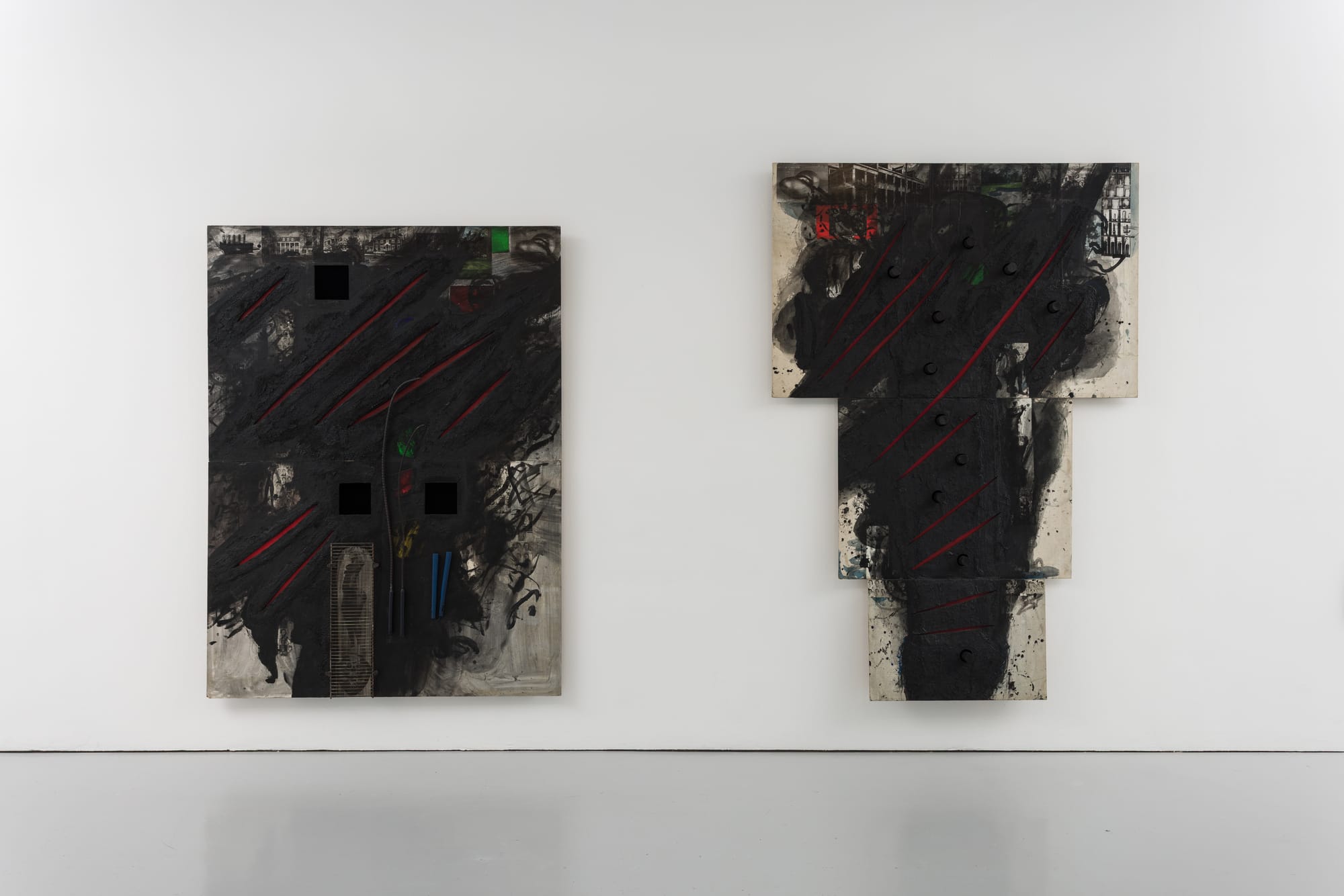
Locke’s move to Atlanta in 1990 marked a massive turning point. He found there a vibrant community of African American vernacular artists whose expressive and materially inventive practices made a dramatic impact on his own. His paintings from this period shed their earlier restraint. They become more visceral, layered, and overtly political; collaging archival images, raw textures, and dark monochromes into works that confront the viewer with the unfinished labour of historical reckoning.
This retrospective is curated by Robert Leckie (Director of Gasworks and former Director of Spike Island), and co-organised with Ikon Gallery in Birmingham and Camden Art Centre in London. It’s supported by the Estate of Donald Locke, the Henry Moore Foundation, and the Paul Mellon Centre for Studies in British Art, among others. It’s heartening to see this level of institutional investment in a Black diasporic artist whose contributions to modernism are long overdue for this kind of framing.
The programming around the exhibition is also worth noting: a panel discussion with Robert Leckie, Hew Locke, and art historian Giulia Smith is scheduled for 5 September 2025; a British Sign Language tour and family-friendly events have already been rolled out.
This exhibition is free and open to the public. Showing until 7 September, the gallery is open Wednesday-Sunday from 12-5 pm.
You can visit the Spike Island website for more details and to book your place on ticketed events.
*Signifying is a series of boasts or insults exchanged as a game or ritual in the African American cultural tradition. This is a function of African American Vernacular English (AAVE) and allows for the development of the skill of indirect expression of ideas, which is essential to understanding the dialect in general.
Featured Image: Donald Locke 'Resistant Forms'. Courtesy the Estate of Donald Locke and Alison Jacques. Photograph by Rob Harris
Would you visit Donald Locke's exhibition at Spike Island?