By Yotam Livni, Third Year, Philosophy
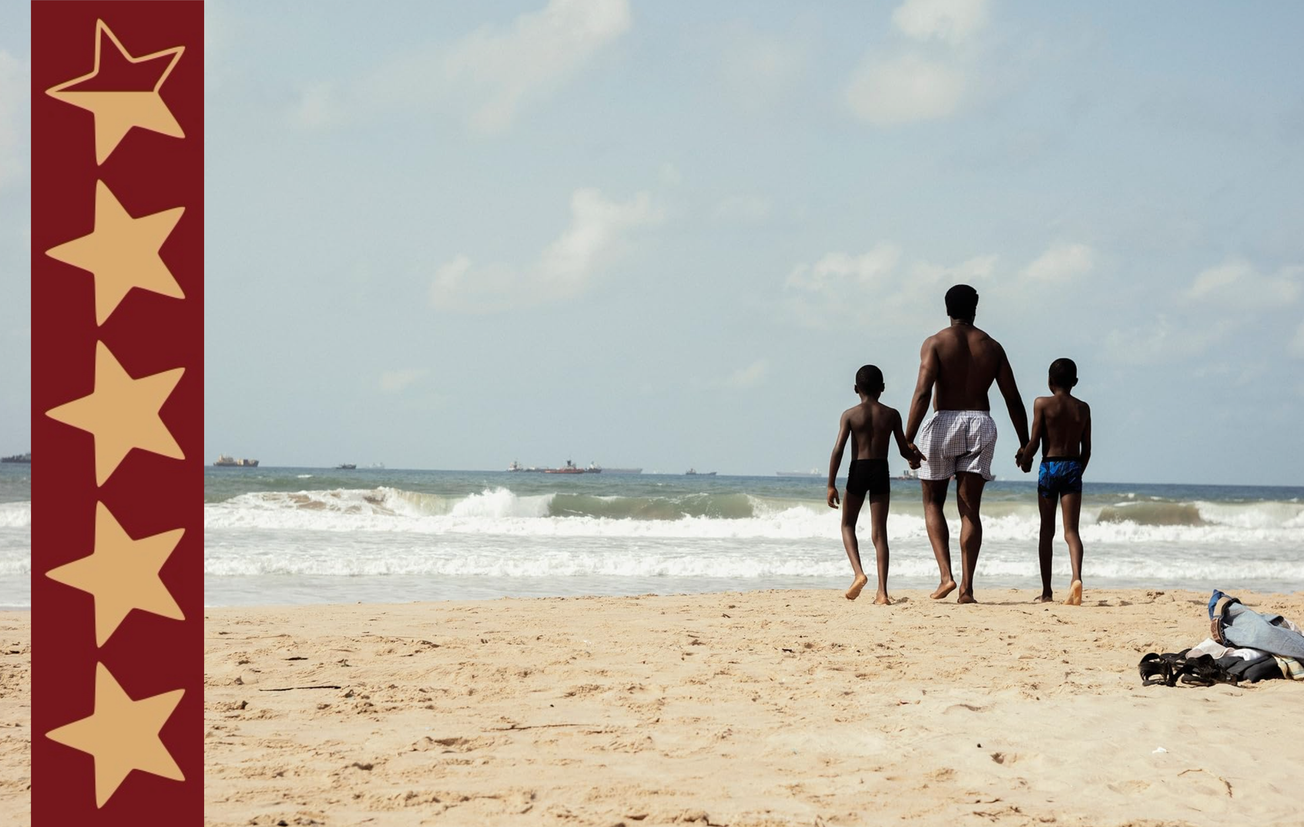
During the 1993 Nigerian election crisis, we follow two brothers, Akin & Remy (Godwin Egbo & Chibuike Egbo) as they spend the course of a day in Lagos with their estranged father, Folarin (Sope Dirisu). The film begins with this outstretched meditative sequence between the two boys as they are at home alone getting along with their day. This calm is shattered as their father returns home. What follows is an emotional epic through the vast, turbulent city of Lagos amid one of Nigeria’s most historically difficult periods.
Premiering at the 2025 Cannes Film Festival under the Un Certain Regard section, My Father’s Shadow (2025) is the first Nigerian film to be selected for the festival’s Official Selection, where it proceeded to win the special mention for the Caméra d'Or.
Serving as the feature film directorial debut of Akinola Davies Jr. and a writing debut for co-writing brothers Wale Davies and Akinola Davies Jr., and it doesn’t end there. The two young brother actors find themselves debuting alongside each other in performances that bring such an emotional depth and reality to the characters of Remi and Akin found on screen.
At a preview screening for the film at Watershed featuring a Q&A, Akinola, the director, spoke of the challenge in finding two child actors that could believable take on the roles of brothers Remi and Akin. It was then he first met the two real life brothers Godwin Egbo and Chibuike Marvellous Egbo. Akinola knew in them he’d found his characters. Afterall, the bond between brothers and chemistry it can bring on screen is something all the money and acting coaches in the world can’t buy.
Ṣọpẹ́ Dìrísù as Folarin brings such a presence to the screen. You can really feel how as a father he holds the world together for these boys. Ṣọpẹ́ bring forth a tender and apologetic masculinity. Playing a clearly quite distant father, there is a lot of baggage between his character and the two boys. As they follow his through his work day in the city of Lagos we get to experience beautiful gems of moments where Ṣọpẹ́, as Folarin, has to really reflect on his behaviour as a man and a father and the values he chooses to instill on his sons.
A fourth important character in this film that cannot go without mention. Lagos, Nigeria, the setting of this story not only serves to set the context of the film, the time within which it is set but in itself reflects the tender relationship of our characters and provides a deeper message.
Akinola describes the 1993 political context, ‘Abiola was meant to be the president. He represented a father figure for the country. Everyone was looking for a statesman, and this hope was never fulfilled.’ There is an element of fatherhood and paternalism in the politics of a country, particularly in one that has faced so much difficulty and struggle. The filmmaker brothers wished to explore in the context of their homeplace this element of failed politicians and political systems. A responsibility owed to a people by its representatives and how when it's not fulfilled, as when a father may fail his children, they may struggle to take on the right values, repeat in mistakes, and suffer as a consequence of this.
A notable feature of this film for me is how it’s told through the perspective of the children. There is an element of memory/recollection from a child’s mind felt throughout that I found provided an almost dreamlike aspect of wonder and curiosity. I think this is achieved predominantly in the use of 16mm film which for me provided a deep nostalgic feel and in the stunning cinematography. It captures Lagos so immersively, in a way that made me feel I was in the perspective of the young boys.
I find a growing element in new modern cinema that requires filmmakers to constantly engage their audiences and stimulate them. So many films today are brought straight to streaming and made for quick easy consumption. Films feel forced to constantly make each moment exciting and explanatory, no longer letting us really linger in the stillness and mundanity of a truly human story, removing any meditative or personal imposition of one's own experience.
So many shots and sequences in this film challenge this newfound norm. They’re long and almost boring. They focus on very mundane life and structures that fill Lagos. It is through this that we are put into the shoes of the boys.
Everything seems new, interesting, massive and by allowing us the quiet time to reflect and immerse in these we better understand how these young boys feel following their dad who seems so mysterious to them in this city they have never gotten to know. Akinola truly challenges what modern cinema can do in a way that I hope inspires and challenges the conflict climate films find themselves in.
 Daisy Forbes
This for me has been one of the most enjoyable and refreshing films of the past few years and gives me hope towards the films yet to come.
Since its release the film has received wide recognition and critical acclaim taking home two Gotham Independent Film Awards, a British Independent Film Award and most recently a Bafta Award for Outstanding Debut.
Featured Image: IMDb
Have you had a chance to watch My Father’s Shadow? Are you ready to experience an emotional journey from this fresh face in contemporary cinema?