A distinction cannot be clearly made between art and labour. To steal a vastly overused phrase, art is a labour of love. Yet we seem to have this incessant desire to attempt to categorise what it can and cannot be, when surely at its most basic level it is anything that we find beautiful, admirable. In forcing these hierarchies we are therefore disallowing art to be an expression and making it a symbol of status.
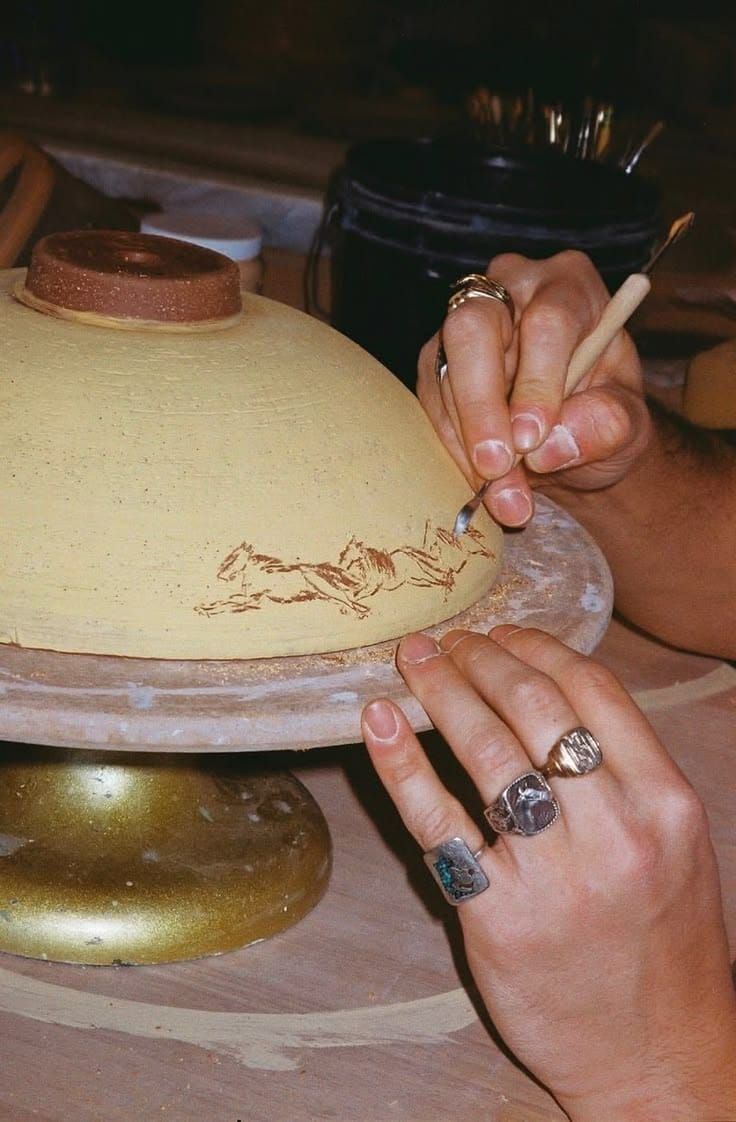
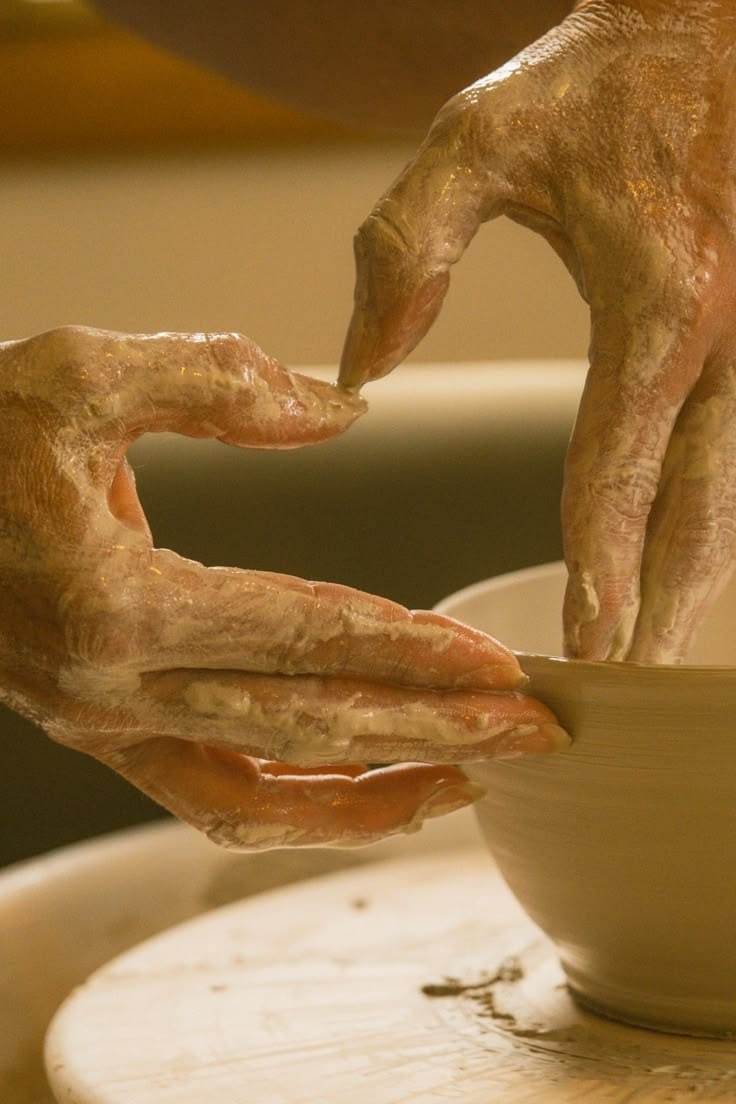
As a potter, my work is highly laborious, beyond simply making the product. It is this work that reinforces it as art in my eyes. There is soul and heart break and pain in each vessel. Some may only see a mug, but I pull it out of the cupboard and see the hours of practice behind it and take pride in this ability to create.
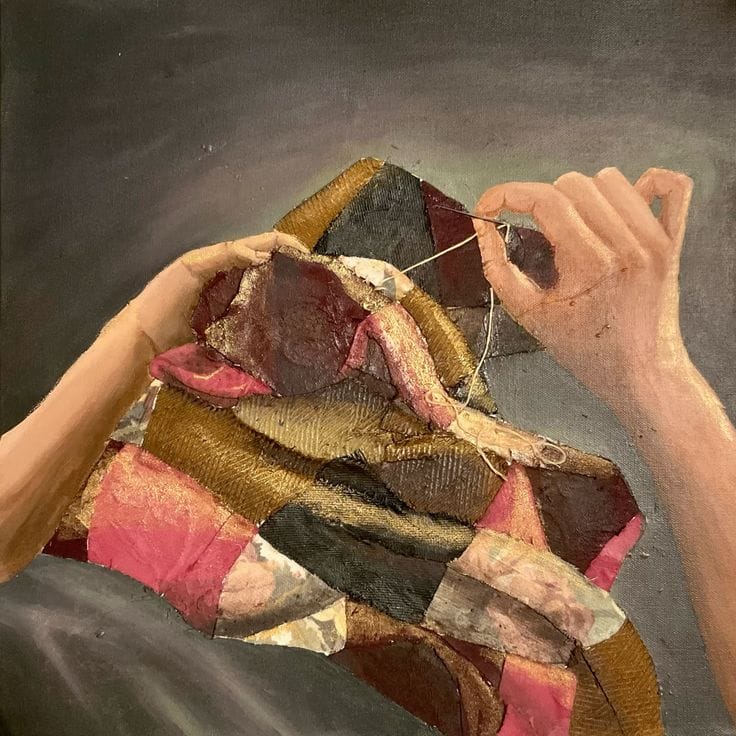
Discourse around the differences between arts and crafts holds art in a distinctly male space, prized highly. Craft on the other hand has traditionally been seen as domestic due to its association with practicality, consequently forcing it into the feminine. Men are allowed to create and enjoy art for art’s sake, but women must conform to its domestic usage. How can this be fair when the hand she has been dealt, has left craft as the only accessible art form? For it then to be seen as inferior.
Ironic really, for centuries of women to be confined to domesticity, and no purpose outside the home, yet should they wish to create, to enter this male field, it must have a purpose. Men simply create art, allowed to make something that just looks nice. Women have been set up for failure. How many famous artists do you name before one of them is a woman? So why must we make the distinction if doing so can become so derogatory. If women cannot be held at the same level as their male counterparts. As Jeff Blakely notes ‘just as anything can be art, not everything can be craft’, so why can we not place all under the category of art and allow all to be in receipt of the appropriate response to their labour.
Then of course there is the debate of accessibility. In theory it seems a wonderful thing to be able to search online and view a famous painting. Those who aren't able to travel to see such works, have the ability to do so online; this is surely commendable. Yet does this make art less valuable? If you can see a photo of the Mona Lisa, how many would bother to see it in real life? A simple search online and people claim to have seen the real thing. What does this suggest about the value we hold in art? That we are happy enough to see it through a screen, ignoring the brush strokes, the paint on canvas. We can see how with the rise of popularity of AI art, where people can acquire reproductions or so-called ‘original’ paintings for a much lower price. As we know, AI cannot ‘create’ anything new, only create from a mash up of existing things. As a society we have moved to a space wherein we are happy to steal from others if it makes things easier and cheaper. We make mockeries of art by putting stupid photos into software to ‘look like Van Gogh’.
With an influx of digital and AI art overwhelming the market and stealing profits from small artists, it is reassuring to see this as an impossibility for some mediums such as ceramics. Not only is AI art hideous, it is devastating our planet, veering so strongly away from what art means, its romanticism of nature and beauty, to the point where it becomes a product, not an artwork. Art suggests a form of labour to create something timeless, to be admired, every emotion seen and felt through a brush stroke or sketch, an energy sent through human touch and interaction. Simply typing a prompt into software is therefore wholly unartistic.
We can only hope that as a society we learn that though we may be given a quick route to winning, a greater win comes from time and perseverance.