By Beth Nugent, Third Year, Film and TV
Later additions to epic movie franchises often get manipulated beyond recognition once in the hands of soulless, money-hungry studios — but none have died a more violent and devastating death than the Jurassic Park series with its most recent instalment, Jurassic World Rebirth, perhaps the most pointless and dissatisfying movie ever made.
The franchise began with Steven Spielberg's timeless Jurassic Park, made on a $63 Million budget and went on to gross over $1 Billion worldwide. In 2018, it was added to the United States Nation Film Registry for preservation as 'culturally, historically, or aesthetically significant'. That kind of success only enticed Universal Pictures to squeeze every penny it could out of the Intellectual property, resulting in seven films, three television shows, two short films, a motion comic series, and a three part web series.
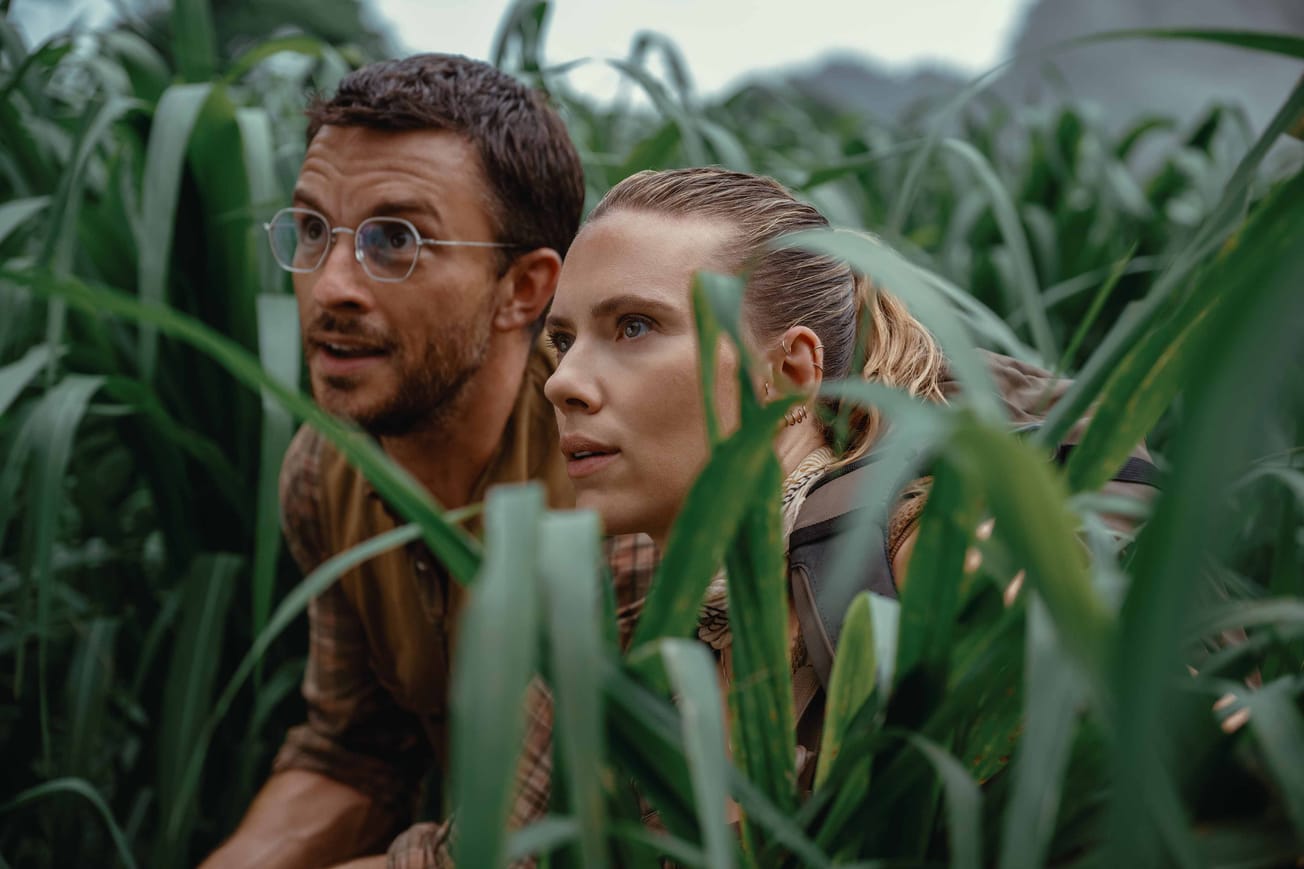
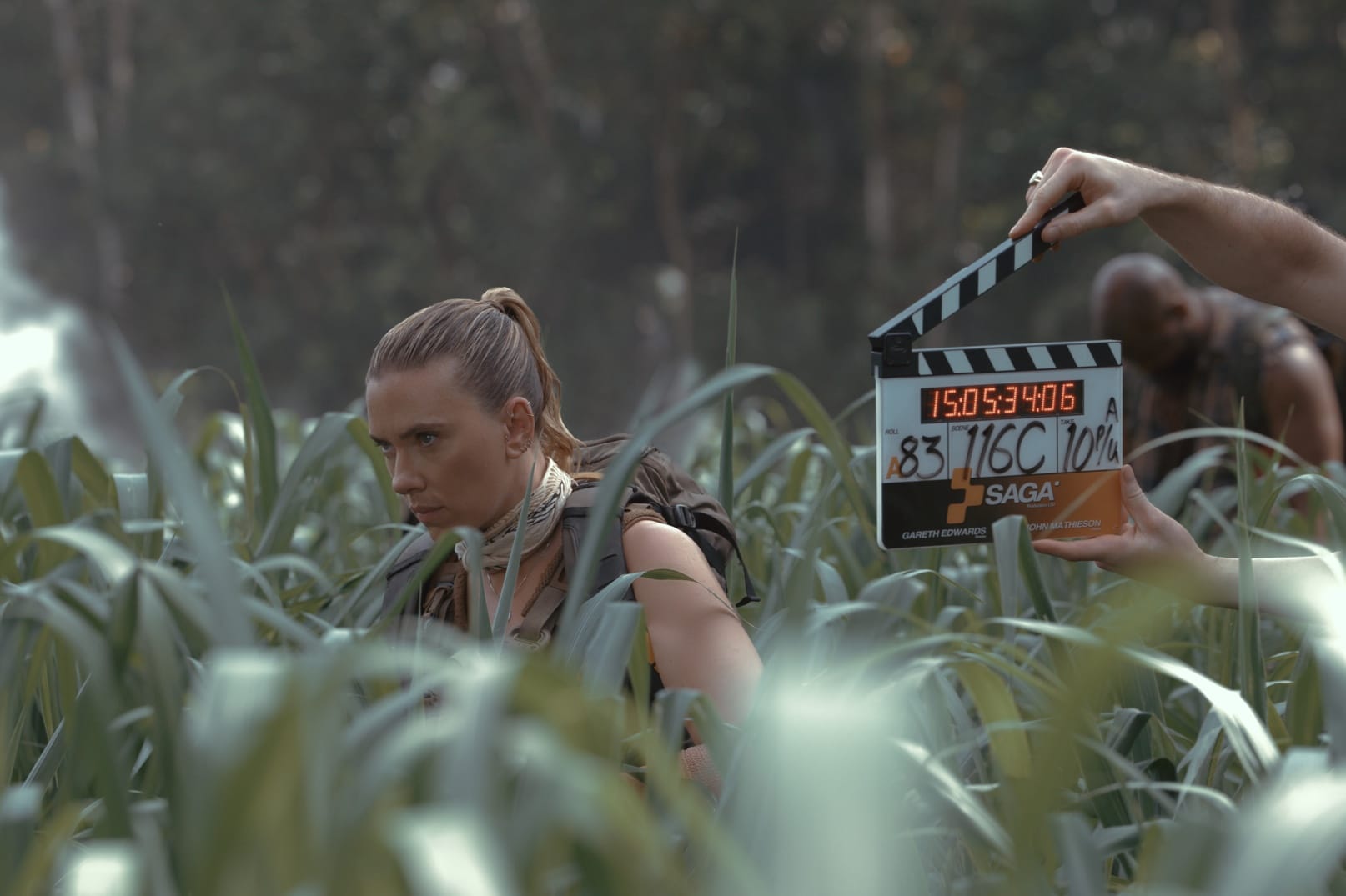
Jurassic World Rebirth follows Zora Bennett (Scarlett Johansson), an ex-military covert operative, and Dr Henry Loomis (Jonathan Bailey), a palaeontologist, as they are hired by pharmaceutical executive Martin Krebs (Rupert Friend) to travel to an island near the equator where dinosaurs still reside. Their mission? To draw blood samples from three prehistoric creatures that may hold the key to curing heart disease. And honestly, the stakes have never been lower.
Bennett assembles a ragtag team of old friends and colleagues who consistently hint at an intriguing backstory for our leading lady, but the film never follows through with any real depth. Poignant scenes are cut short before genuine character development can begin, and the only traits we learn about Zora Bennett are her sharp tongue and money-driven mindset.
Dr Loomis wasn’t much better. Bailey gives a charming performance as a nerdy yet lovable palaeontologist, but the script never allows him to showcase his knowledge of the species. Instead, he mostly fumbles around, serving little purpose beyond a half-hearted romantic subplot with Bennett — and, of course, showing off his slutty little glasses (which are being released to markets soon!)
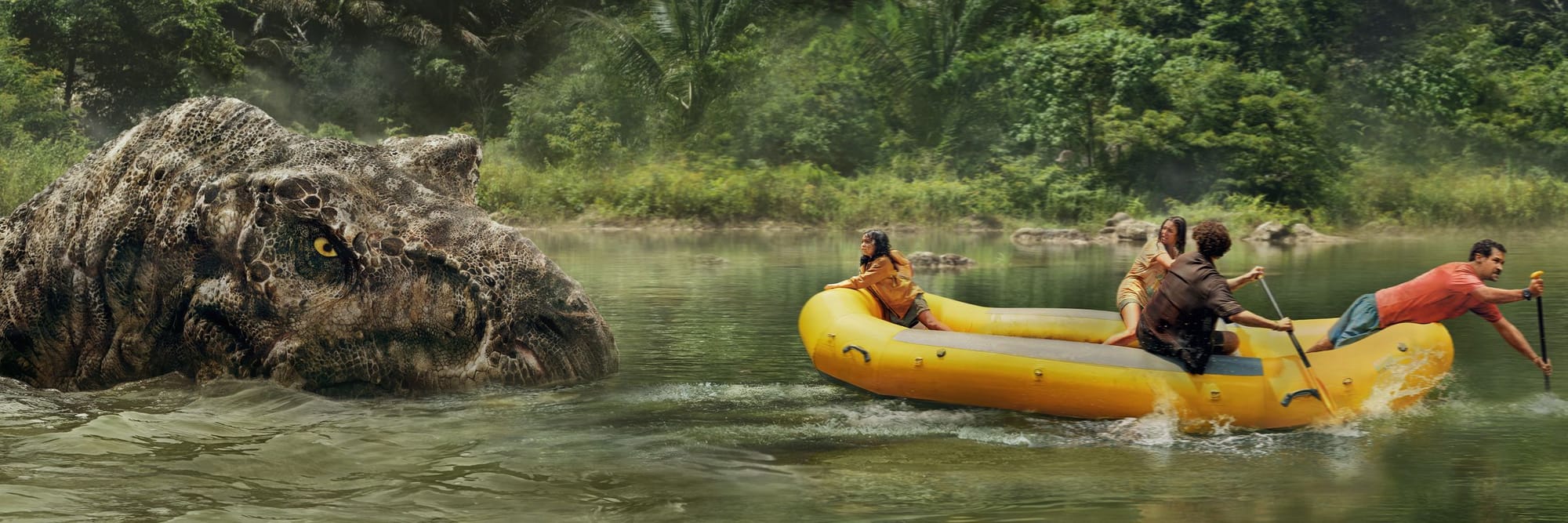
In a split narrative, the other half of the film follows the Delgado family: a father, his two daughters, and the elder daughter’s stoner boyfriend. Early on, they are shipwrecked and briefly aided by Bennett and her crew, but soon split off to navigate the island alone. Watching these segments, I repeatedly found myself asking: what is the point of them? They serve no real purpose, and the conflict between the father, Reuben Delgado (Manuel Garcia-Rulfo), and the boyfriend, Xavier Dobbs (David Iacono), feels forced and lacks the comedic edge the film so desperately needed.
Bennett’s friends and crewmates are so inconsequential that you know they’re marked for death within their first scene, and their inevitable demise five minutes later barely warrants more than a furrow of the brow. Surprisingly, the film features far fewer deaths than expected. The Delgado family all somehow make it out alive, despite being possibly the least intelligent human beings on the island. Reuben takes top spot, consistently letting his children wander into danger before silently waving them over when they’re seconds away from being chomped by a dinosaur.
The attempt to establish Martin Krebs as a compelling antagonist is lost amid sloppy writing; instead, he comes across as little more than a minor inconvenience before being unceremoniously eaten in the final act. His entire character is reduced to a two-dimensional, money-hungry insurance executive
In lieu of a strong villain to root against, the film’s central conflict becomes whether Bennett should hand Krebs the blood samples in exchange for a hefty reward, or release them to the public so that everyone can access the cure for heart disease. After, at most, three brief conversations with Dr Loomis, she conveniently decides to be a good person and release them into the public domain.
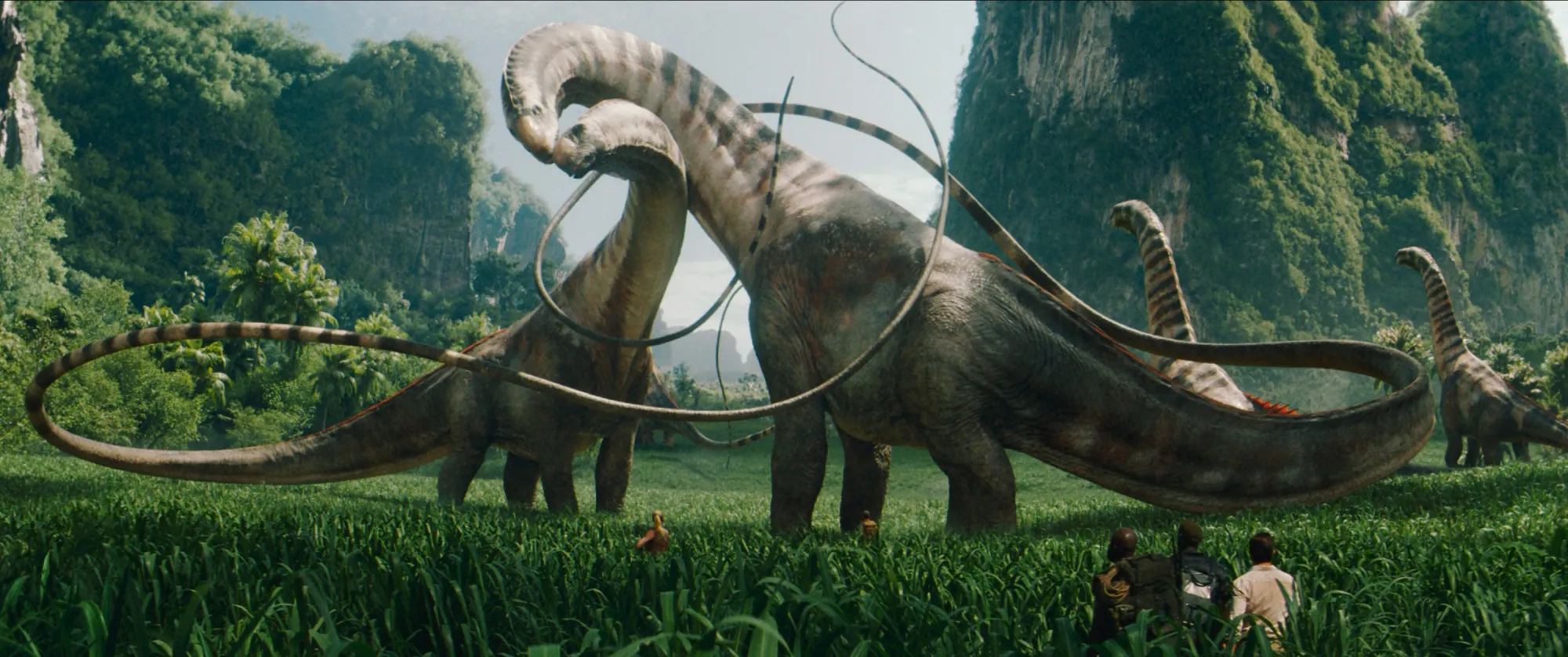
As always, the dinosaurs are the best part of the film. At times, there were flashes of genuine tension that recalled earlier instalments, and the film succeeded in building a fully developed, believable world. A standout moment comes when Dr Loomis finally gets to stroke a dinosaur, fulfilling a lifelong dream. With the iconic theme swelling in the background and sweeping cinematography showcasing the vast array of breath-taking creatures, it was the one scene that truly felt like it could have belonged in the original Jurassic Park trilogy.
Unfortunately, the movie felt utterly pointless. By the end, all the characters were in almost the same state as at the beginning, and none of their actions had any real impact on the world. The viewer is left feeling as though they’ve wasted two hours and thirteen minutes just to watch a few people collect dinosaur blood — without much complication, I might add.
Some things are better left extinct, and some movies too.
Has the Jurassic Park series run its course, or is there life left still in the franchise?