
By Amaya Lewis-Patel, Comment Subeditor
Our house has finally got around to watching Heated Rivalry (2026). We do it ironically, reading out loud the closed captions for dramatic effect. ‘(Heavy breathing)’ and ‘Upbeat synth music’ are some of my favourites. And we’re not alone: even NYC Mayor Zohran Mamdani is a fan. But as with many of the trends originating in LGBTQ+ experience that have swept across Bristol and the world, it makes me think about how our community is represented in the mainstream. In the age of the Death of the Author and separating the art from the artist, anybody can write about anyone – right?
At first glance, Heated Rivalry seemed like my ideal of LGBTQ+ media made for and by the community. One of the deuteragonists, Shane, is autistic and Asian-Canadian. A supporting character Svetlana is a Russian woman of colour. The showrunner Jacob Tierney is a gay man. That’s a lot of bases covered: so far, so woke.
Then I discovered that the show was based on a book series by Rachel Reid, who also acted as a consulting producer. Not to make assumptions, but I am pretty sure that she is not a gay man – and definitely not a gay man of colour writing from personal experience of racism and homophobia. And yet, Reid has become a New York Times Bestseller by imagining ‘what it might be like to be a closeted NHL player’. While I hesitate to use words like ‘appropriation’, ‘exploitation’ or ‘commodification’, there is something in this that makes me uncomfortable.
I know that this isn’t my battle to fight. I’m not a closeted gay hockey player either, so I have no more authority than Reid to speak on their behalf. If anything I am glad that someone is challenging homophobia in professional sports, and I am happy to see any positive LGBTQ+ representation. I think that the sex scenes are important: steamy gay sex scenes should be accepted in the same way as straight sex scenes (à la Bridgerton (2020) and Normal People (2020)). If we only condone wholesomely sexless shows like Heartstopper, we continue to marginalise non-heterosexual sexuality. And if misogyny and toxic masculinity contribute to the marginalisation of gay male sexuality, then the popularity of Heated Rivalry is a leap forward for society as a whole.
I would only ask: why do straight women love writing and reading about gay sex? The Guardian suggests that they are drawn to the opportunity to see ‘sex and romance without misogyny and gendered hierarchy.’ In a rather Freudian manner, this means sex and romance from which women are absent altogether. It is telling that women find it easier to find escape from sexism in ‘MLM’ romance (men loving men) than to imagine a world without sexism. Instead of fighting the patriarchy, read gay smut! Even Heated Rivalry's intimacy coordinator was a straight woman. In this context, the real struggles of homophobia and repression faced by the LGBTQ+ community risk being reduced to subplots. I certainly don’t see a surge in donations to queer charities in proportion to the surge in downloads of Heated Rivalry.
As Jacob Tierney says in an interview with Teen Vogue, gay men are so ‘starved for stories’ that they’ll ‘watch anything with gay men in it.’ To an extent, all press is good press: it’s powerful to see your story on screen, no matter who wrote it. Later in the interview, however, Tierney acknowledges that ‘the secret fan base of this is women, and that is a much bigger target than just queer people or queer men’. There is a tension here: the queer community to whom queer representation could speak at a deeper level, and the commercial fan base for whom queerness is gift-wrapped and marketed. So we must take what we can get, even if we don’t feel that it truly represents us.
‘There is a power and pride in seeing the commercial and cultural success of queer media by and for queer people.’
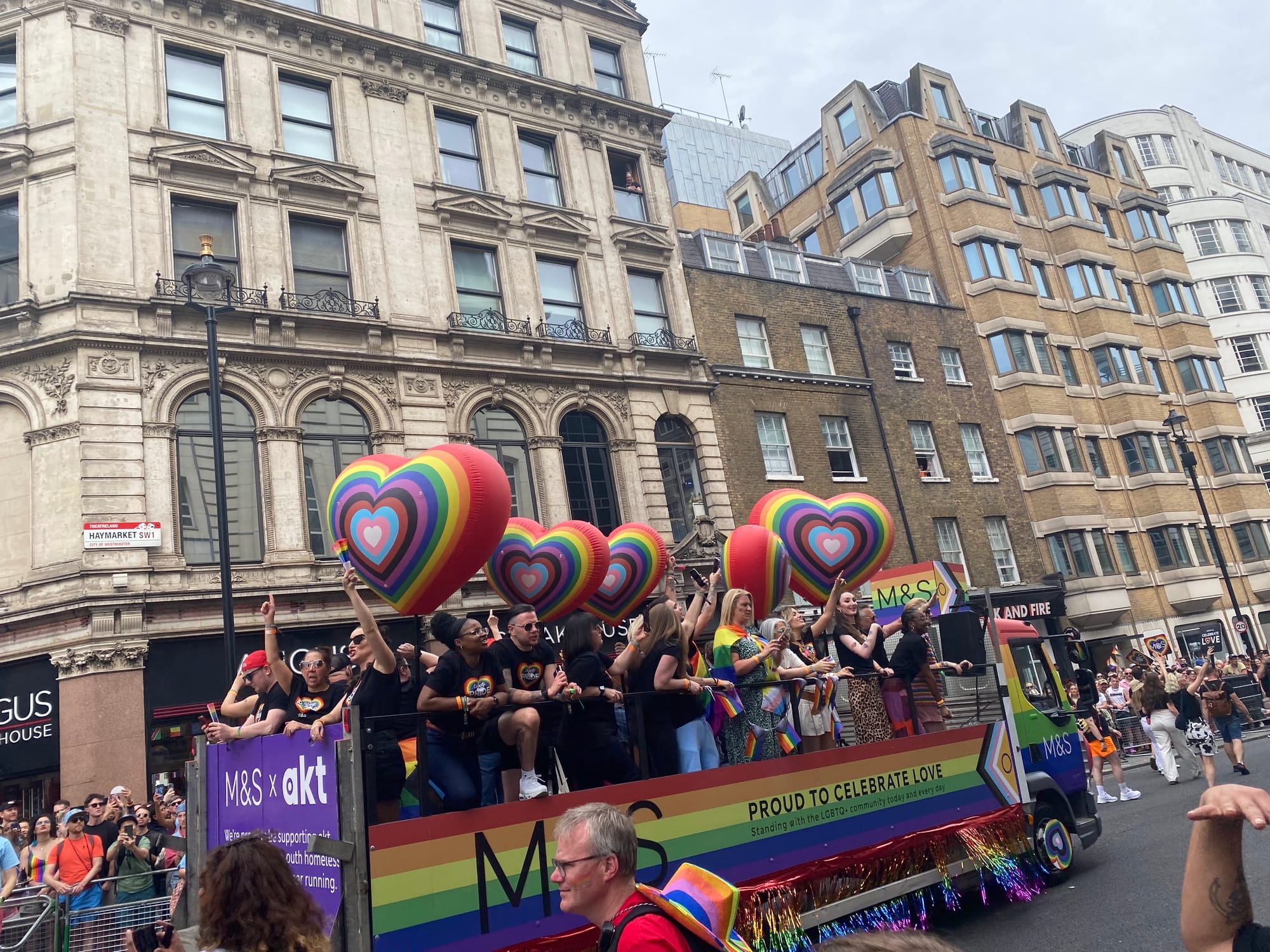
This is something I have noticed in Bristol. Carabiners, rainbows: they all quickly become commodified and inserted into the mainstream, while maintaining their connection to queerness. Symbols and spaces of identity can now mean nothing: everyone loves a night out at OMG, even homophobic rugby boys. And while this means that we are not marginalised, our queerness is. The stereotype of a ‘gay humanities student’ is more a label of fashion sense, reading choices and oat milk lattes than sexuality.
As a queer woman of colour (do I get a prize?), I’m accustomed to the male, straight and white profiting off female, queer, non-white culture. I think that it is important to engage with experiences that are not our own, to celebrate them and strive towards empathy instead of exclusion. But there was something special about first discussing Judith Butler in a seminar, or watching Portrait of a Lady on Fire (2020). It was the sense of community and validation that comes with shared experience. Katie Perry’s ‘I Kissed a Girl’ is very different from listening to Chappell Roan’s ‘Good Luck Babe’. There is a power and pride in seeing the commercial and cultural success of queer media by and for queer people.
 Nicole Quy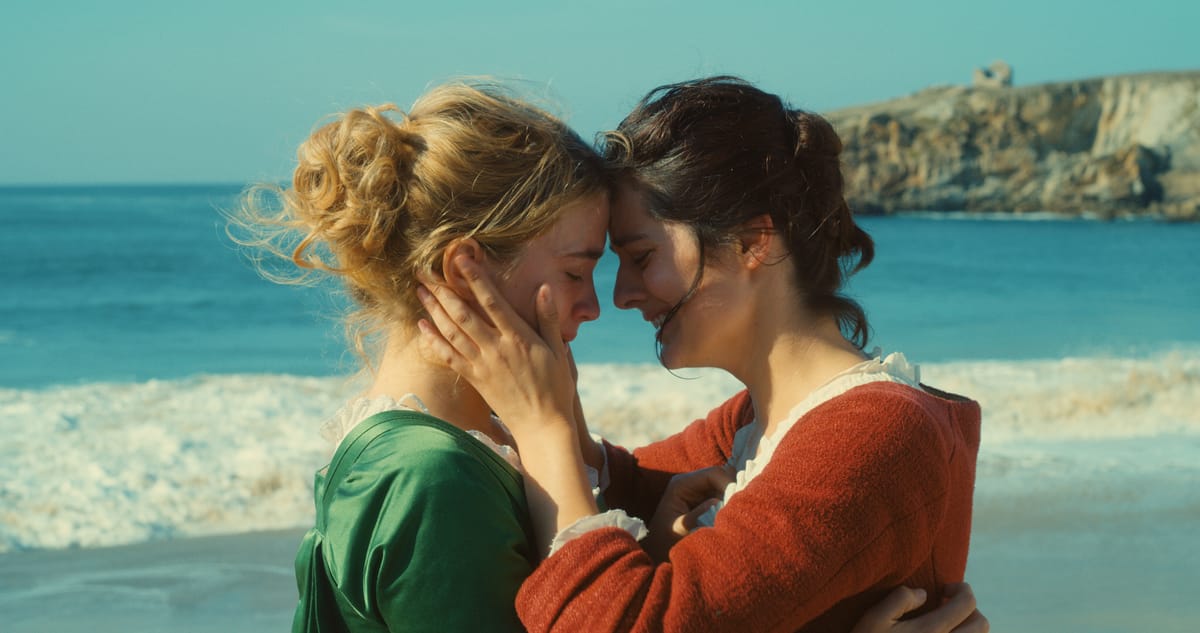
While we shouldn’t gatekeep or exclude, we should be careful. To speak for a community that is not your own is to risk speaking over them, and even blocking their ability to speak to each other. The reality of the media and publishing industries is that not everybody is privileged with the ability to write (or read) anything. And when certain voices are marginalised and silenced, it matters whose stories are told, who tells them, and cui bono.
Featured image: Unsplash / Gerhard Crous
Have you watched Heated Rivalry?