By Lulu Shasha, Third Year, History
‘When 22-year-old Emily Chong graduated from University College London last year, she thought the job hunt would be simple. She had a first-class degree in history and a place on the dean’s list, an academic honour awarded to the top five per cent of a graduating class…Since August she estimates she has applied for more than 100 positions across public relations, advertising and communications with no success.’
Curled up on an armchair in my friend’s attic room, I read the Financial Times’s ironically fitting case study aloud. Emily Chong, a history graduate with a first-class degree and an academic honour, is on paper, perfectly qualified for any graduate job. This is what I tell myself as I stare blankly at my laptop screen. I recognise my own inevitably approaching future reflected back at me: another victim of the so-called ‘jobapocalypse’.
The uncertainty of my future has thus far been a romanticised notion of youth. I narrativized it into a familiar coming-of-age story: self-doubt, hard work, and eventual success. Our parents did it. Our parents’ friends did it. Our friends’ parents did it. They turned out just fine. But in the employment climate of the 2020s, this narrative arc feels more and more fantastical. Everything I read seems to suggest that there is a new reality I must come to terms with.
The headline of this Financial Times article reads ‘The great graduate job drought’. Another from the Guardian: ‘It’s so demoralising’: UK graduates exasperated by high unemployment’. From the Telegraph, ‘London was the place to start a career. Now graduates can’t get a job’, or the agonisingly blunt Economist’s ‘Why today’s graduates are screwed.’

A poll by the Institute of Student Employers (ISE) found that graduate hiring fell by eight per cent in the last academic year and is forecast to decline by a further seven per cent in the current year. Meanwhile, data from job search site Indeed shows that roles advertised for recent graduates were 33 per cent lower than a year ago and accounted for 12 per cent fewer of all job postings.
Great. The numbers do, in fact, confirm what the headlines grimly suggest. But why has this happened? The reports point to a few explanations.
The most glaring, and dystopian explanation dominating recent coverage is artificial intelligence. The fear is that entry-level jobs, the banal filing tasks and administrative drudgery graduates are typically funnelled into, are being absorbed by AI talent. But like the reflexive scapegoating of migrants for our employment disasters, the idea that AI is already ‘stealing our jobs’ appears far more clickable than credible. Stephen Isherwood, ISE's Joint Chief Executive, claims that fears that artificial intelligence is already displacing young professionals are unfounded.
Still, even with my technological paranoia momentarily soothed, the larger dread remains. The outcome is unchanged, and there are still no jobs.
‘I sense that failure could be my fault; that no matter how hard I work, someone else will always have done better, done more.’
More recently, analysis has suggested that rising minimum wages have added salt to the wound. Tax and wage changes introduced last April, initially celebrated by students have quickly performed an uno reverse card. Apparently, by increasing the cost of employment, they appear to have discouraged hiring altogether. Indeed reports that overall job postings in mid-June were five per cent lower than at the end of March. The resulting Catch-22 is punishing for young people who are scrambling to climb the job ladder in cities they cannot afford to live in, anxiously chasing any employment that might let them start repaying student loans before they soar egregiously beyond the original amount borrowed. Priced out of the work by the policies introduced to aid them, the London-centric privilege allowing some to run back to family homes rings loud once again.
Of course, we could talk about the lingering effects of Covid and Brexit too, but honestly, I am already bored and exhausted.
The worst part of this all is the competition. ISE reported that in the last academic year there were 140 applications for every vacancy among those surveyed for a second consecutive year, up from 86 per vacancy in 2022–23. Such an oversaturated employment market has allowed employers to be more selective, effectively pitting candidates against one another. Cue a new insecurity, surprisingly more debilitating than those I carried through my teenage years. I sense that failure could be my fault, that no matter how hard I work, someone else will always have done better, done more.
‘Sector, institution, or degree no longer seem to matter. We are all expected to be superhuman.’
Moments where such realisations dawn leave me feeling like I have had the air knocked out my chest before I fall into my own existential pit of self-doubt and terror. I doom scroll on LinkedIn or watch the impossibly optimistic recruiters hosting the Q&As of the graduate schemes croak through the speakers: ‘It would be great if you had some newsroom experience’, ‘Data-handling skills would be useful’, ‘A few languages under your belt is always impressive.’ I feel ridiculously dejected and entirely inadequate.
Just as I was about to chastise my eighteen‑year‑old self for choosing the path of the supposedly unemployable humanities student, I was reminded of a friend of mine at Cambridge, undertaking the grand task of both a medicine and an engineering degree, who shared some intel on the jobs he and his peers are applying for. High above the city, on the top floors of glass skyscrapers, finalists are faced off in high-stakes poker games; cognitive trials designed to test performance under pressure. Sector, institution, or degree no longer seem to matter. We are all expected to be superhuman.
Nevertheless, amidst this supposedly ‘meritocratic’ sea of CVs and qualifications alternative recruitment methods poke through showing potential to stand as pillars of hope. The Spectator’s no-CV internship scheme anonymises applicants and judges them solely on application tasks. ‘We don’t use CVs because we regard that means of recruitment as stale and unfair,’ they argue, dismissing exam results and institutional prestige in favour of ‘talent alone’. Of course questions arise about helping hands at home, but they reassure us with compelling success stories: a Ukrainian woman displaced by war, English as her second language; a 48-year-old mother who had never had a full time job now working as a reporter at the Sunday Times.
 Anna Johnson
Still, while the scheme is refreshing in its rejection of linear life paths (and the strange, almost neoliberal logic that treats early advantage as the raison d'etre of our future careers or lack of them), it does not solve the underlying problem. There are still too few jobs, and too many applicants. The Spectator’s advertisement of the scheme admitted as much: We typically get 200 applications for about 12 places. So why apply against such odds?
It’s a good point. What do we do when the odds are stacked against us all? We turn off our LinkedIn notifications. We get on with our degrees. We keep lobbing mud at the wall and hope that eventually something sticks, or at least cracks the brick for an opportunity to slip through. Until then, I will practise a kind of deliberate optimism. I will exist in a state of borrowed self-assurance, because the outcome, as I’ve already established, is ultimately the same.
But it will be okay. Right?
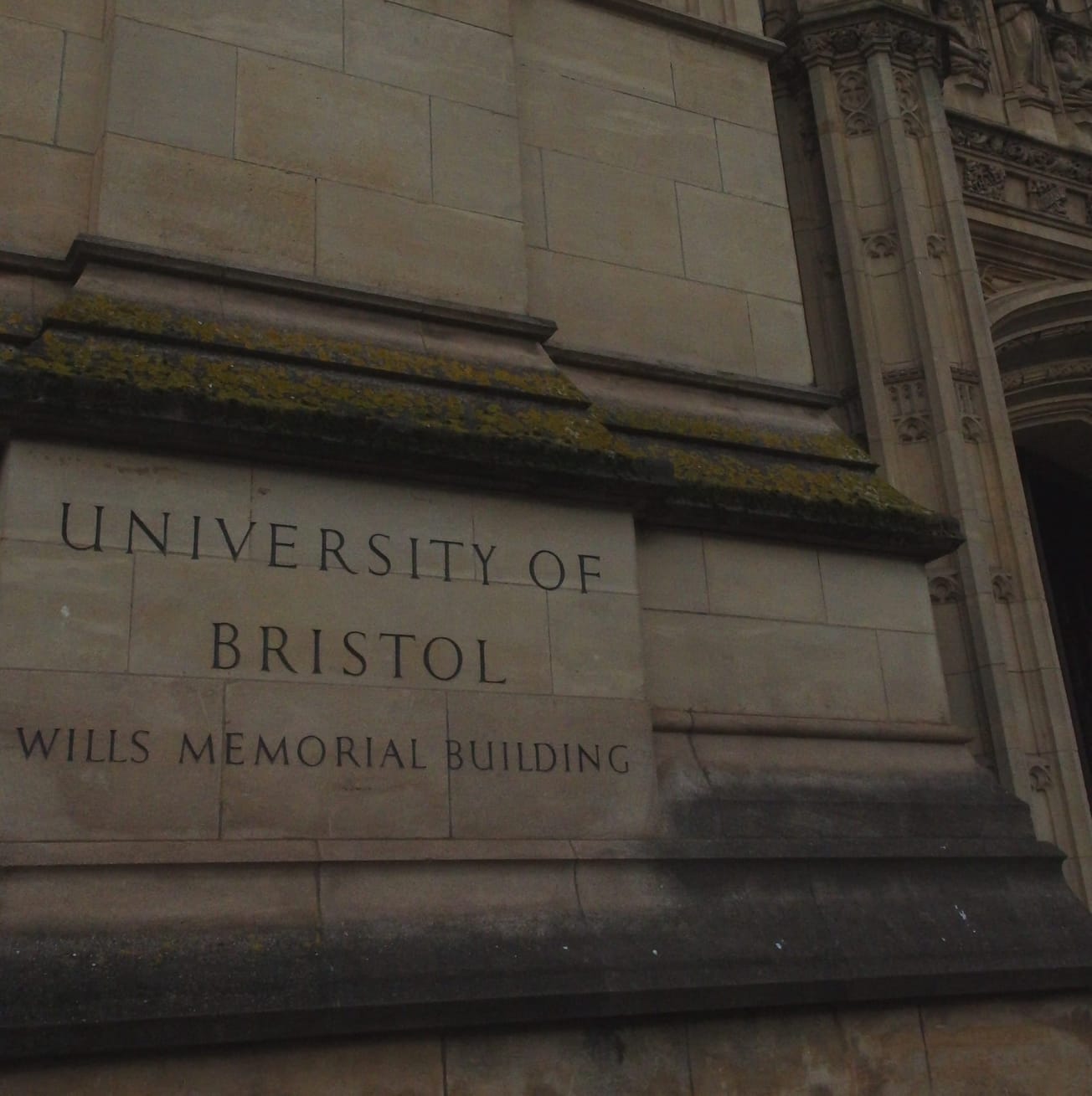
Featured image: Epigram / Sophie Maclaren
Are you excited to join the world of work, or hoping that university lasts forever?