
By Sofia Athena Roberts, Third Year, Classics
None of my clothes fit anymore. It's not something I would usually admit, but for the purpose of this article, it seems fitting.
Most of the clothes I own were bought when I was sixteen, when I had begun to experiment with my personal style. Now, at twenty, my body is not the same as it was four years ago - nor should it be.
As children entering our teenage years, we are heavily informed about the changes that occur during puberty. However, as teenagers approaching adulthood, we are unprepared for the subtle ways our bodies continue to change. There’s no manual for this stage of growing up. We’re expected to figure it out for ourselves.
The changes occurring to my body weren't something I fixated on - until I opened Instagram.
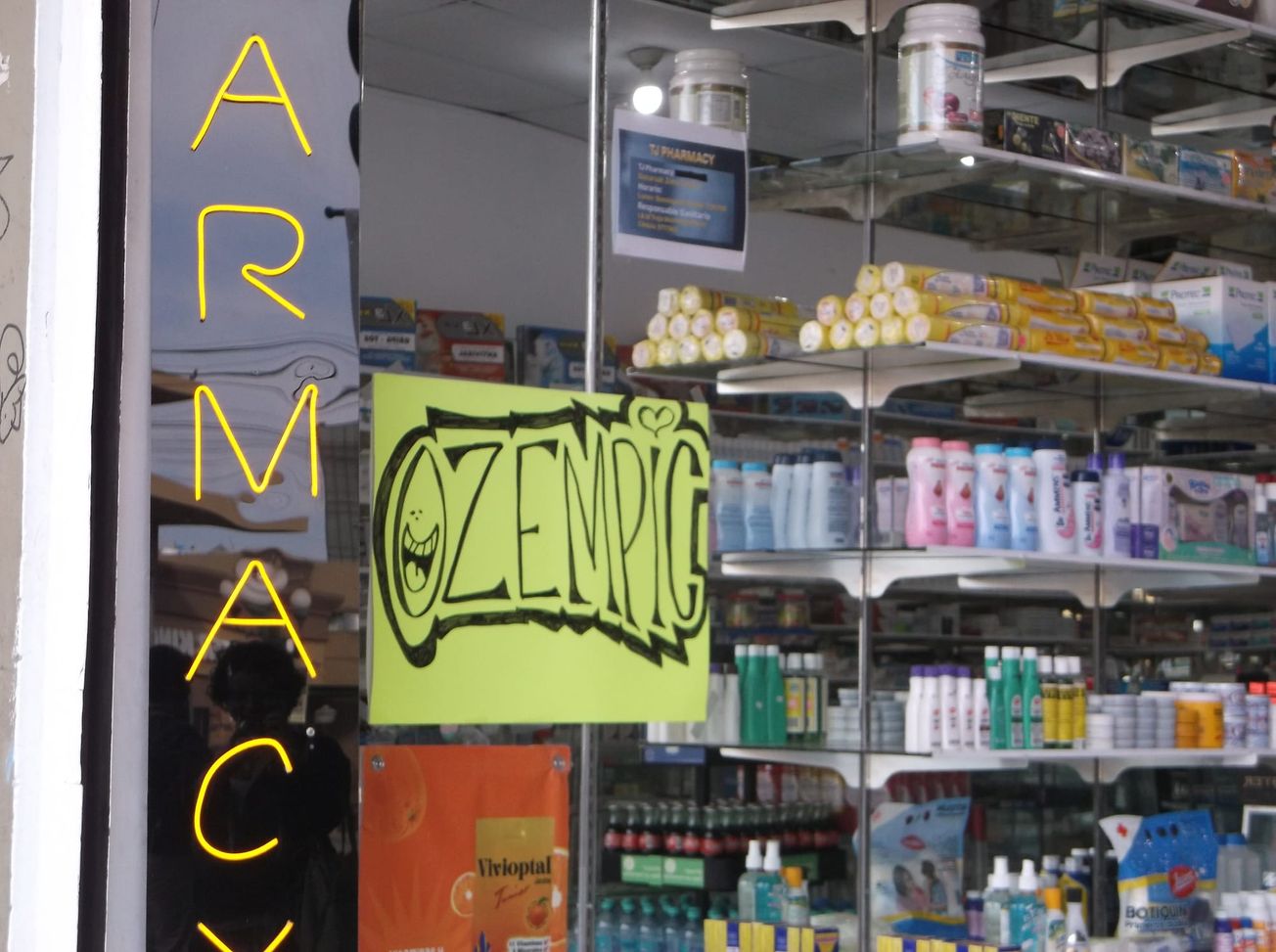
In the era of Ozempic culture, ‘wellness’ influencers, and AI-generated super-skinny models, the message is impossible to miss: Thin is in - again - veiled in the language of self-optimisation.

We all know the cliché ‘comparison is the thief of joy,’ but practical application of its message can be harder to implement. I had thought that now I was older and already exposed to the apparent dangers of social media, I was immune. Though comparison isn't always a conscious process; it's a slow and unsettling erosion.
It wasn’t until I was looking at a seemingly harmless image of a couple on Instagram that I had a sickening thought:
What does she have that I don’t?
The list that ensued was instinctive and cruel:
A slimmer body. A prettier face. A boyfriend.
I had spent the past few years coming to terms with being single, and understanding that it is okay not to be in a relationship - as the poet Olivia Gatwood writes - 'I have so much beautiful time.' Yet in that moment, logical thought became fragile. I was struck with a sensation of personal failure, as though something was fundamentally wrong with me for not having a boyfriend, and that my looks were the reason why.
It was at that point I knew I had to remove myself from the app. The beliefs that I had worked so hard to build and affirm within myself had faltered in the light of someone else’s image.
Beliefs like: ‘I am my own person, my body keeps me alive, I am beautiful.’

It occurred to me that the reason it had taken me so long to implement them was because of my constant engagement with the app. Why would I risk their erasure any further? The damage was algorithmic. And it didn’t stop at beauty standards.
My feed presented a surreal timeline: a baby with an amputated leg, a weight loss ad, a luxury dress priced higher than my monthly Clifton Village rent, an update of war. The contrast was sharp and disturbing.
And no one seemed to be discussing the juxtaposition, or the emotional toll of the output. I knew everyone watched the news, but there can be a disconnection between knowledge of world events and ensuing empathy. If I posted an image of a starving child to raise awareness of the situation in Palestine, I was viewed as radical – or worse, performative.
Another popular idiom comes to mind here, ‘you are what you eat.’ This doesn’t just apply to nutrition - the media you consume can imprint itself on you. The more time I spent on the app, the more impacted I felt by it’s warped dissonance.

I noticed, too, a subtle competitiveness that had emerged between myself and my peers. It translated to sharing pictures for the purpose of gauging the reaction of envy, a performance masquerading as connection. I myself was guilty of it.
On a simpler level, as students and young people we are at a time in our lives where we are inundated with pressure - to get a first in our degree, to fall in love, to know ourselves, to have a career. It’s imperative to relinquish some of that pressure wherever you can, otherwise it can override you. A 2023 study by the UK’s Higher Education Policy Institute found that 71 per cent of students reported a decline in mental health since starting university, with social media use listed as a contributing factor.

Still, I wondered how I could possibly delete the app. I use it every day. I post a picture to my ‘story’ every other day.
The solution was surprisingly simple: I began to replace scrolling on Instagram with scrolling through poems on Pinterest, and I immediately felt calmer.
When I informed my friends of my decision, a serious announcement on multiple group chats, their responses were revealing.
“Oh, I would do that too, but -”
“It’s how I stay informed”
“It’s the only place I talk to people on”
“I don’t think I can…”
However, one friend admitted to me that LinkedIn sometimes makes them anxious, as they compared their work experience to others and wondered whether they were doing enough. There was a quiet pressure to be constantly productive. I was glad that we were able to be so transparent with one another. It reminded me that there is grace in vulnerability, that opening up can deepen connection and understanding.
 Zara Byng
Another friend messaged me immediately to ask if I was okay and if I needed anything, which I appreciated, though logging off really wasn’t the monumental event it appeared to be.
Choosing to go offline wasn’t a dramatic decision, it was an informed necessity. I became aware that the more time I spent on the app, the worse I began to feel about myself and the world around me.
And I realised - It wasn’t worth it.
Featured Image: Unsplash / Adrian Swancar
Have you tried going offline?