By Jenna Baker, Third Year, Film and English
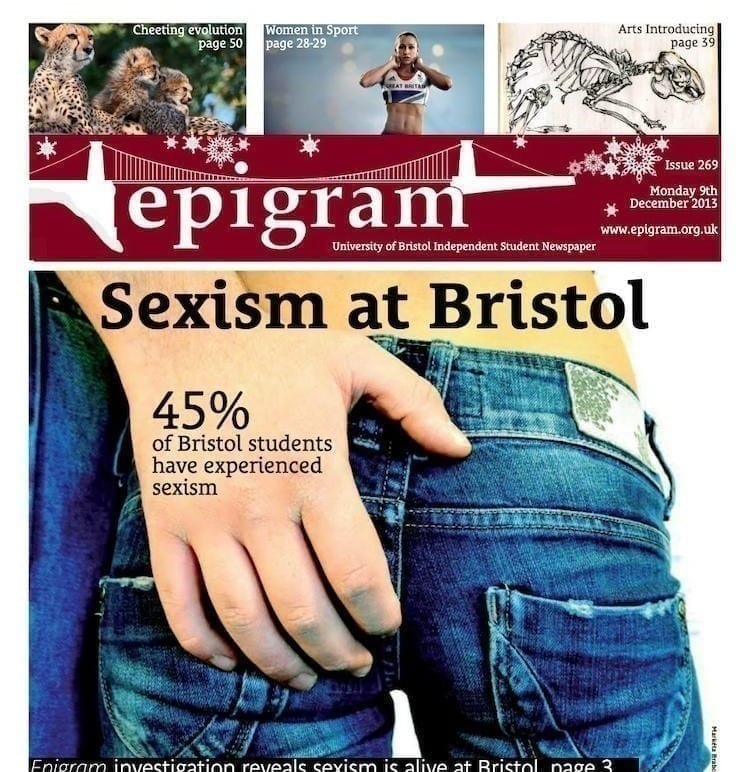
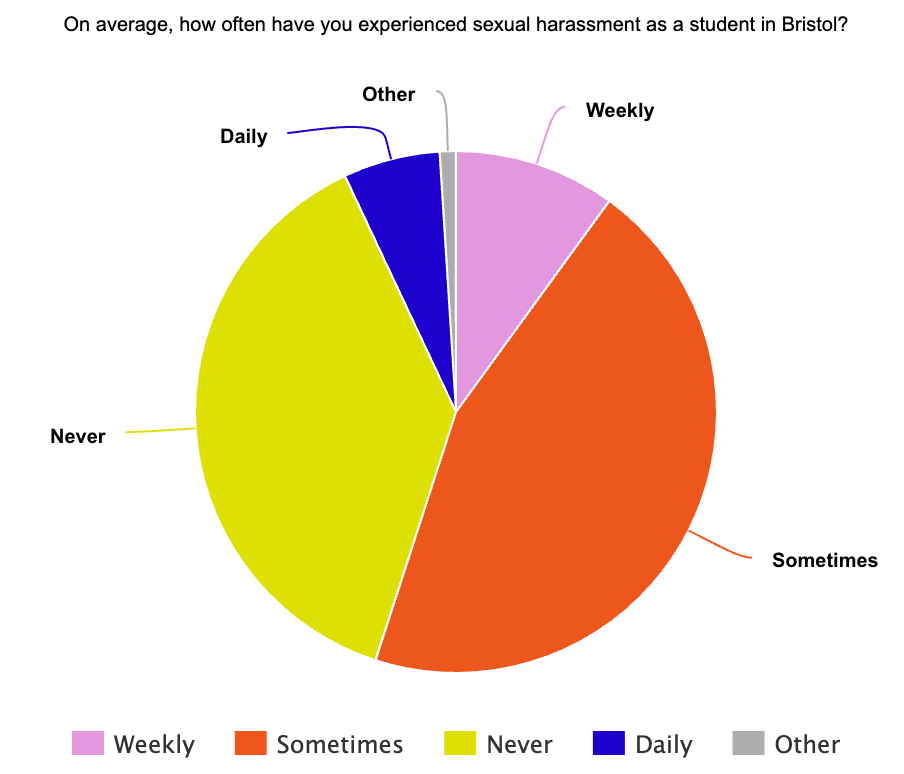
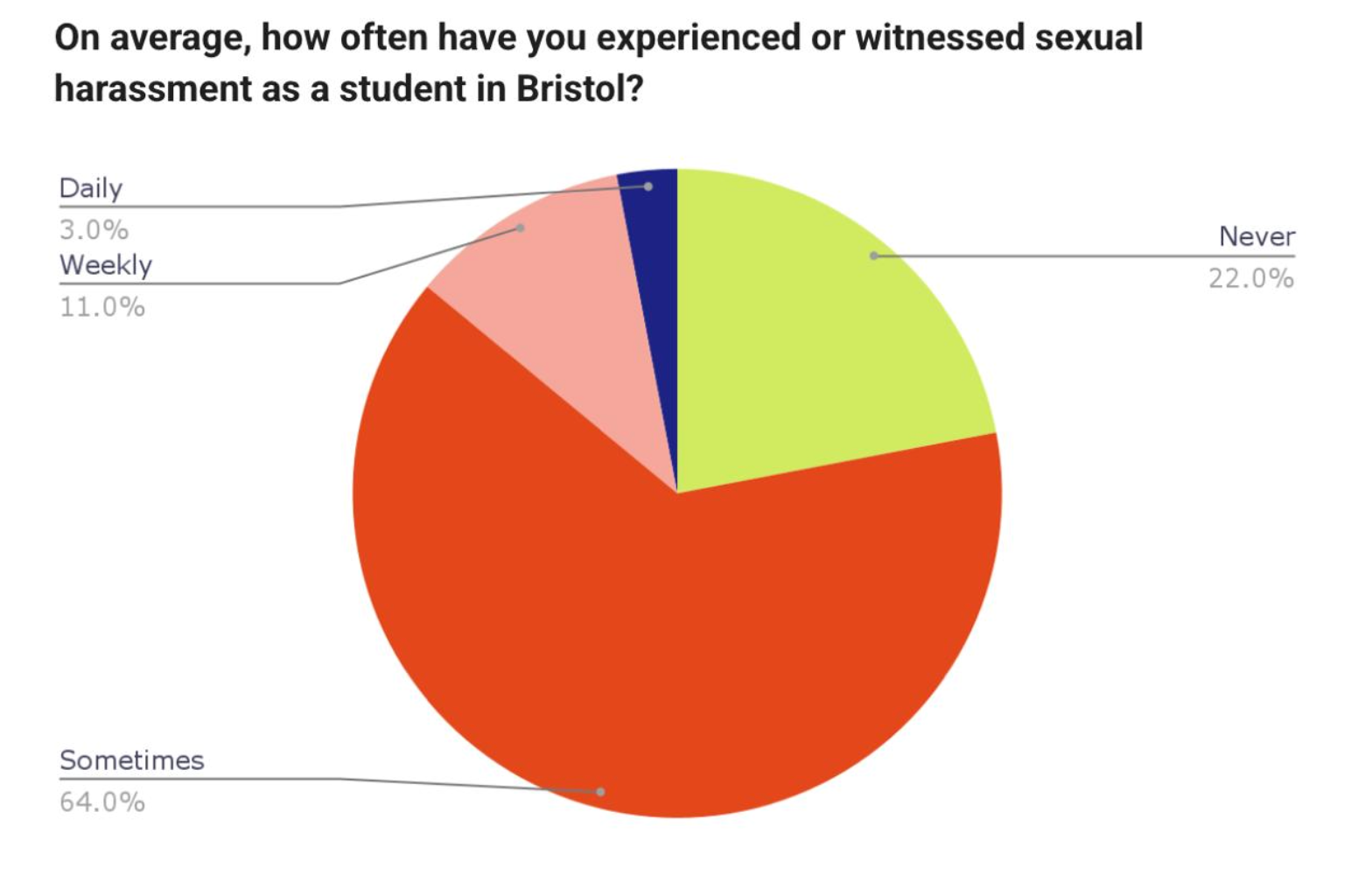
In 2013, a special report from Epigram revealed that 62 per cent of students had experienced sexism or sexual harassment. In a survey conducted this week, results found that 68 per cent of students said they had experienced or witnessed sexual harassment as a student at the University of Bristol.
‘Stay away from him once he’s had a few bevs.’ A sentence, or similar to one, that you may have heard with alarming frequency. The emphasis is always placed on women to support each other, ensuring they are in the ‘know’ about the perpetrators of sexual assault and harassment. Rarely, however, are men encouraged to turn around and point fingers. Why, when almost everyone notices this behaviour, is the instinct always to turn our heads? Is it fair to blame the bystander?
How can we even begin to deal with this problem? I have often asked myself this question when hearing of mutual friends who have been known to speak or act in inappropriate ways. We all have the ability to help stop the spread of rape culture amongst out peers. However, misogyny and harassment are deeply embedded into societal structures, including the education system and thus University more broadly.
Comparing the 2013 article to today, blatant accounts of misogyny prevail. Students clearly still feel threatened by sexual harassment and 56 per cent of the 2026 survey regarded misogyny as being part of a wider culture at Bristol and Universities more broadly.
‘Speaking out, no matter the nature of the incident, is vital’
In 2013 , students reported experiencing ‘stalking, being taken advantage of when drunk’ and ‘threats of rape.’ Alarmingly, but perhaps unsurprisingly, examples of this were also shared in the survey Epigram conducted this week. One response shared how ‘there was culture of misogyny and sexual harassment exposed in the men’s hockey team,’ highlighting how rape culture is often left to fester and grow within sports societies and male only spaces. The response also shared the horrific incident of a ‘rape case being brought to court.’
Another response from this week shared the lack of understanding from men about ‘the nuance of consent,’ explaining also that ‘porn in particular has affected how men view and therefore treat women with misogyny.’ Other responses cited how dating apps have ‘issues of misogyny,’ which when paired with the normalisation of hookup culture, examines how the pressure for students to engage in casual sexual acts is undeniable, also increasingly occurring under the influence of alcohol or drugs.
 Rafaela Davies
Speaking out, no matter the nature of the incident, is vital. Misogynistic or sexist comments are almost always the byproduct of a much more severe belief system. Whilst it is important to ensure you and those around you are active in combatting misogyny, it is still impossible for the individual to dismantle a culture clearly recognised as part of a widespread, societal issue. Universities and wider structures have a responsibility to ensure students are safe.
Should Bristol University be taking more action to ensure misogyny and harassment are not only tackled when they occur, but before they do?
Featured image: Epigram / Issuu
Enjoying 'From the Archives'? Check out the next contribution next Friday!