Straight from the West End and winner of three Olivier awards, Jordan Fein’s new revival of the Bock & Harnick classic makes a convincing case for why even the most traditional musicals should always be given a shot at a revival.
'What more could you possibly say about a musical that has performed so many times?'
There are few musicals more baked into the DNA of popular theatre than Jerome Robbins’ song-and-dance adaptation Sholem Aleichem’s series of short stories about Tevye the Dairyman. Originally produced on Broadway by the legendary Hal Prince in 1964, where it ran for a record-setting 3,242 performances, the show broke new ground in terms of onstage representation and its downbeat ending and yet is now the standard for every major musical since. And while this titanic sense of importance has cemented Fiddler’s place in the history books forever, it makes any revival of the show feel decidedly unsexy. What more could you possibly say about a musical that has performed so many times? Its characters are such that they can’t really be radically reinterpreted like the leads of Cabaret can. Setting it in the modern day, as many bold new revivals of classic works of theatre seek to do, would betray the show’s historical context. And I’m sure that Joseph Stein’s estate wouldn’t be too pleased if you decided to muck about with the script. So how can West End producers seek to justify investing the vast amount of capital it would take to restage this classic show? Well, Jordan Fein, who pulled a similar trick with Oklahoma at the Young Vic, may have cracked the code.
'It’s sort of like if Jane Austen and Fyodor Dostoevsky had decided to collaborate on something together'
Fiddler on the Roof is the story of Tevye, a poor Jewish milkman living in the Russian shtetl of Anatevka in 1905, who seeks to marry his five daughters off to whoever the village’s vaunted matchmaker chooses. However, the daughters aren’t quite so taken with the idea of marrying exclusively for money and instead wish to choose their own husbands without the oversight of their parents. It’s sort of like if Jane Austen and Fyodor Dostoevsky had decided to collaborate on something together. However, the trifling quarrels and stresses of Tevye’s family are soon dwarfed by the encroaching wave of anti-semitism sweeping pre-revolution Russia and the escalating possibility of a pogrom that will force them all out of their homes. Staging a show explicitly about the forced movement of the Jewish people is obviously extremely prickly territory considering the continuing military conflict along the Gaza strip and quickly escalating anti-semitism on many prominent social media platforms. For all his stylistic updates, Fein smartly avoids signalling towards these current political trends, perhaps aware that reviving this show now could potentially be seen as a defense of the Israeli government’s continuing military strikes on Gaza. While I can’t speak to Fein’s specific intentions on this account, I think it’s fair to say that there is a major difference between chronicling the tragic and long-standing persecution of the Jewish people and endorsing a genocide claimed to be committed on their behalf.
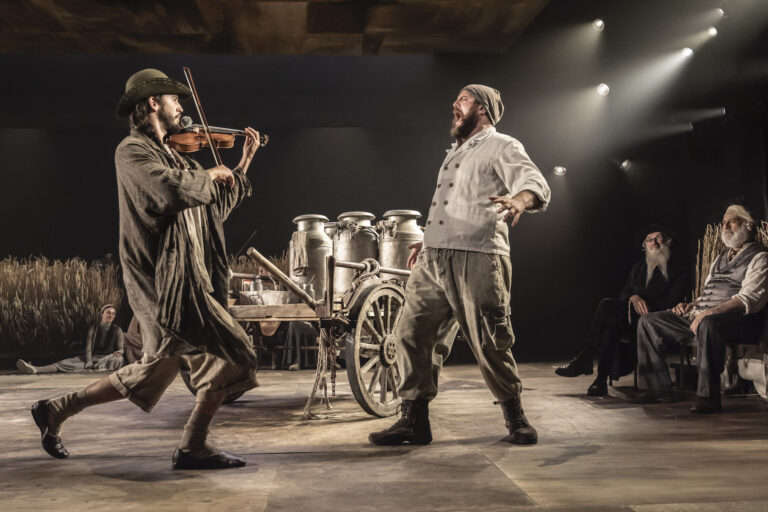
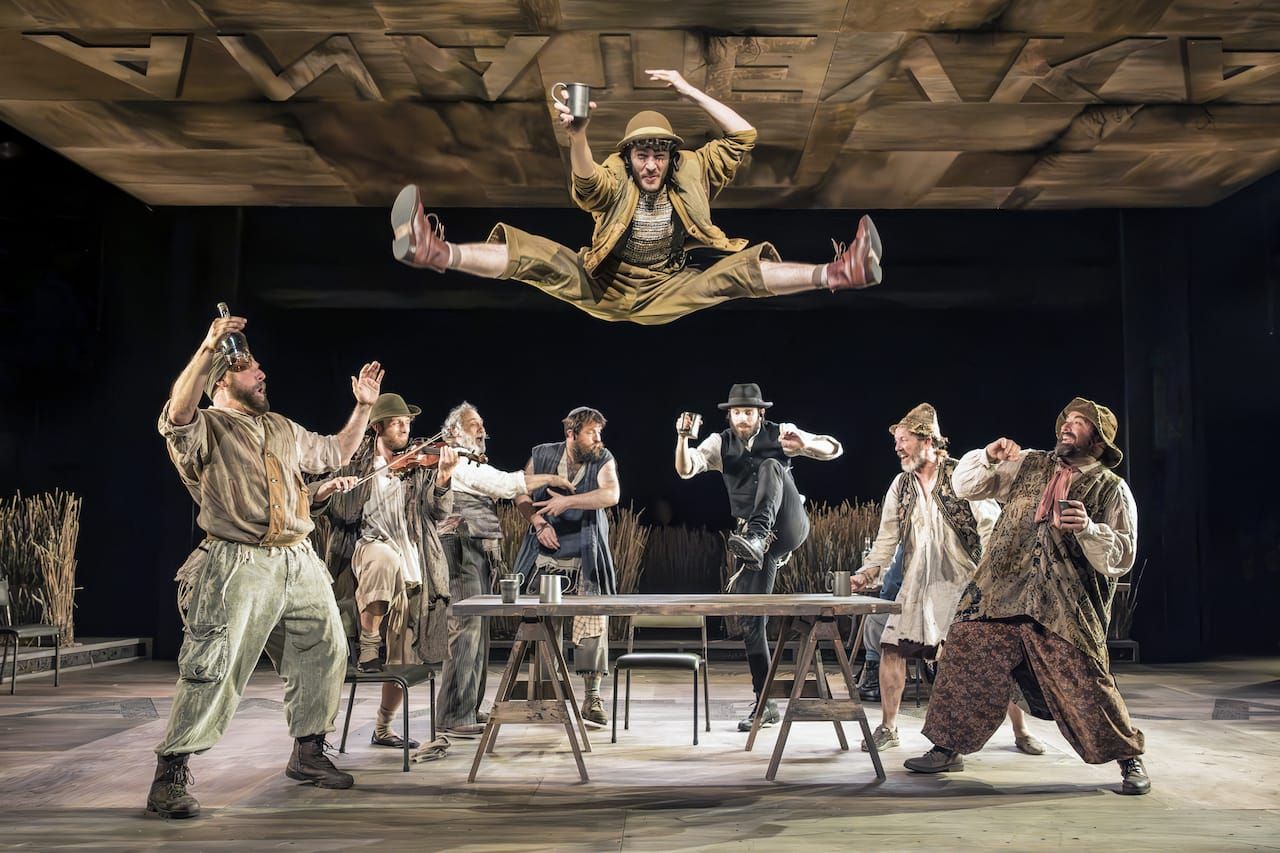
What stood out most to me about this new production is just how magnetic the chemistry between every single member of the cast is. Many of these actors have been enacting these sequences almost nightly since the run started in Regent’s Park Open Air Theatre in July of last year and this is readily apparent from how perfectly each performance gels with all the others. While this may sound like no major feat, I’m always surprised by how excruciating it is to watch two actors stage when their energies and styles don’t feel compatible. Fiddler never runs into this problem. Because every performance is so selfless and of a piece with the ensemble as a whole, it’s very difficult to pick a specific standout. However, if I were forced, I’d no doubt go to Natasha Jules Bernard, who is absolutely electric as Tevye’s eldest daughter, Tzeitel, especially in her bravura rendition of “Matchmaker, Matchmaker” (perhaps the show’s most famous number). In particular, her dynamic with Motel the tailor (played by Dan Wolff) is so fun to watch that she’s even able to cover for the fact that Wolff struggles slightly in his rendition of “Miracle of Miracles”. If there’s any downside to how perfectly in sync the cast is, it’s that one or two of the actors can sometimes fade in the background slightly when the weight of the story isn’t being thrust upon them, such as Jodie Jacobs as Golde and Hanah Bristow as Chava.
Choreographer Julia Cheng (hot off the industry redefining success of her Cabaret revival) opts to focus predominantly on circular imagery in many of her dance sequences. In particular, the opening number of “Tradition” sees the ensemble form a tightly knit ball at the centre of the stage, representing not only the closeness of their community but also forming a kind of ‘attack circle’ against the hostile forces that seek to divest them of their land. That said, whenever the cast does break into more traditional Robbins dance sequences of high-kicks and spins, it’s utterly transfixing, none more so than a section performed entirely with empty bottles balanced on their heads (I certainly had to dry my palms by the time they eventually took the bottles off). The most impressive technical decision here is designer Tom Scutt’s choice to place the titular fiddler (an extraordinary showcase for Raphael Papo) on a platform twenty feet in the air, covered in stalks of corn. However, this isn’t just some arbitrary coup de théâtre designed purely to grab headlines, but instead makes the fiddler at once supernatural and more sinister, creating the sense that the stage itself is constantly bearing down on the main characters in the exact way their political landscape is.
 Imogen Day
I was completely blindsided by this production. Fein and co are able to strongarm even the trickiest numbers into getting the kind of prolonged applause breaks you only see on the West End. While they’re unfortunately unable to combat the sad fact that Bock and Harnick burn their best numbers in the first thirty minutes, they otherwise squeeze any and all juice out of what I previously thought was an empty vessel. While the production has now unfortunately closed in Bristol, it’s moving onto Liverpool and Manchester before spending a month playing at Birmingham’s Alexandra Theatre over Christmas and I would highly recommend checking it out.
Have you been to the Hippodrome?