
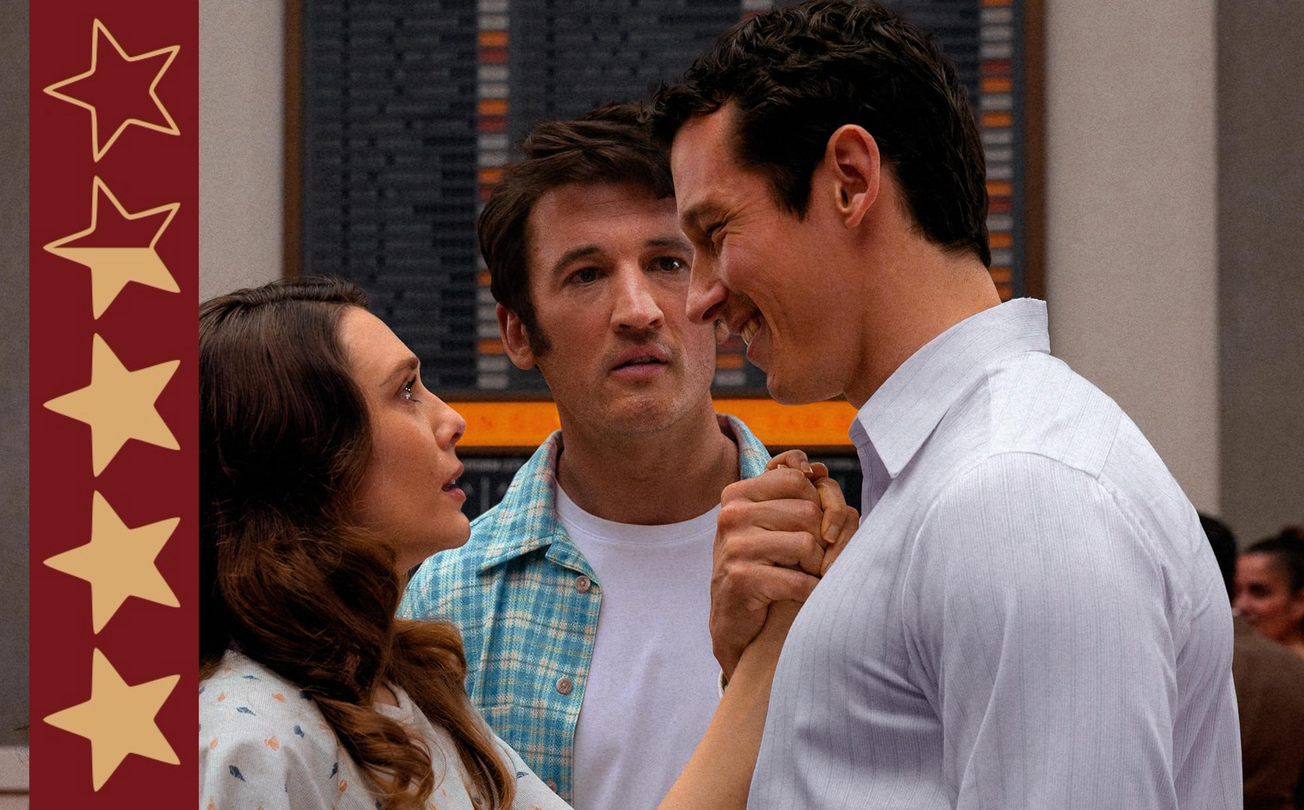
By Charles Hubbard, Second Year, Theatre and Performance
Threesomes are in. After decades of Hollywood turning a blind eye to the possibility that relationships might exist outside neat pairs, mainstream cinema has finally begun to flirt with polyamory. In the past 18 months alone, Challengers, Splitsville, and Mickey 17 have coyly gestured toward the idea of the throuple, testing how far audiences are willing to follow.
Which is precisely what makes Eternity, a film so small-c conservative, so cautious, and so resolutely middle-of-the-road, feel all the more conspicuous. At a moment when cinema appears ready to challenge traditional romantic structures, Eternity retreats into familiarity, its refusal to take risks rendering it oddly out of step with the cultural moment it inhabits.
For a film about being forced to choose a single moment of your life to relive for all eternity, Eternity, David Freyne’s post-mortem rom-com, is strangely light on existential dread. Instead, it leans heavily into warm fuzzies and remains firmly committed to a ‘one man, one woman’ philosophy. Its pointedly un-hip vision of domestic bliss, paired with an entirely agnostic afterlife, makes it feel curiously pitched at boomers, even as it’s being marketed toward the Letterboxd-pilled A24 generation alongside titles like Marty Supreme and Materialists.
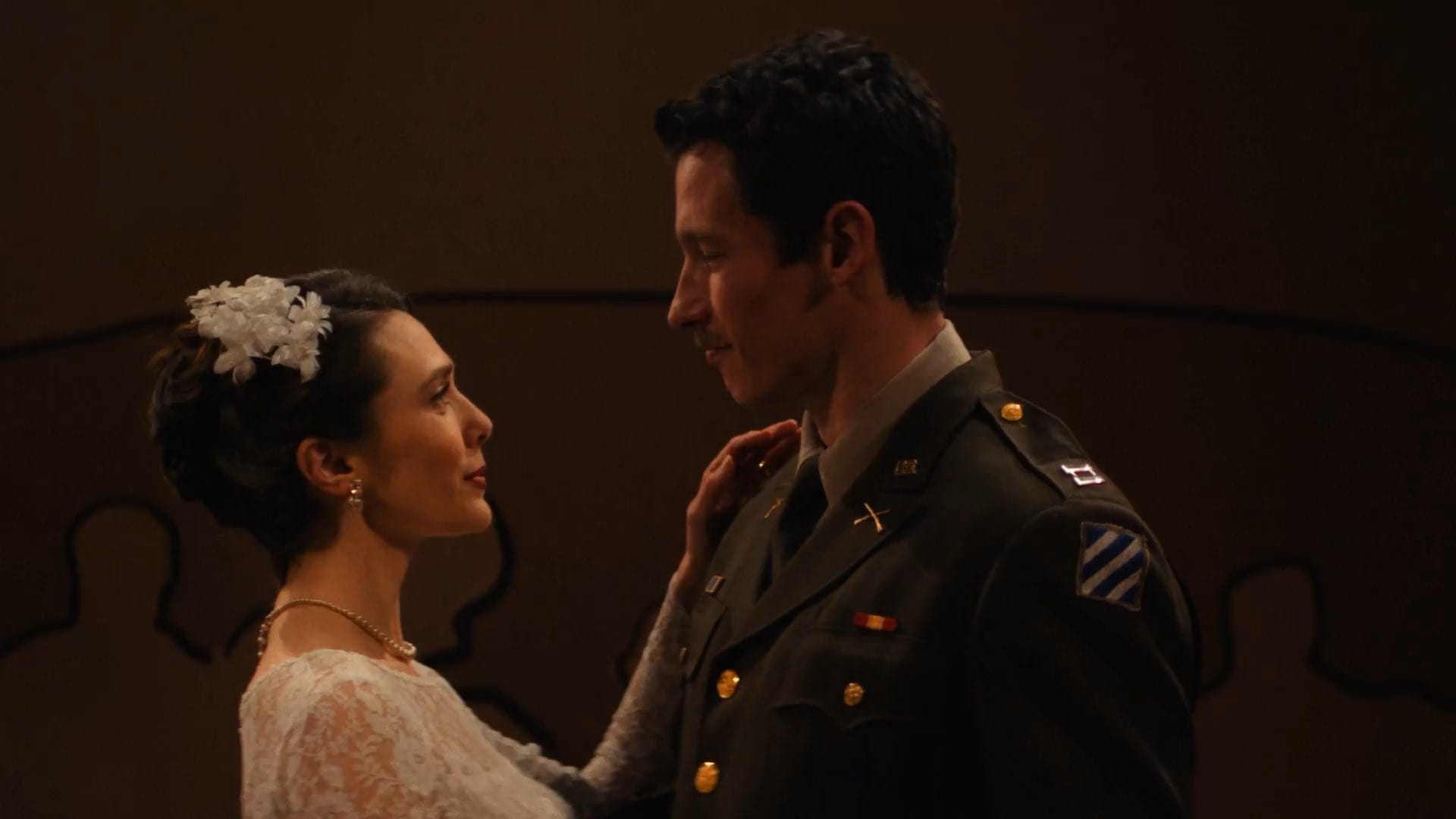
The film is broadly entertaining, well acted, and undeniably handsome to look at, but it also feels destined to become another casualty of post-pandemic Hollywood’s ongoing struggle to successfully market star-driven, big-budget original dramas, particularly those that fail to gain traction on the awards circuit.
The film has an undeniably enticing elevator pitch: a woman, Elizabeth Olsen, in her first proper lead role since… well, maybe ever, dies and is sent to an afterlife where everyone is forced to pick one moment of their life to relive for all eternity. Conveniently, she dies in the exact same week as her husband Larry (Miles Teller, straining to pass as an out-of-shape schlub), so the choice of who to spend eternity with initially feels like a done deal.
That certainty collapses when she encounters her first husband, Luke (Callum Turner), who died fighting in the Korean War after just two years of marriage. This leaves her with an absurdly cruel dilemma: does she choose her first love, who has waited 67 years in purgatory for a second chance, or the man she has already spent her entire life with?

The film piles on logistical afterlife rules, Olsen getting just a week to decide, the inability to switch eternities, that are entirely arbitrary and exist solely to funnel us toward this emotional conundrum. The rules don’t matter, and Eternity knows it. The film even seems to shrug at them entirely in its inexplicable (and slightly unnecessary) final fifteen minutes.
As alluded to earlier, Eternity largely sidesteps the deeper existential questions its premise invites, opting instead for a fairly pat love triangle, albeit one that requires a concept this surreal to function at all. While I would have liked the film to dig into where the afterlife physically exists, how much change is possible within these pockets of eternity, or even the economy of the afterlife, I recognise that not every film needs the psychological rigour or metaphysical obsession of a Paul Schrader joint.
Director David Freyne and co-writer Pat Cunnane gesture toward ideas of religion, the existence of God is kept conspicuously vague, and morality (why be good in a world without consequences?), but only ever as passing jokes en route to the next romantic beat or comic set piece. The film’s cheeky, pseudo-fantasy world-building ultimately recalls Ghost more than anything else, right down to the presence of a famous Black actress in a scene-stealing supporting role — here, it’s Academy Award winner Da'Vine Joy Randolph as Larry’s AC (Afterlife Co-ordinator). The difference is that the audiences who flocked to Ghost 35 years ago are unlikely to encounter Eternity until it pops up on an in-flight entertainment system sometime a decade from now.

Elizabeth Olsen may be the most tragic example of an entire generation of gifted young actors sidelined by long-term commitments to the Marvel Cinematic Universe. After years spent in the Marvel silo, it’s easy to forget just how extraordinary she is, and Eternity serves as a timely reminder. The role feels almost tailor-made for her classical beauty and her ability to pivot effortlessly between screwball comedy and sincere drama. Hollywood, please: stop sleeping on her.
Much like Materialists, Celine Song’s earlier (and similarly prudish) take on open relationships, the real issue here lies with the men. Miles Teller and Callum Turner, though undeniably talented, are far too interchangeable to function convincingly as romantic rivals. They share the same height, haircut, and body type, to the point where, if you slightly cross your eyes during a two-shot, it starts to resemble a film about identical twins.
Teller is simply too good-looking to convincingly sell the out-of-shape, lovable dope the script demands, while Turner lacks the magnetic pull required of a true romantic ideal. In a film that hinges entirely on a woman choosing between two supposed opposites, it’s a problem when the male leads feel less like contrasting soulmates and more like perennial runner-ups for the exact same roles.

I’d genuinely recommend Eternity. It’s easy to imagine it working for almost every possible demographic, which is both its greatest strength and its ultimate Achilles’ heel. The film often feels like a Charlie Kaufman-esque script that’s had its weirdness and ambiguity carefully sanded down by a studio, a suspicion that feels slightly misplaced given A24’s reputation for backing art-forward, resolutely uncommercial projects.
Maybe David Freyne is just a big wife guy! And honestly? That’s fine. Anyone determined to take down a film whose central thesis is that it might actually be quite nice to spend eternity with the woman you’ve loved for 65 years probably needs to get out more.
Featured Image: IMDb / Charles Hubbard
Have you caught A24’s latest rom-com in cinemas yet?