By Harry Gillingham, Second Year, Politics and International Relations
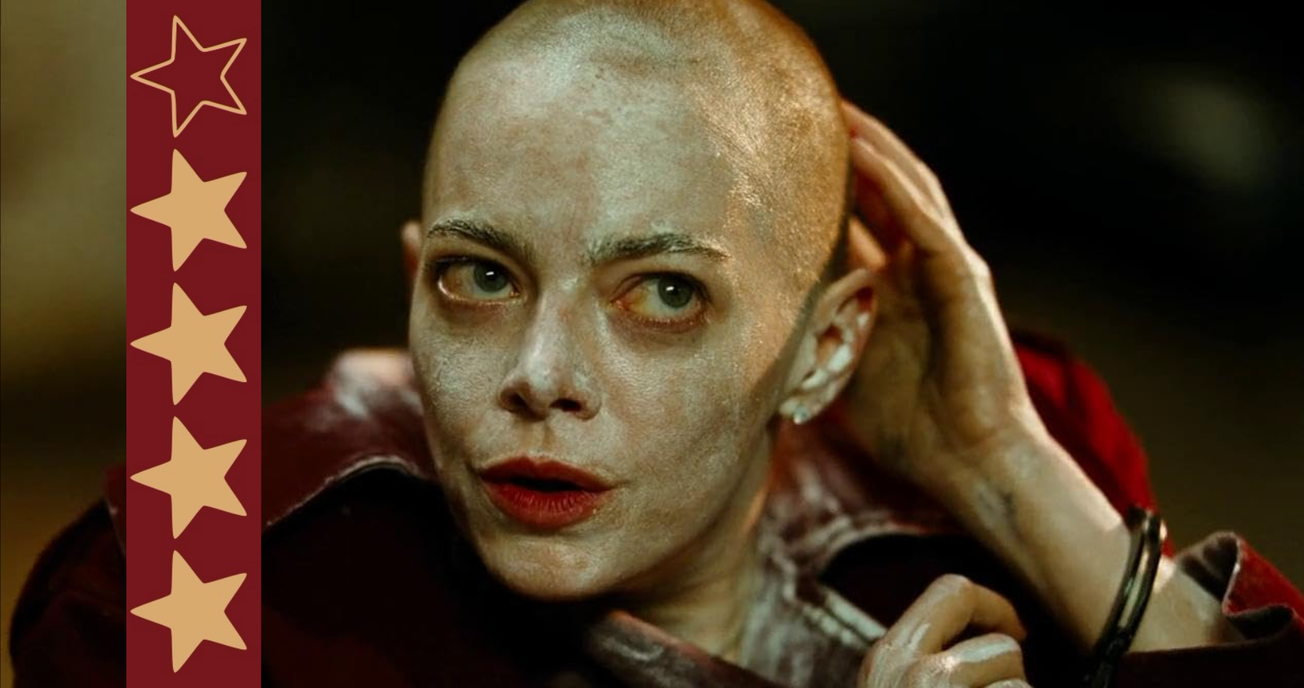
Michelle Fuller, a highly renowned pharmaceutical CEO played by Emma Stone, awakes to find herself kidnapped and held captive in a basement with her head freshly shaved. Her captors tell her that her head has been shaved because she is an alien, and they must prevent her from contacting her mothership and incurring Earth’s impending demise.
Her response to this revelation?
‘Let's start a dialogue’.
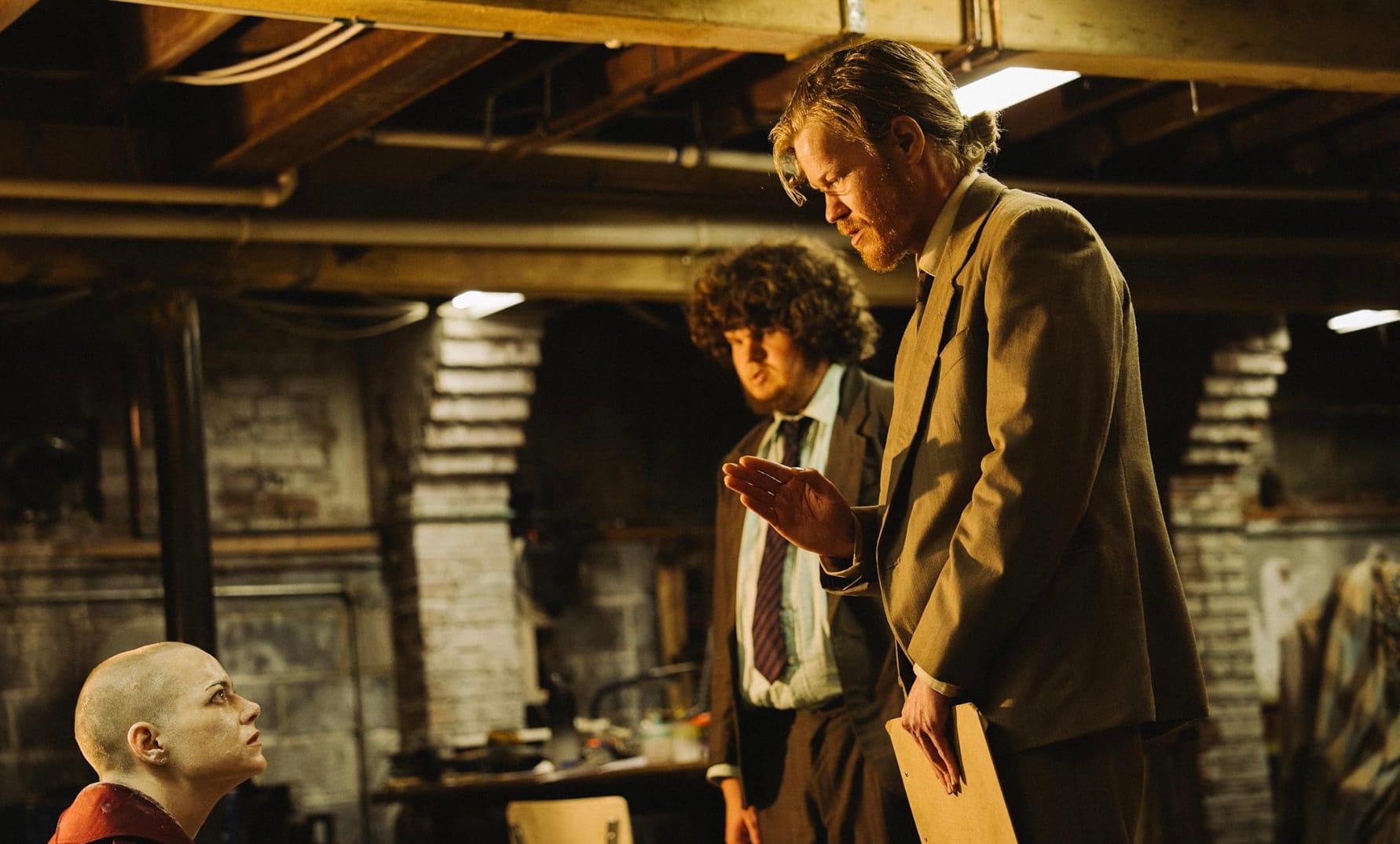
It is exactly this juxtaposition, pairing the normality of empty, coercive corporate talk in the face of the irrationality of a kidnapping, that serves as the crux of the absurdist realm the film constructs. Each subject is a combatant, Stone’s character shifting through survival strategies as if she's negotiating in a boardroom while Jesse Plemons, playing Teddy (bee-keeper and warehouse worker turned kidnapper), erupts in a conspiracy fueled rebuttal. Clever narrative framing and dialogue destabilises our perception and engulfs the audience into a post truth reality, where absurdity becomes normality. They duel with one another for their worldview to triumph, all the while Lanthimos teases us, slowly pulling at the strings of these two subjects, until the tenuous texture of the film snaps into a glorious explosion of moral panic.

Despite being based on the premise of the 2003 Korean comedy Save the Green Planet!, it comes at no surprise that Yorgos Lanthimos’ new film Bugonia is distinctly recognisable to his auteurship. Signaturely occupied with his stylistic musings on absurdism, from The Lobster (2015) jabbing at modernity’s despondency toward connection, The Favourite (2018) focusing upon systemic marginalisation, Poor Things’ (2023) attention toward the nature of agency, and Kinds of Kindness (2024) satirising the concept of devotion, Bugonia too characterises and explores such thematic occupations further. Lanthimos re-conceptualises these themes through a tale of inequality and the breakdown of order, reflecting the radicalism reached by subjects upon capitalism’s indifference toward them. While in his other work, his subjects speak in a blank matter of fact tone that heightens the distressing tangibility of the absurd reality Lanthimos is constructing, Bugonia works counter to such trademarks.
Despite the film’s subject being an ‘alien’, he ironically probes at a sense of realism through his employment of naturalistic dialogue. Unlike Lanthimos’ stylistic flares in Poor Things that emphasised indulgence into surrealism, Bugonia employs hyperrealist stylistic attention to its images. Where the expressive eyes of Emma Stone are the focal point of every frame she is on screen, each time they widen or flicker revealing further depth to the mania that is unfolding. This tone plays in unison with Lanthimos’ perversely dark humour, inciting that the only way we, as an audience, can truly understand our contemporary misgivings is to laugh uneasily at them, reveling in all their absurdity. The film, therefore, holds its finger firmly on the pulse of contemporary disillusionment and anxiety, furiously stoked by the flames that only burn those who carry warehouse boxes in the basement with bruised fingers and sticky, honey-like sweat beading down their brow. Where, in the face of such disillusionment, it makes more sense for a CEO to be alien than human.

Crisply composed in 35mm, the opening shot of a purple flower met by a golden bee is evocative of the film’s contemplation on the raw beauty of nature. Its vibrancy, however, is overcast by the depths of Teddy’s psychological lamentations on the futility of the bees’ devotion to hierarchy despite their eco-destruction. As such, the purity of nature gives way to human nature’s ability to distort its image in the shape of its desire. Yet there remains a perverse beauty and tragedy in its absurd condition.
Tonal dissonance, such as in this opening, establishes the film’s voice that echoes uneasily throughout - the public image of purity and the private image of its corruptibility that lurks beneath. The score’s operatic brass and strings, echoing classic Hollywood, are not formally triumphant. Instead they envelop the film’s downward spiral into an attack on reality and truth. The colour palette ranges from the sterile whites of CEO Emma Stone’s lofty office, into the sickeningly orange hues of Plemons’ basement. Its yellowish orange lens is characteristic of the honey from the worker bees, established in the opening, but this visual motif is realised alternatively in this basement, where Plemons holds Stone captive. No longer are these shades of golden orange evocative of the purity of their devotive nature, but rather a visual of moral collapse upon exploitation and degradation. Within Plemons’ basement, a site of apocalyptic salvation, their produced surplus of honey is no longer in deliverance to the white boardroom walls that sits publicly atop their hive. Rather it is a conspiracy fueled manifestation that hangs in the tar-like yellowish and orange hues that veil each shot, while the operatic score cheers in tragic triumph.
 Kitty Atherton
Yorgos Lanthimos explores absurdism by blending the contradictions in the beauty of existence with the oppressive arbitrary constructs humanity produces. In Bugonia, Lanthimos focuses on the coexistence between the perceived beautiful visual form of Emma Stone’s office, its purity and agency, with the sickly underbelly of Plemon’s basement that, through his labour, holds up the structure the office sits upon. In this basement of the bee hive, the honey produced is not sweet, as the image of the Queen Bee may suggest, but is inseparably contaminated through its exploitation and moral degradation.
Featured Image: IMDB / Bugonia
What did you think of Bugonia?