By Crystal Calo, Second Year, Politics and International Relations
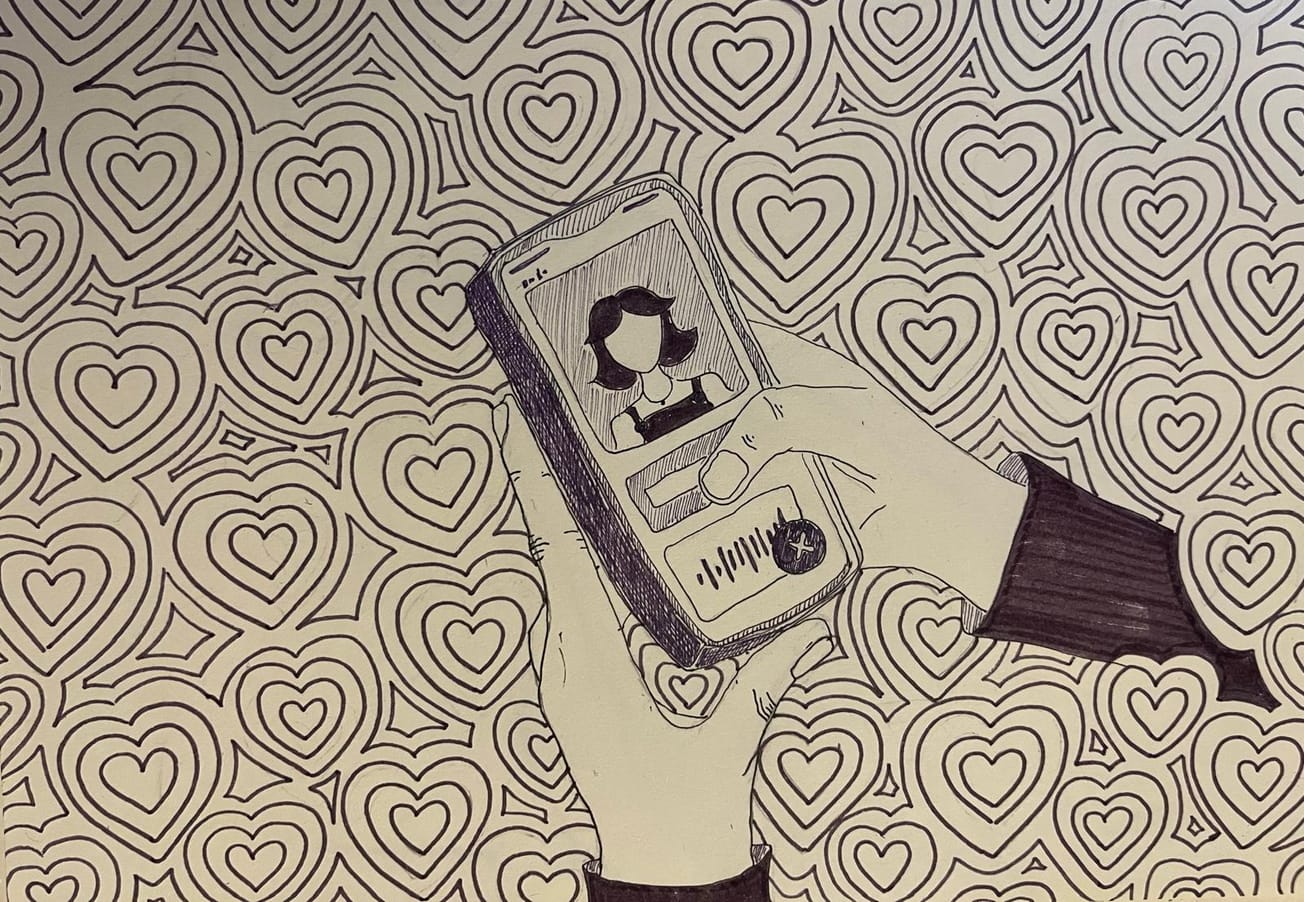
I was socialised to see my personality as socially unappealing. ‘Crazy Crystal’ was the most recent judge of my character from an acquaintance, but I found hope in early 2025 that my personality was attractive. I was in the Senate House, scrolling through Hinge. I suddenly saw a guy in my halls requesting a ‘slightly autistic woman’. Over that year, I saw my appeal at least once a day. From Churchill to Manor Hall, the calls for my romantic company were found repeatedly.
Intents vary when putting such a response down. I won’t go and shame every man. John from Surrey could actually want a more neurologically diverse dating pool. Nonetheless, the ‘Slightly Autistic Woman’ prompt was not a point of progress but cultural regression. There is inadequate education on autism in society. This has led to autistic people remaining excluded and sometimes fetishised when dating.This is not a critique of Hinge specifically. More accurately, this piece highlights the fact that we are still submerged in an uninclusive dating pool due to a lack of education on neurodevelopmental disorders.
The societal misunderstanding of autistic people’s capacity for love has been embedded in medical discourse. Neurotypical clinicians have often rationalised their exclusion of autistic people from love. The consequences of clinical mishandling have trickled down into the media cementing harmful stereotypes against autistic people. The media fails already with tropes like savantism. Unfortunately, I don’t possess a superhuman ability to pull all-nighters for my essays like I’d hope to. It is inescapable to be exposed to derogatory portrayals of autistic people when using mainstream media when trying to understand what autism is.
It is inescapable to be exposed to derogatory portrayals of autistic people when using mainstream media when trying to understand what autism is.
However, in the context of televised love, autistic people are particularly excluded in a way that violates their dignity. I remember wincing at the awkward camera angles of Love on the Spectrum (LOTS), a deliberate choice of people with higher support needs and satirisation of moments where social cues are misread. To my joy, my issues with the program went beyond the clearing of my Netflix history and have been supported by research.
Love on the Spectrum’s problematicness can be found in the neurotypical gaze. This is an extension of Laura Mulvey’s idea of the male gaze, whereby cinematography is coined to portraying an autistic person in an objectifying manner. This includes recurring themes, autistic traits being portrayed as a goal to ‘fix’ as well as visual cues that place an autistic individual's behavior outside the bounds of normative social engagement. Thus, many shows are not used to educate neurotypical spectators on the complexity of autistic individuals but to reinforce the autistic persons’ interpersonal abnormality.

The neurotypical gaze can actually be seen in the supercrip narrative. It is inspirational when an autistic person overcomes their social difficulties to find a partner in LOTS rather than Love Island, where participants are expected to do so and it’s not treated as an active challenge that is conquered. The structure of LOTS mirrors social perception of autistic compatibility. Studies have found that neurotypical participants think that autistic people are well suited to each other. This is because their issues with impairment means they would be perfect for each other. I don’t know about you, but this being perpetuated by the media I find exclusionary. The structure of my brain is not a box into the range of romantic suitors I could choose to be a companion.
Such effects of media framing are clear, resulting in a reductive view of Autistic people in romantic contexts. Often autistic people’s romantic desirability is constrained. Feminist disabilities scholar Michael Gill coined the term sexual ableism. This is societal overlooking of an autistic person's sexual agency due to infantilising stereotypes. Their later book, 'Already Doing It,’ redefines autistic adults as sexually capable. With sexual ability in mind the quantifier ‘slightly’ is I think the biggest joke when it comes to my dating confidence. As much as masking is a very socially beneficial skill to possess. One can gain difficulty in feeling confident in peoples’ acceptance of their raw personality. I may bite my nails, have poor posture and muddle my words. This is not a true love of an autistic partner, but one that fine tunes the multifaceted nature of my personality into socially desirable. In contrast to the discardable, but irreducible parts, that a neurotypical gaze would seek to reduce.
 Lucy Hillier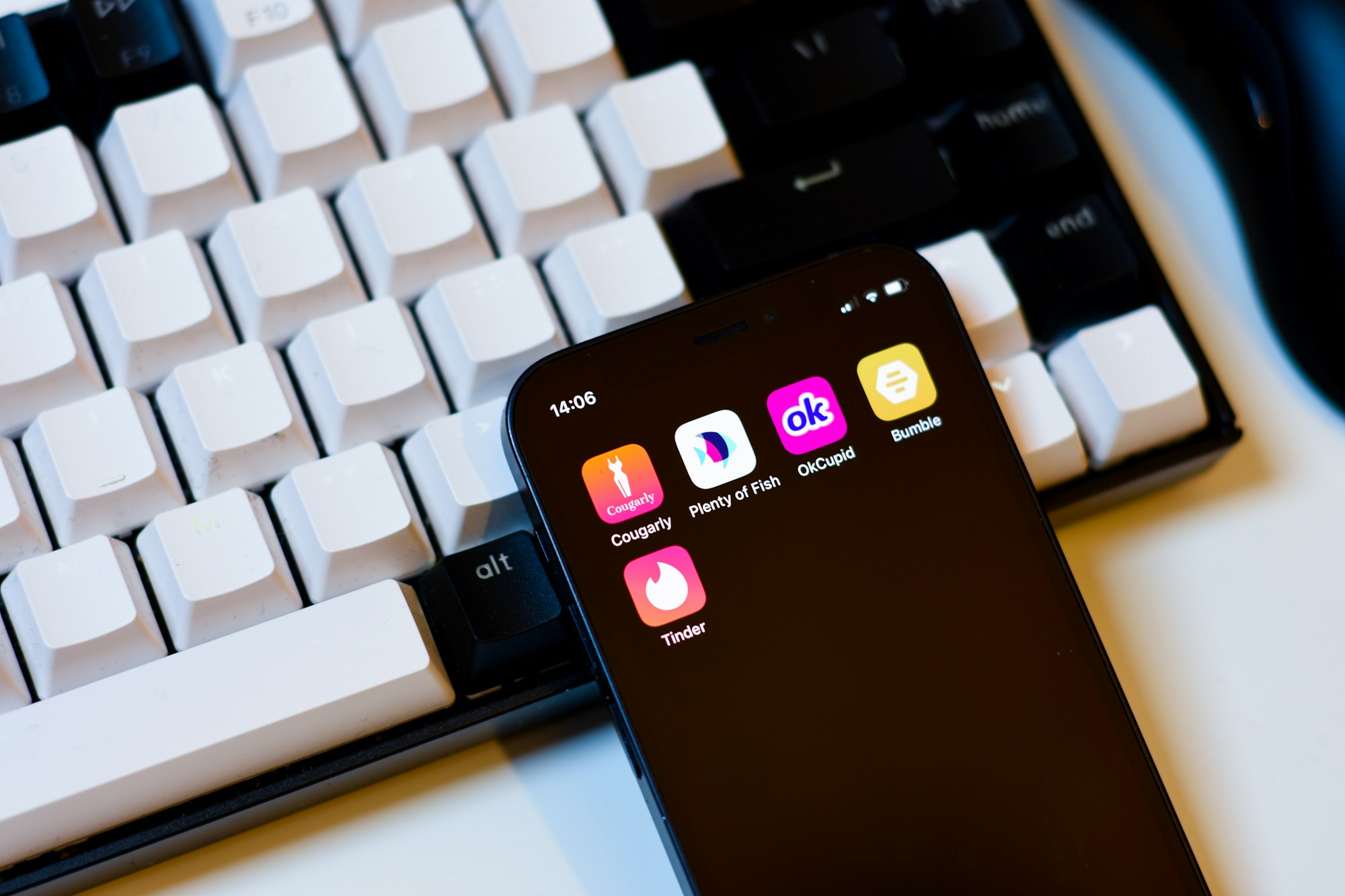
According to a study done on college students, the perception of autistic people can change if they are depicted as ‘good.’ Good is a bit of a stretch. I think that portrayals must highlight that we are equally complex humans deserving of respect that are realistic of weaknesses we might face. Rather than a satirical device. The ‘slightly autistic woman’ trope reveals there is a significant gap in society’s social embrace of autism. Adequate education is the way forward to reduce the stigma that cripples the neurodivergent community. We must work toward dating one day being a safe haven that should be safe for all brains.
Featured image: Epigram / Lindsay Shimizu
What are your thoughts on this trend of requesting neurodivergence on dating apps?