
By Crystal Calo, Second Year Politics and International Relations and Bethany Banks, Third Year English
St Patrick’s day celebrates Christianity being brought to Ireland. In the early days of March, many Bristol students will anticipate where they will end up on Kings Street or how many Gs they plan on splitting. For Crystal Calo and Bethany Banks it is no better time to delve into some of the best of what Irish film and literature has to offer.
Crystal Calo: some Irish film recommendations
The Commitments (1992)
First, the 1992 film The Commitments follows Jimmy Rabbitte, a young, unemployed working-class boy from Dublin, who pioneers a northern soul band. Despite having a looming record deal and a loyal fanbase, Rabbitte’s success collapses following the public exposure of controversial relationships and unsustainable interpersonal dynamics within the band. However, Jimmy is still determined to create a successful band, professing he will next make a country music band.
Ireland’s transitional economy is reflected in its mixed portrayal of meritocracy. By the end of the film, Jimmy remains rejecting conventional employment, despite the failure of his initial band. He remains hopeful that his talents, in being able to construct and lead a band, will eventually lead him to success. The Commitments not being moulded as meritocratic success shows Ireland’s emergence into an economically prosperous economy. Nonetheless, Jimmy ‘s optimistic psychological state is portrayed as an admirable, heroic quality showing how Ireland, on the cusp of economic liberation, was starting to feel optimistic without the constraint of financial insecurity.
Furthermore, the film steering away from working class stagnation being emphasised as a central plot point reflects how Ireland’s sociocultural transition was influencing art. The Troubles movement dominated the punk scene prior to the nineties. Bands such as Belfast’s Stiff Little Fingers, used music to communicate anger at Ireland's war. However, after diffusing political tension, there came the post Troubles movement of the late 1980s to the mid 1990s. Irish punk transitioned from speaking of political struggle to exploration of youth identity. With later Punk bands such as the Outcasts amd Therapy tackling the themes of romance and mental health. This is embodied in the structure of the film which despite showing many characters affects of islands economic stagnation mostly holds scenes on interpersonal dynamics within the band. Linking back to the post Troubles movement, increasing economic security allowed people to explore their personal identity through music, rather than draw their collective struggle to light.
Thus, The Commitments is unfortunately not a film that can give ambition to budding young artists. However, it does show how decreasing political tension and rise in economic optimism had an influence on Irish expression.
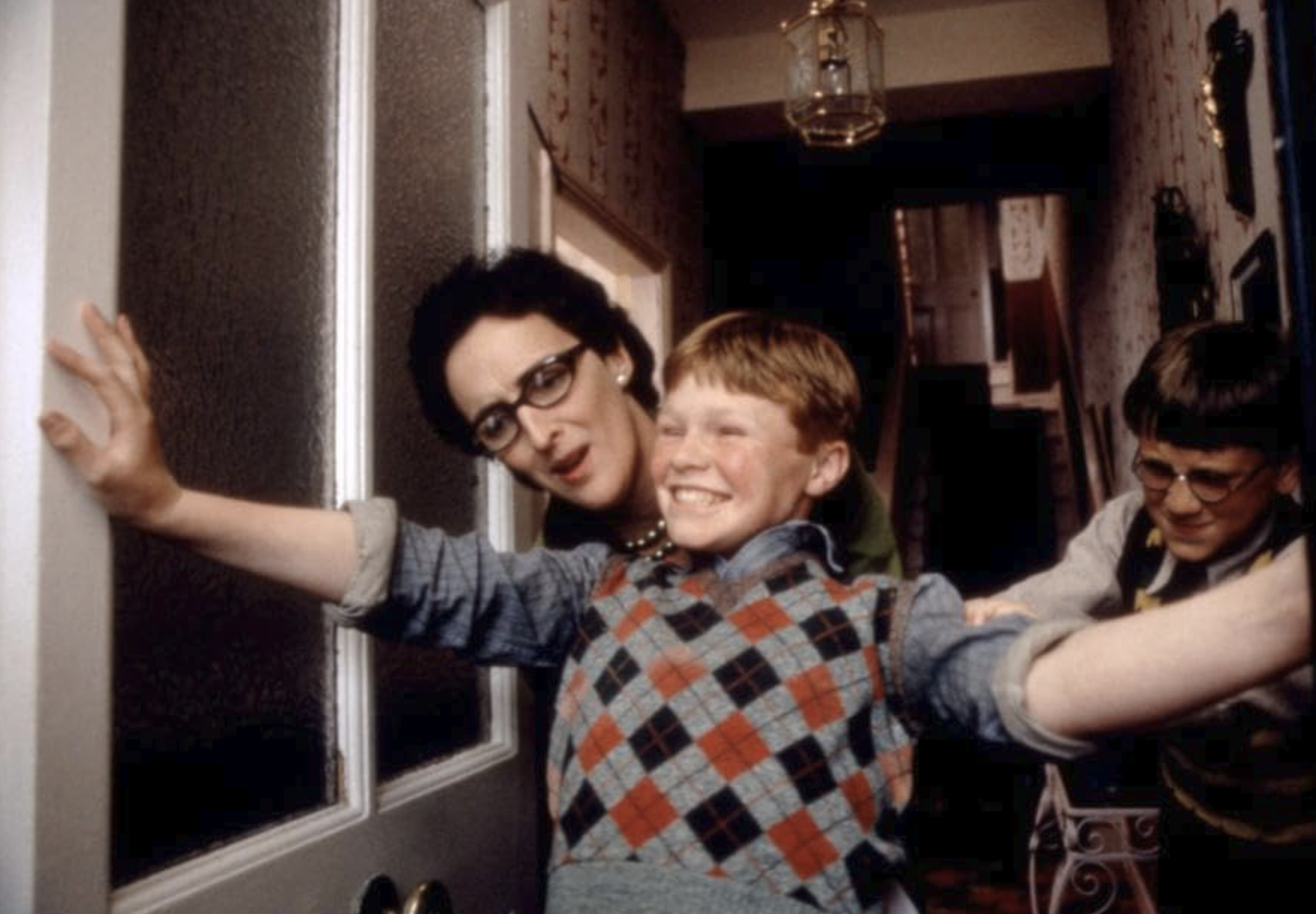
The Butcher Boy (1997)
Instead of an understanding of Ireland’s changing relationship with music, Neil Jordan’s The Butcher Boy, gives an understanding of Irelands changing relationship with religion. It follows Francis, a young boy of the small town of Clones battling the the death of his mother and an alcoholic father. Leading him to a a descent into violence.
The Butcher Boy is monumental in revealing how religion’s fracturing reputation transcend into media expression. Between 1984 and 2011 there was a 72% decrease in Irish people going to mass. The influence of the Celtic Tiger in causing the rise of atheism in Ireland is supported by economic theorist Karl Polanyi. Polanyi argues that a states’ descent into capitalism changes the way people view ideal character. Detracting from an ideal person from conforming to religious understandings of morals to the extent a person contributes to the economy. Thereby showing how is economic shift had a passive influence on how people evaluated their peers.
A central message of Jordan’s film is to value human connection over religious institutions. By the closing scene of the film, Francis is left without his parents, uncle Arlo, his best friend Joe and walks away independently into adulthood. Despite the support of Mary Magdelene throughout the film, he reduces the angel to a manifestation of his mental turmoil. Prioritising a life of solitude. During the 90s, the Irish Catholic Church was submerged in scandal. From the Father Brendan Smyth affair of 1994 to Sinead O’ Connor ripping the a photo of the pope in 1992, the Catholic Church was losing its moral credibility.
However, the film was directed in a way where the church acts as an antithesis to human connection. Scenes of any of the priests depicted in the film are shot briefly with all the boys or Francis himself being shot physically positioned opposite to the priest. This framing of priests portrays the church as a distant and unreliable form of connection. The confidence of Jordan to associate religion with delusion and loneliness shows that human relationships ultimately matter more than religion.
Both films explored reveal how the Celtic tiger was an engine of economic salvation in addition to cultural change within Ireland. I valued my weekend of film nights; it did not just inspire me creatively but fuelled my intellectual curiosity. I hope St Patrick’s day has the same touch on others too.
Bethany Banks: Some Irish literature recommendations
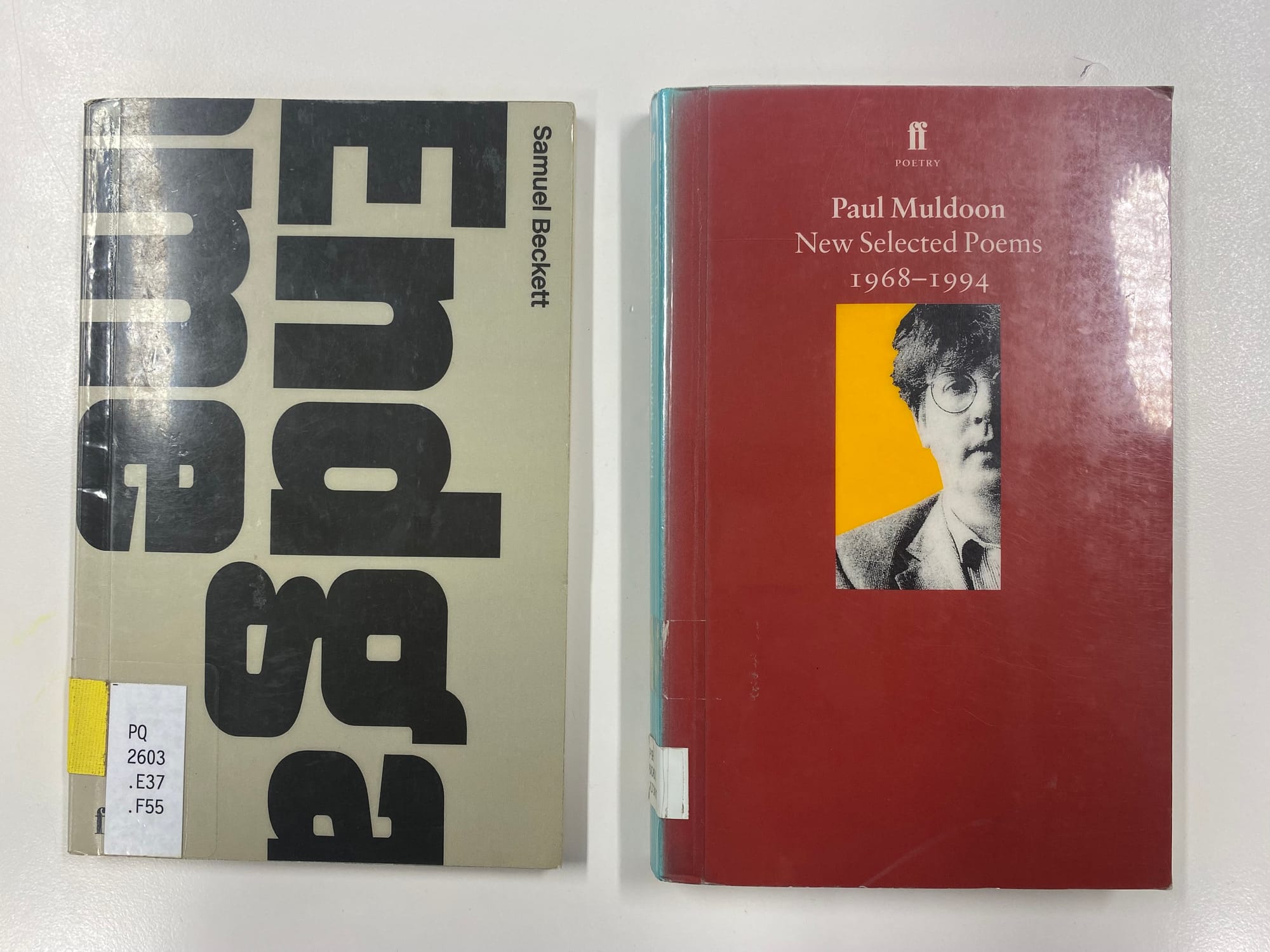
From contemporary fiction to avant-garde playwriting, Epigram has compiled a list of stand-out Irish writing that is well loved, but slightly less obvious than the immediate assumption of James Joyce or Sally Rooney.
Megan Nolan – Acts of Desperation (2021), Ordinary Human Failings (2023)
Acts of Desperation, as a debut novel, established Megan Nolan as a supremely talented writer of literary fiction, with prose that is viscerally honest, and characters that are equal-parts deeply individual, and entirely relatable. It tells the story of a suffocatingly consuming relationship, and the devastation that ensues in its narrator’s inner world as a result. As the course of the relationship unfolds, Nolan paints an unflinching character portrait of a woman in turmoil, and cuts to the core of experiences of love, suffering, and what it means to lose yourself in the idolisation of someone else.
While maintaining the same honest prose and dedication to the specific inner-worlds of its character’s, Ordinary Human Failings is more ambitious in scope. The theme of obsession is treated with higher stakes, following the lives of an Irish family in 1990s London and the journalist investigating their potential complicity in a child’s murder. More than just a mystery thriller, Nolan expands on themes of addiction, grief, and what it means to be Irish in the culture of Thatcher’s Britain.
Samuel Beckett – Endgame (1957)
Perhaps more well known for his breakthrough Waiting For Godot (1953), Endgame is Beckett’s second play, a sardonic, absurdist exploration of the human condition. Set in a post-apocalyptic world, a man, his servant, and his two elderly parents wait for the end that seemingly never comes, they spend their time telling stories, that too, seemingly never quite reach a conclusion. Sounds cheery, I know – but really, the play is an existentialistic teaching on the acceptance of fate, equal parts bleakly comic and thought-provoking. It’s well worth a read, or even better, a watch of a production.
Paul Muldoon – Selected Poems 1968–2014 (2017)
Described by the Times Literary Supplement as ‘the most significant English-language poet born since the Second World War,’ Muldoon’s poetry is cryptically allusive, witty and innovative. He reflects on art, violence, history and politics, but his complex word-play makes clear his love, first and foremost, for literature. Gaining prominence in the 1960s and 70s as part of a group of Northern Irish poets, including the well-revered Seamus Heaney, many of Muldoon’s poems are experimental in form, a hybrid of inspiration ranging from lyric poetry to epic narrative constructions.
Muldoon finds complexity in the straightforward, humour in the mundane; this seems to be a thread tying all of the writers I’ve mentioned. This St Patrick’s Day, I encourage you to read some Irish writing, and open yourself up to an ever-evolving landscape of literature that, with a sardonic wit, truly celebrates humanity in all its complexities.
Featured Image: Amanda Marie / Unsplash
Do you agree with our recommendations?