By Charles Hubbard, Second Year Theatre & Performance
Holly Race Roughan’s subversive new take on the Bard’s most performed comedy, straight from a barn-storming run at the Globe, is in equal parts gleefully cruel and maniacally funny.
‘Daring’ and ‘shocking’ may seem odd words to describe a flashy new revival of Shakespeare’s tale of starry-eyed lovers lost in the woods. Such terms are more regularly applied to the Bard’s tragedies, be it the eye-gouging in King Lear or the increasingly racialised and colonial depictions of Caliban in The Tempest. However, Holly Race Roughan’s remounting of Midsummer courts its audience’s gasps and armrest-clutching just as much as it does their laughs and chuckles. The performance opens with Puck (an absolutely bewitching Sergo Vares) sitting onstage in a white tutu and proceeding to peel and eat a banana in its entirety. And it only gets stranger from there.
‘It’s the only Midsummer production I’ve seen that’s been able to escape from under the gigantic shadow cast by Peter Brook’s landmark 1970 RSC staging’
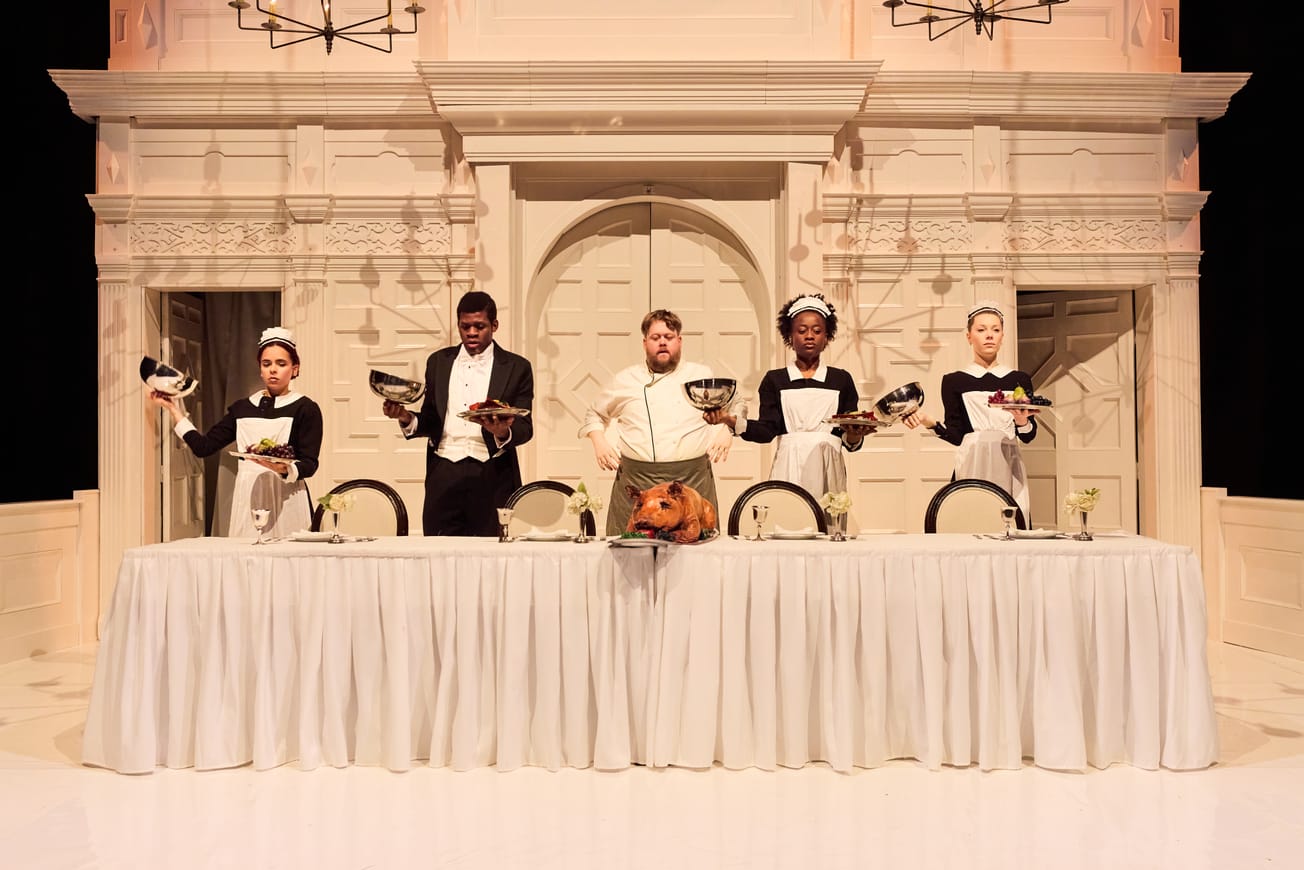
Double-casting virtually all the characters and frequently diverging from the source material, Roughan’s production takes nothing for granted from the text, not even the season embedded in its title, swapping out a temperate summer for a bitterly cold winter. Likely to piss off the purists and all the better for it, Roughan’s countless textual innovations and directorial interventions make this somehow feel like the first time this play has ever been staged. It’s the only Midsummer production I’ve seen that’s been able to escape from under the gigantic shadow cast by Peter Brook’s landmark 1970 RSC staging, never feeling bound by needing to either consciously model or self-consciously subvert Brook’s legendary vision.
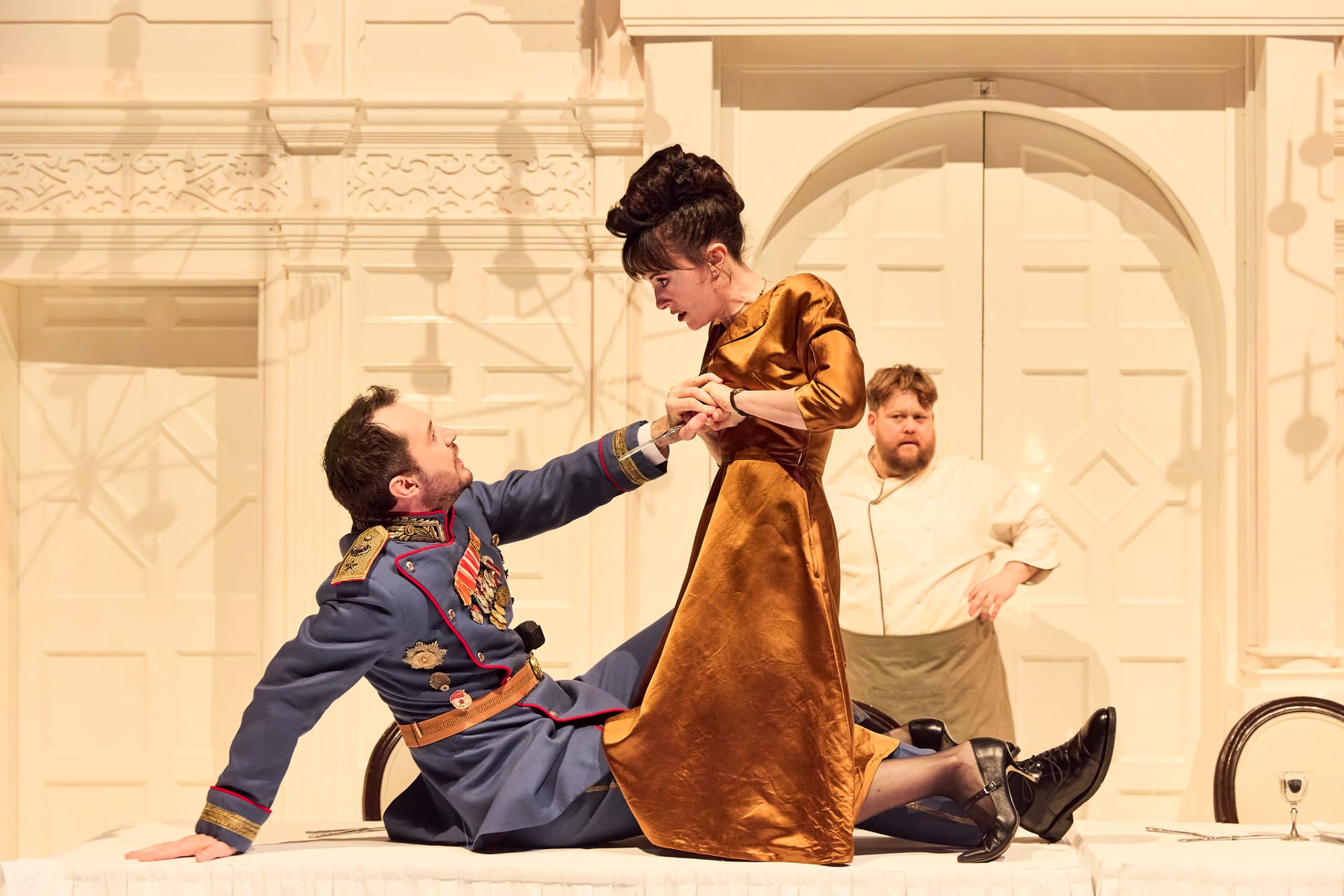
The production mines new meanings from Shakespeare’s text that feel so natural and obvious that it’s baffling that other directors haven’t spotted them first. The child fought over by Oberon (Michael Marcus, who also plays Theseus) and Titania (Hedydd Dylan, also Hippolyta) - a boy in the original text, a girl in this version - has been boldly foregrounded in the marketing for the production and the final product very much follows suit. Played by an eminently soulful Pria Kalsi (who is also Flute, one of the company of players), the child is the ultimate embodiment of the collateral damage caused by Oberon and Titania’s marital war, much more so than the quarrelling of the play’s four lovers. It is this notion of violence between the fairy king and queen that is the ugly streak running through the entire rambunctious restaging.
Double-casting the tempestuous parents of both urban Athens and the magical forest invites the audience to consider the woods not as an escape from the pressures of society but rather a microcosm of it. In particular, Marcus’ riveting loose-cannon performance as Theseus has the entire theatre practically sitting on a knife’s edge every time he is on stage. Brandishing a glock every time his wife flashes a kitchen knife, it is the bipolar-coded insidiousness of Theseus' petty tyranny that forms the engine that drives the play to its jaw-dropping climax (slight spoiler: Roughan doesn’t exactly abide by Uncle Will’s wishes). If only his casting as Oberon was as well-judged. Marcus’ everyman face, complete with the five o’clock shadow and receding hairline of your average middle-aged dad, makes him an odd and somewhat unsatisfying choice for the otherworldly and whimsical Oberon, especially when Dylan’s Titania feels straight out of a children’s fairy tale.
As for the lovers (all of whom also play Titania’s fairies), Tara Tijani (Helena) handles the verse the best, perfectly navigating the hairpin-turn emotional pivots of a woman whose relationships (both romantic and otherwise) to everyone around her are spinning out of control by the second. Tiwa Lade (Hermia) is unfortunately unable to breathe much life into a fundamentally unlikeable role, certainly the least fun of the four parts to play, mostly retreating to an amusing but superficial ‘deer in the headlights’ expression whenever asked to exhibit more complicated emotions than pure besottedness with David Olaniregun’s Lysander.
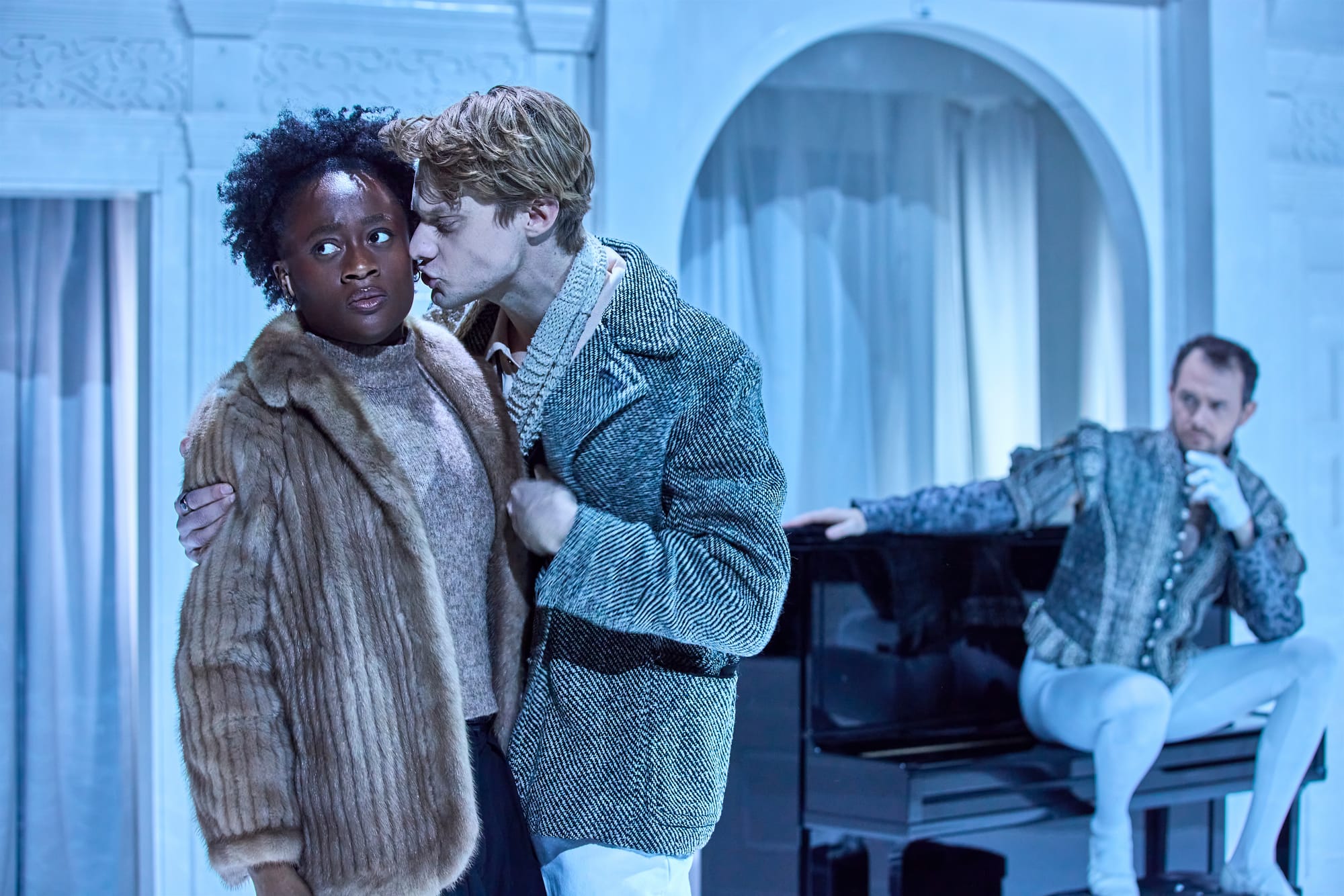
No matter, because Lou Jackson blows them all off the stage and right into the audience with his backboard-shattering performance as Demetrius. Carefully exposing the sexual violence that always lurked beneath his leering antagonism towards Helena but never at the expense of landing full-bodied belly laughs from yours truly, it doesn’t quite compute that he only graduated from drama school this summer, much less that this is his professional debut. In the final act of the play, which can so often feel dramatically rudderless in the hands of a lesser director, Roughan chooses to present the lovers not as charmingly love-struck teenagers but rather as spoilt, entitled rich kids mercilessly mocking their servants. Their forest-bound romantic cul-de-sacs suddenly seem trivial and plastic when you see how badly they treat those they deem less than them.
‘You could hear a pin drop from audience members that were having to reattach their sides only moments before’
This flipping of audience sympathies is also deployed with the character of Bottom. Too often a one-note punch line (and his asides here certainly provoke their fair share of extended guffaws), Danny Kirrane’s deceptively slow-burn turn as a man transformed into a donkey moves beyond safer comedic territory to reveal genuine pathos so surprising that, during his later monologues, you could hear a pin drop from audience members that were having to reattach their sides only moments before. And of course I would be remiss not to mention Vares’ performance as Puck, whose entrances through the audience and verbal derring-do are as distinctive and other-worldly as any depiction of the character I have ever seen. If I was to take an issue with a technical element of the production, it would be scenic artist Emily Carne’s choice of white marble columns to loom over the entire stage. While Jackie Orton’s costumes feel more Eastern European in nature (mostly thick furs and hunting jackets), smartly emphasising the wintry climate, the marble feels distinctly Grecian, firmly plating the set in a decidedly traditional approach while every other element of the show feels eager to escape notions of what a Shakespearean play ‘should’ be. The columns also provide a firm separation between onstage and offstage where a slow blend into the darkness would have felt a much better fit for a production so gratifyingly hell-bent on unsettling its audience.
 Olly Francis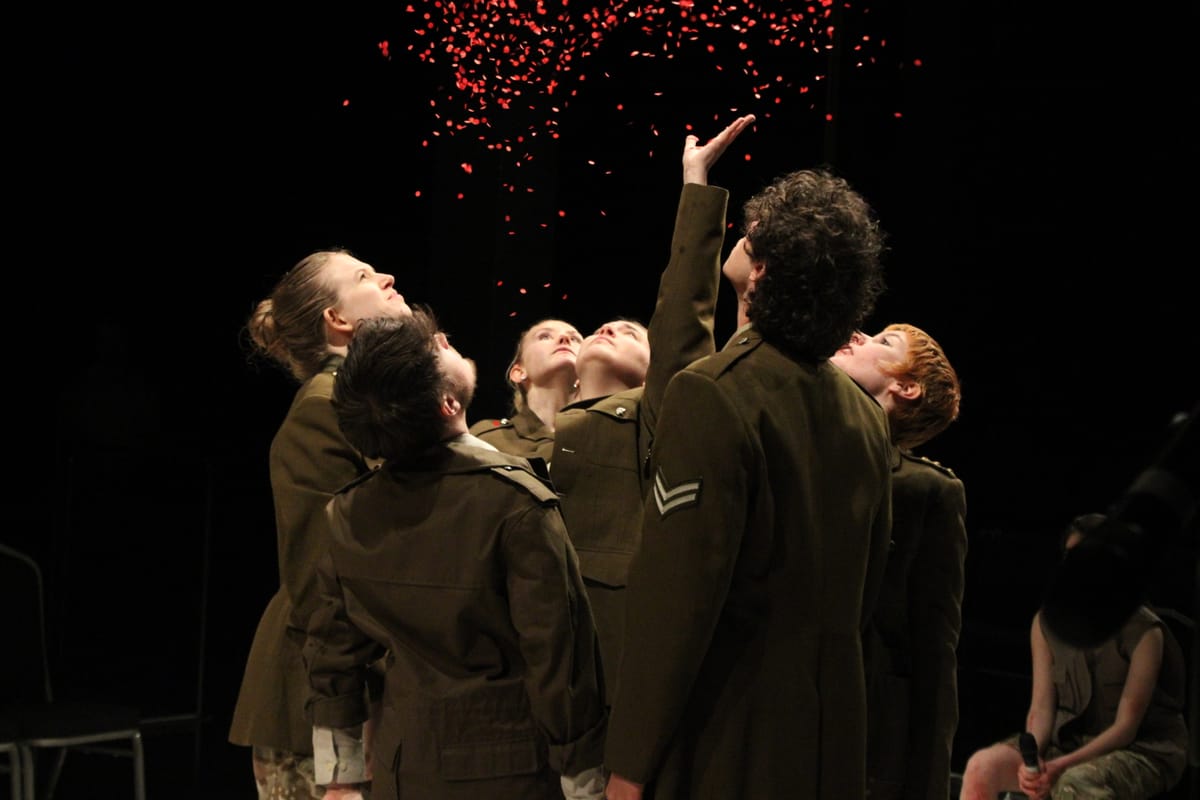
Despite my minor quibbles, this is a superb production. It’s both a resounding case for why we should still be performing Shakespeare over 400 years after the man himself kicked the bucket, and a righteously justified kick in the teeth to anyone still braindead enough to tell directors not to ‘muck about’ with the classics. It’s easy to see why this revival had such a triumphant run at the Globe and, if there’s any justice in the world, every major theatre in the country should be clamouring to host Roughan’s astounding new vision.
The production runs until 21st March. Tickets are available on the Old Vic's website.
Featured image: ‘A Midsummer Night’s Dream’ | Bristol Old Vic / Rich Lakos
Will you go and see this production of ‘A Midsummer Night’s Dream’?