By Josie Horneff, First Year Philosophy and Theology
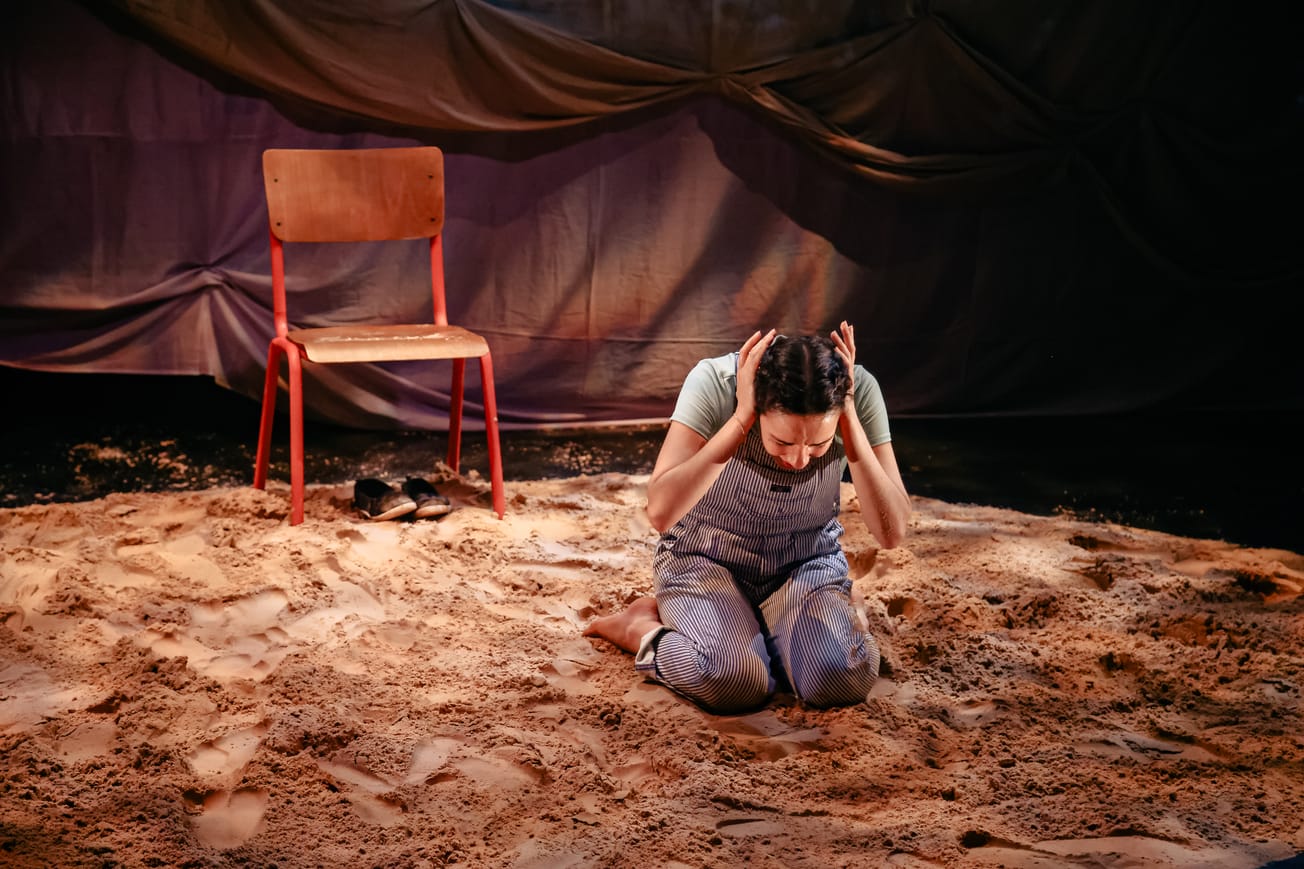
‘A Grain of Sand’ by Elias Maters follows an 11-year-old Renad, a Palestinian girl who is an aspiring young storyteller. Sarah Agha uses her performance to build an image of Gaza for the audience, before its identity was reduced to conflict. Putting focusing on folklore, family, and the unwavering faith we have in humanity as children. Her stage, accompanied by the writing of children in Gaza (2024), takes us on a journey fuelled by grief and confronts all that has been lost by the people of Palestine.
I thought Elias Maters direction creates a beautiful ode to the lineage of story telling. The story is centred around Renad's search for ‘Anqaa’, a mythical phoenix in Palestinian folklore. We watch Renad transition from believing that this phoenix is an outside force protecting her, to realising the ‘Anqaa’ and the powerful image of its ashes emerging from destruction is a testimony to the reliance and endurance of the people of Palestine much like Renad's own journey. Sarah Agha guides us through elements of old mythology and modern-day accounts from children caught in the conflict. This pathway through Palestinian culture celebrates the powerful young storytellers whose opportunities are now being taken. This contrasts Renad's recollection of her sitti's stories being passed down to her, highlights that the freedom of storytelling and cultural celebration has become a privilege no longer afforded to the children of Gaza.
Elias Matar writing from the perspective of an 11-year-old opened up the narrative to an unfiltered insight into Renad's childhood, portraying moments of humour and of violence with the same level of passion. This took the main focus of the story away from the technical elements of the attacks on Gaza and into the core of grief. Renad describes the pattern of loss around her, observing: ‘first it's the home, father protection, mother's laps, and then your own skin.’ This was integral to the piece as it highlighted so clearly the message that it is the civilians in Palestine that will continue to be victimized in this conflict. Unfiltered dialogue is what allowed Sarah Agha to tell such a moving story in the short run time of sixty minutes.
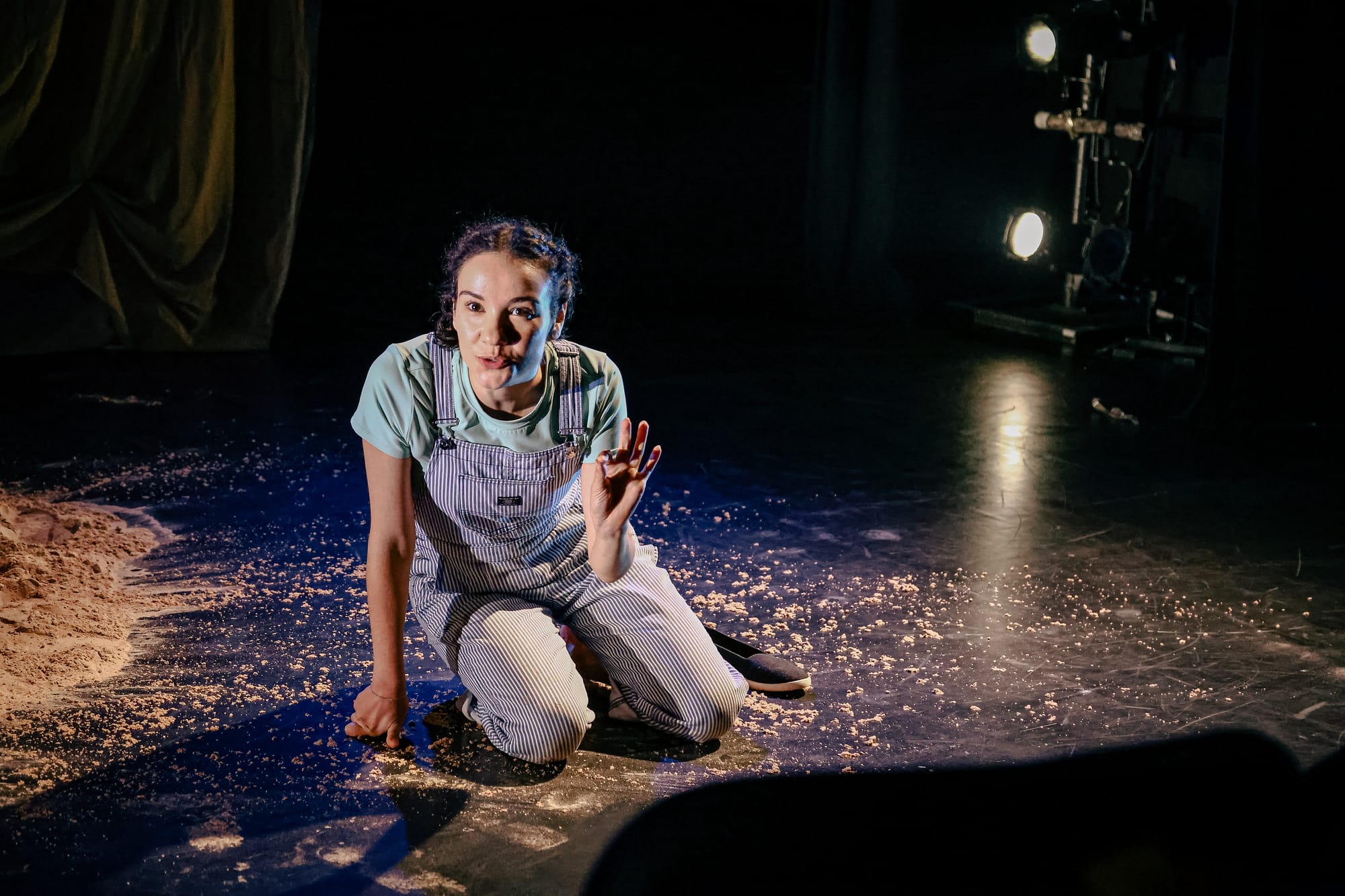
The whole piece, being sixty minutes with no interval, was not only a testament to the stamina and talent of Sarah Agha but embedded the involuntary nature of the conflict into the performance. There was no moment of pause or formal transition to when the violence started and innocence was lost. It really ingrained how quickly reality changes for victims of the attacks.
Natalie Pryce's choice to use sand on stage grounds the audience in the setting of Gaza and Elias Matar's writing both celebrates Palestinian culture and depicts the internal conflict that comes with feeling trapped in one's own country. Sarah uses sand to show the frustrations Renad has being bound by this war and its suppression of her adolescence. A moment that really stood out was when Renad was recalling her sitti’s words: ‘no one dies of hunger in their homeland.’ These comforting words shaped the character's understanding of her environment, and watching the process of that worldview be shattered for Renad is what made this play have such a unique impact. Sarah Agha, as she sank into the sand carrying Renad's hunger, showed us how violent regime meant she could no longer take comfort in her homeland.
 Anna Leaf
I feel so grateful to have seen Sarah Agha's performance at the Bristol Old Vic and could not recommend going to see ‘A Grain of Sand’ enough. The performance is touring the UK currently and will be moving to Edinburgh on the 11th of March. While the play is fast moving, the book A Million Kites containing the children’s poems and writing which were collected in 2023 and 2024 is being sold at the Bristol Old Vic. I would urge you to go support their work and stories. All sales from this book are donated back to organizations helping the children in Palestine.
Featured image: ‘A Grain of Sand’ / Bristol Old Vic | Amir Hussain Ibrahimi