By Rachael Fay, Second Year, English and Film
Epigram's Rachael Fay looks back at an incredible year of women's sport, and debates what needs to still change as we move into 2026.
Growing up, I had never been willing to engage with sports, partly because of the toxicity around men's football, but honestly, mostly because I found sports intimidating. When the Lionesses returned to the European stage, my stance on sport completely changed. I felt represented, seen and unbelievably inspired. Despite being written off after their disappointing opening match against France, and the media losing all faith in them, we saw them rise again.
At the start of this year, I had never been to a team-sport match or published an article. I have now watched the Lionesses at Wembley and the Red Roses at our very own Ashton Gate. I am now a printed, publishing journalist for two papers, and writing my third article as a sports journalist. I can’t believe I’ve only been in this headspace for six months, and I wish I’d been here longer.
The Lionesses
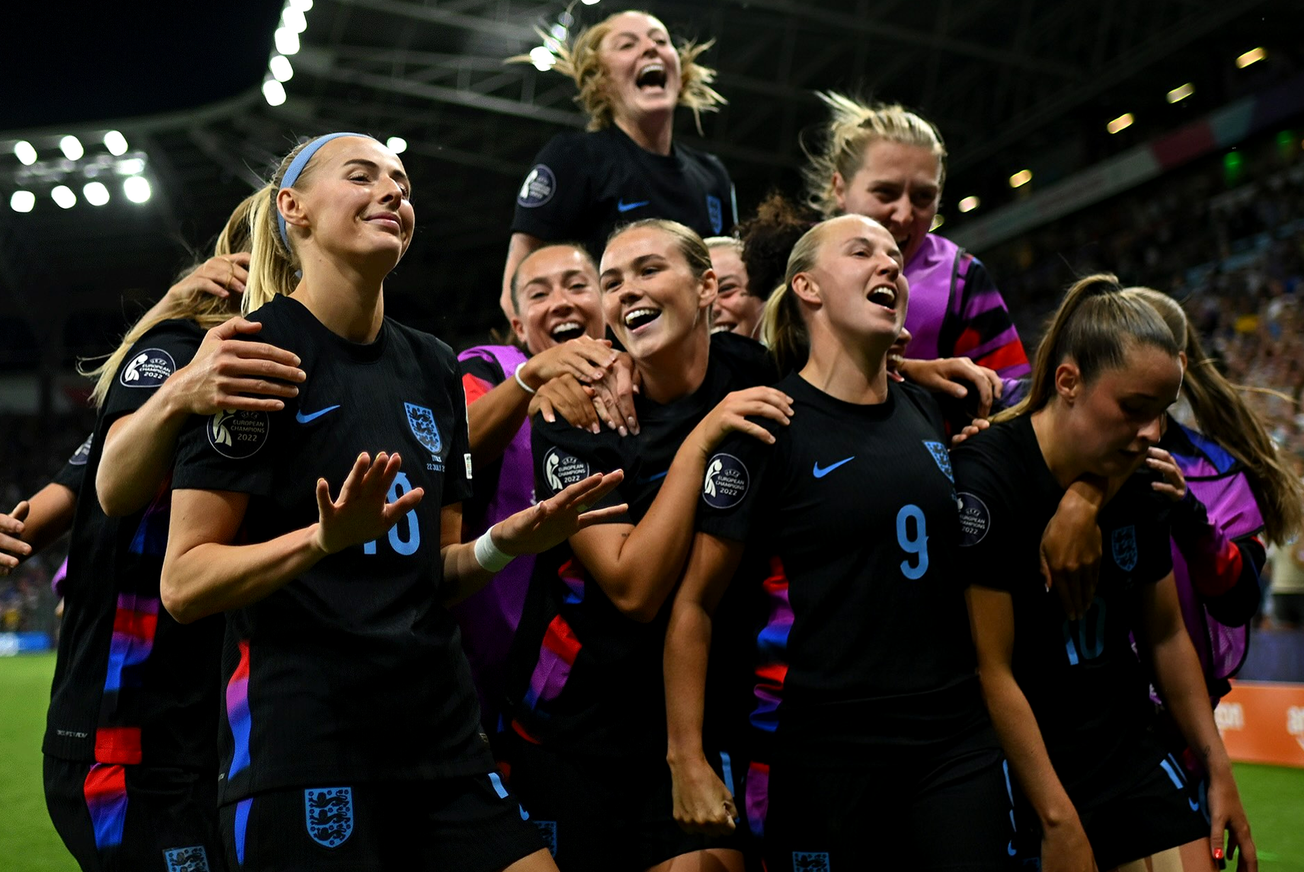
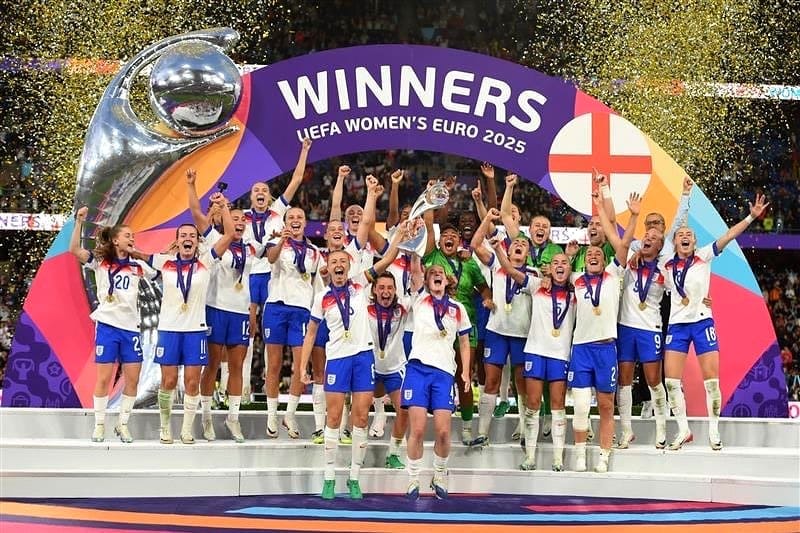
In July, the Lionesses returned to the Euros as reigning champions to Switzerland, led by captain Leah Williamson and legendary manager Sarina Wiegman, who also led the girls to their 2022 Euros victory. After a tense string of penalty shoot-outs, the top two teams in the world were set to face each other in the final: England and Spain.
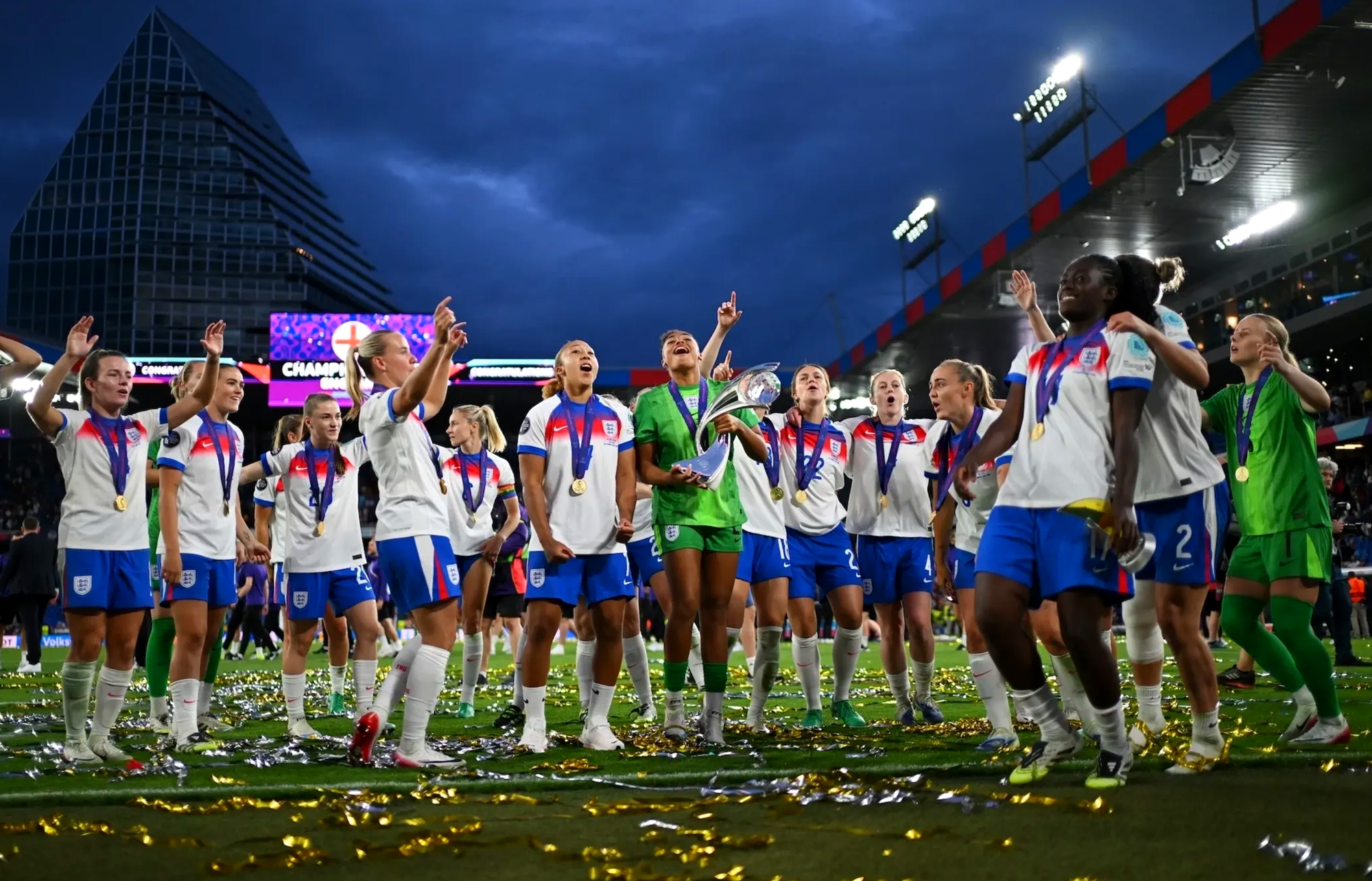
Choe Kelly scored the winning penalty for the second Euro campaign in a row, crowning the girls back-to-back queens of Europe. Viewership peaked at 16.2 million making it the most-watched television moment of 2025 across all TV broadcasters.
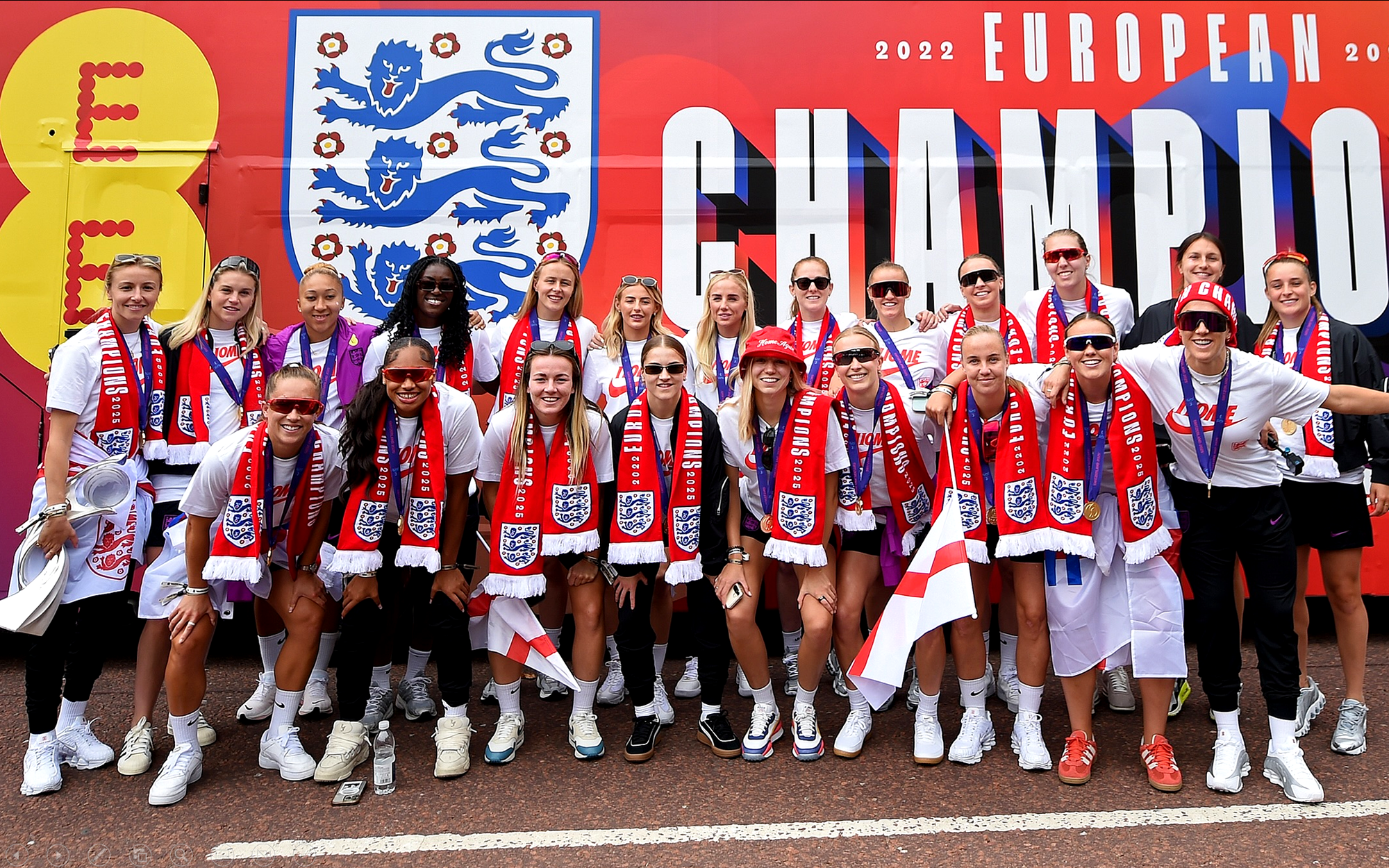
The Lionesses returned to crowds 65,000 strong at their homecoming parade down the Mall to Buckingham Palace, and I was among them. Their success means equality for everyone in football: last weekend, every WSL (Women's Super League) and WSL 2 match was photographed exclusively by women. England Football found in November 2025 that now 90% of schools offer girls equal access to football.`
‘Women's football – no it's just football’ ~ Chloe Kelly, Glamour 2023
However, whilst women’s football grows bigger, the health and welfare of players is not being prioritised the same rate. Female athletes are experiencing an ACL crisis, with nearly 150 incidents this year alone, as women play in men's kit as the only professional kit available. Additionally, the club schedule leaves limited time to rest players, resulting in them becoming exhausted and injury-prone.
“You won’t be able to increase the ticket prices or get bigger crowds in the stadiums because you won’t have players to watch. We are driving ourselves into the ground with it, so some sort of solution needs to be found soon, in terms of the schedule, otherwise it’s not sustainable.” ~ Leah Williamson via the Daily Telegraph
Studies show that female footballers are 2-8x more likely to tear their ACL than men. Since 2022, over 500 elite-level women's footballers have torn their ACL. The recovery time for a torn ACL is 9-12 months, so this is devastating for any professional's career. Women's health, not for the first time, is crying out to be taken seriously and taken into consideration - women need easy access to a kit that won't jeopardise their careers later.
Like the men's team, the Lionesses have had to endure terrible racist abuse as well as extreme sexism. Just 9.7% of footballers in the elite women's game are from ethnically diverse backgrounds. Although this is increasing as the game grows, racism within the squad and from 'fans' is a prevalent issue. Lionesses such as Jess Carter and Lauren James have been subjected to horrific racist abuse this summer, with arrests made. It is very sad that this devastating culture in English football threatens the women's game just as it does the men's.
'We need to be really careful to not just turn into the men's game', Manchester City's Vivienne Medema told The Telegraph. These women are unbelievably resilient, inspirational with their 'get it done' attitude, shutting out the outside noise and bringing home the silverware.
The Red Roses
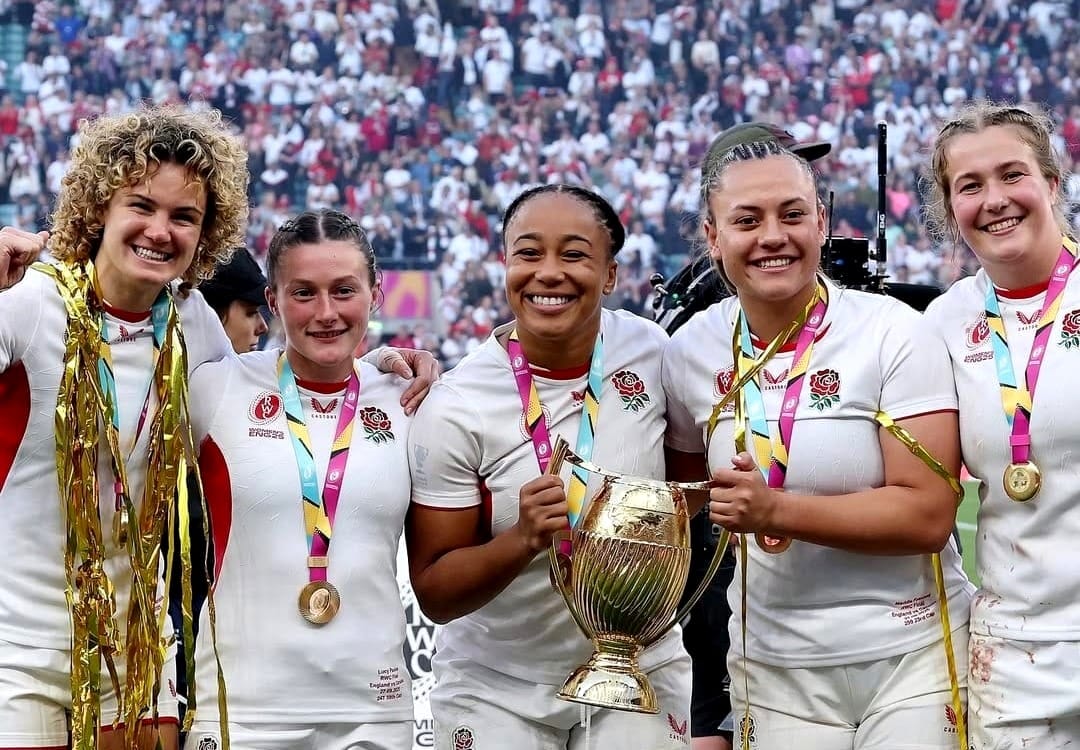
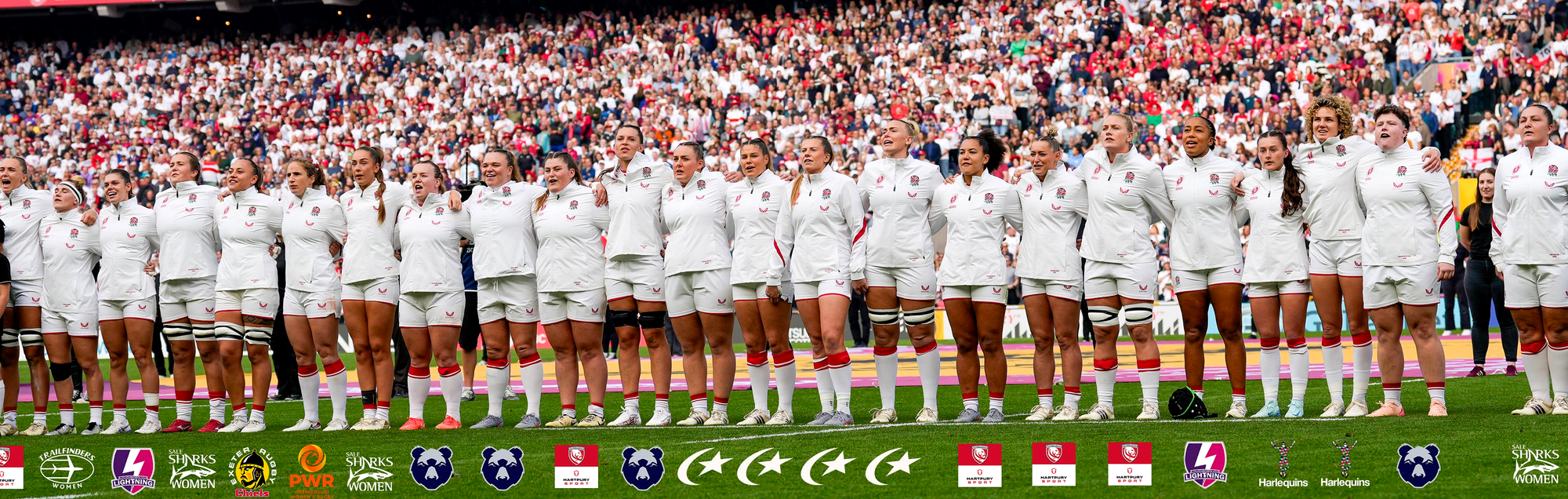
What has been so heartwarming about this year is that the Red Roses, Women's Cricket team and Lionesses have actively supported each other’s campaigns by using each other’s platforms rather than being pitted against each other. The Red Roses are now World Champions for the third time after bringing it home at Twickenham in October to a home crowd, breaking the world record attendance for a women's rugby game at 81,000 fans.
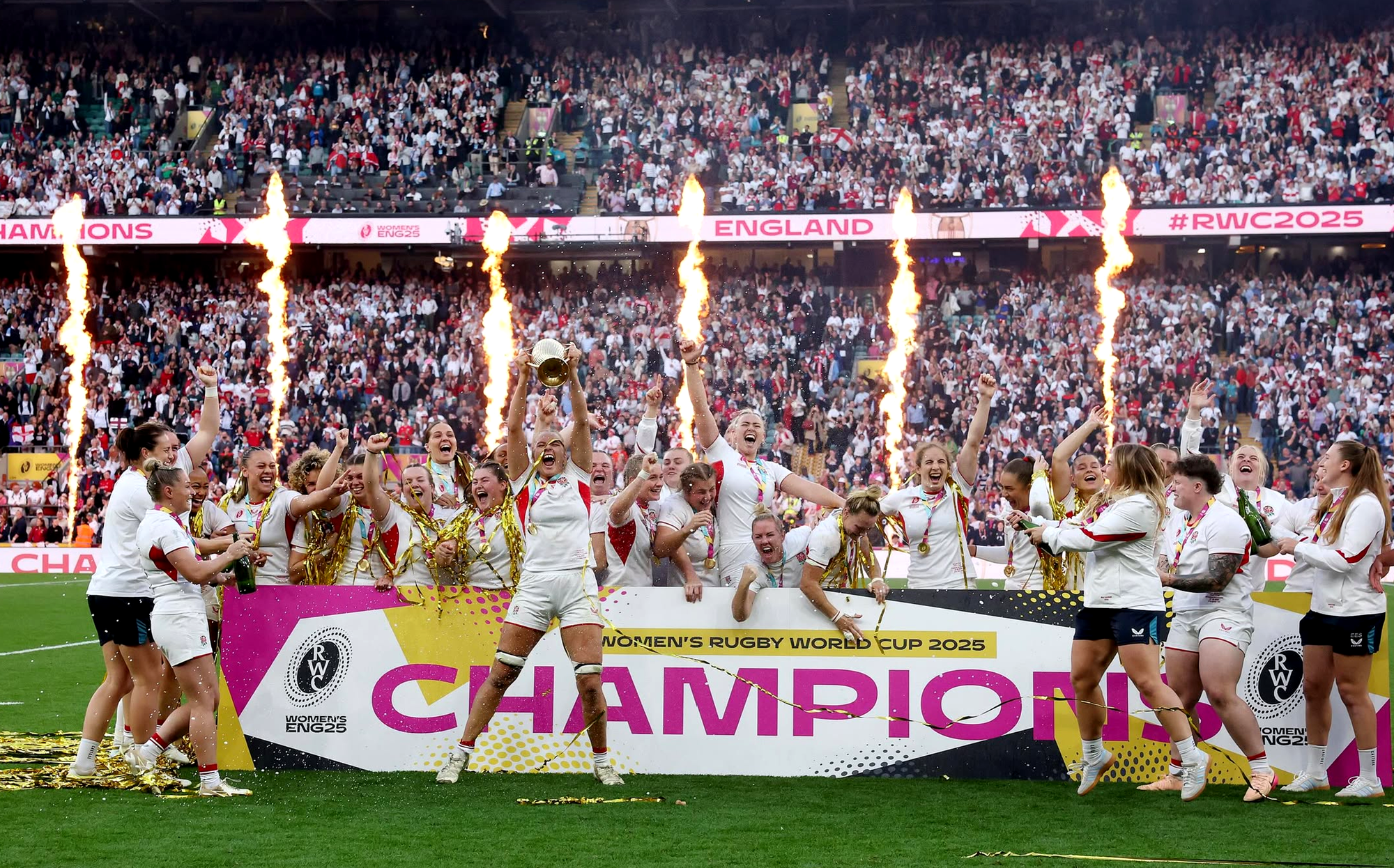
They remaining unbeaten for 33 consecutive games - the longest winning streak in rugby history. 1.1 billion impressions were generated on social media by the Women's RWC - making it the second-highest performing rugby world cup of all time across digital, behind only the 2023 men's tournament.
Girls and women now make up roughly 25% of all rugby players worldwide and 1 in 7 are pre-teen girls. The number of female players has risen by 38%, with over 500 clubs now offering women’s and girls’ rugby with adult women’s rugby expanding faster than men’s in youth rugby. The Red Roses are breaking barriers for young girls in terms of hard work, attitude, teamwork and body type. Having the Red Roses live on BBC1 , broadcast to millions, marks such a change in the public's attitude towards women's team sports.
Periods in sport
The Women in Sport charity has said that around 64% of girls drop out of sport by the time they reach the age of 16. Legendary tennis player Billie Jean King has said that she believes it's so crucial that girls get into sport to learn how to lead and to build confidence; thus, girls dropping out of sport is doing a lot of damage to women's and girls' potential. This is down to a lack of confidence and physical issues: whether these are modesty concerns, cramps or further health conditions such as endometriosis, which affects 1 in 10 women and goes widely undiagnosed. Talking about these very real, important issues is often seen as taboo; however, according to the BBC's Elite British Sportswomen's Study 2024, 88/143 athletes said their performance had been affected by being on their period. So, this is a very prevalent issue.
I remember when I found out what periods were: I was in shock that every single biological woman in the world has had to cope with periods, and I couldn't believe I had never found out until I was told it would happen to me. England Captain Leah Williamson has been open about her struggle with endometriosis, and revealed that a flare-up almost resulted in her missing the 2022 Euros campaign: 'I'm a professional athlete, I've always been like, 'let's get on with it'.
Her teammate Beth Mead revealed that she played the 2025 Euros on her period as well.
"Success can happen at any time and I happened to be on my period with that success. [...] We're at elite level, but how can we help someone who's at grassroots, to give every girl every opportunity to play whatever sport it is they want to play, whatever time of the month it is." - Beth Mead, BBC Bitesize
Financial inequality
Despite the women's football's insane schedule, only the top professional players will currently ever be able to properly retire from football without having to get another job, having dedicated themselves to professional football from a young age. England legend Lucy Bronze said in September, "I got asked about women's footballers being able to retire, and I was like ‘Well, 99% won't be able to retire off of what they made’. It's not to say that they should be able to, it's just the way it is."
The financial inequality is stark. Football League 2 men's players earn a reported £100,000 annually, whereas the average Super League salary for women's football is £47,000. Harlequins stars Ellie Kildunne and Marcus Smith reportedly have an annual income difference of £350,000 annually plus match bonuses. Following the Lionesses' success this summer, the WSL has introduced a new minimum salary wage for senior players so the players are now legally protected; however, there is a long way to go: the Man United women's team were forced to pay for their own flights home after a Champions League win openly claiming that their womens team ‘aren't a priority’.
The women of England are rising and finally getting the credit they deserve after decades of struggling for recognition and funding. In the words of Chloe Kelly post-Euros win, 'thank you to everyone who wrote me off' - now they are finally getting their roses, and I can't wait to see what the future generations of England football and rugby can do.
Featured Image: Instagram / Lionesses